










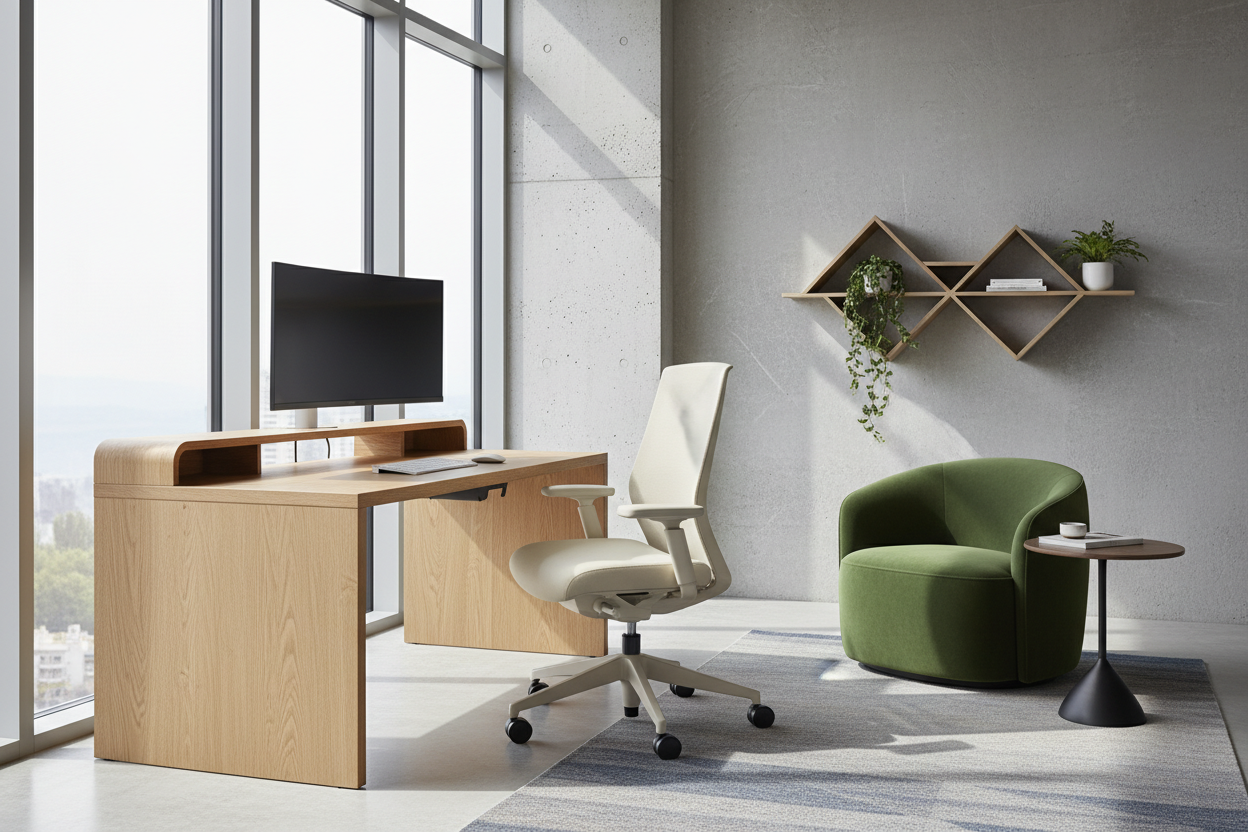
We have all encountered the same visual dissonance: a beautifully curated living space interrupted by a clunky, clinical office chair or a laminate desk that feels cold to the touch. The challenge isn't just finding a place to work; it is finding pieces that respect the architectural integrity of your home while supporting your body for eight hours a day. High-quality wfh furniture must bridge the gap between commercial-grade ergonomics and residential warmth.
Key Features to Look For
Before committing to a purchase, review this checklist to ensure the piece meets both functional requirements and design standards. This criteria is what separates disposable decor from investment pieces.
- Ergonomic Adjustability: Look for seat height, lumbar support, and tilt tension that doesn't rely on bulky, visible levers.
- Material Authenticity: Prioritize solid woods (walnut, oak) or high-density veneers over hollow-core laminates for longevity.
- Visual Weight: In multi-use rooms, opt for legs with negative space or glass tops to keep the room feeling open.
- Textile Durability: For seating, seek fabrics with a high double-rub count (30,000+) that resist pilling.
The Work From Home Table and Chair Equation
The most critical relationship in your home office is the vertical distance between your seat and your work surface. When clients ask for the best work from home furniture, I often steer them away from buying sets. A set often compromises on one element. Instead, curate them individually.
Analyzing the Chair Silhouette
A task chair does not need to look like it belongs in a cubicle. Look for mid-century modern inspired profiles that hide the mechanism underneath the seat pan. If your office is in a shared space like a living room, consider a chair with a lower back profile to maintain clear sightlines across the room. Leather or high-performance velvet can soften the technical look of a task chair, making it feel like a lounge piece when not in use.
The Desk as an Anchor
When selecting a work from home table and chair, the desk acts as the anchor. Solid wood desks develop a patina over time, telling the story of your work. If you are tight on space, avoid heavy pedestal desks. A writing desk with slender, tapered legs allows light to pass through, keeping the room feeling airy. However, ensure the desk depth is at least 24 inches; anything shallower will force your monitor too close to your eyes, causing strain.
Materiality and Tactile Experience
In a corporate office, durability is purely utilitarian. In a home, it must be tactile. Your skin touches the edge of the desk and the armrests constantly. I recommend avoiding glass for primary work surfaces as it can be cold and creates harsh acoustic reflections. Instead, look for oiled wood finishes or linoleum tops, which are naturally antimicrobial and soft to the touch. These materials absorb sound and add a layer of warmth to the ambient atmosphere of the room.
Lessons from My Own Projects
I want to share a mistake from my own home office renovation so you don't repeat it. I once fell in love with a vintage Danish teak desk. It had a stunning grain and a beautiful floating top design. I bought it immediately.
However, I didn't account for the "apron" (the vertical piece of wood directly under the tabletop that connects the legs). It was four inches deep. Once I pulled my ergonomic chair up to the proper typing height, my thighs were jammed against the bottom of the desk apron. I couldn't cross my legs, and after an hour, I felt claustrophobic.
It looked incredible in photos, but functionally, it was a disaster. Now, whenever I source tables for clients, I physically measure the clearance from the floor to the bottom of the apron, not just the top of the desk. That three-inch difference defines your comfort.
Conclusion
Your workspace is an extension of your lifestyle. By focusing on authentic materials, proper scale, and hidden ergonomics, you can build a space that invites productivity without sacrificing style. Treat these pieces as investments in your health and your home’s aesthetic value.
Frequently Asked Questions
How do I protect a wood desk from laptop heat and scratches?
Always use a high-quality desk pad. Leather or wool felt pads provide a sophisticated layer of protection and improve mouse tracking, while also defining the "active work zone" on the table surface.
What is the ideal desk size for a small apartment?
For tight spaces, aim for a width of 42 to 48 inches. This accommodates a laptop and a notepad without dominating the room. Wall-mounted ladder desks are also excellent for utilizing vertical space without a large footprint.
Is a standing desk worth the aesthetic compromise?
It can be. If you require a standing desk, look for models with solid wood tops and legs that conceal the motors. Avoid the standard T-leg metal bases if possible, or position the desk so the legs are obscured by a side chair or plant.


Dejar un comentario
Este sitio está protegido por hCaptcha y se aplican la Política de privacidad de hCaptcha y los Términos del servicio.