










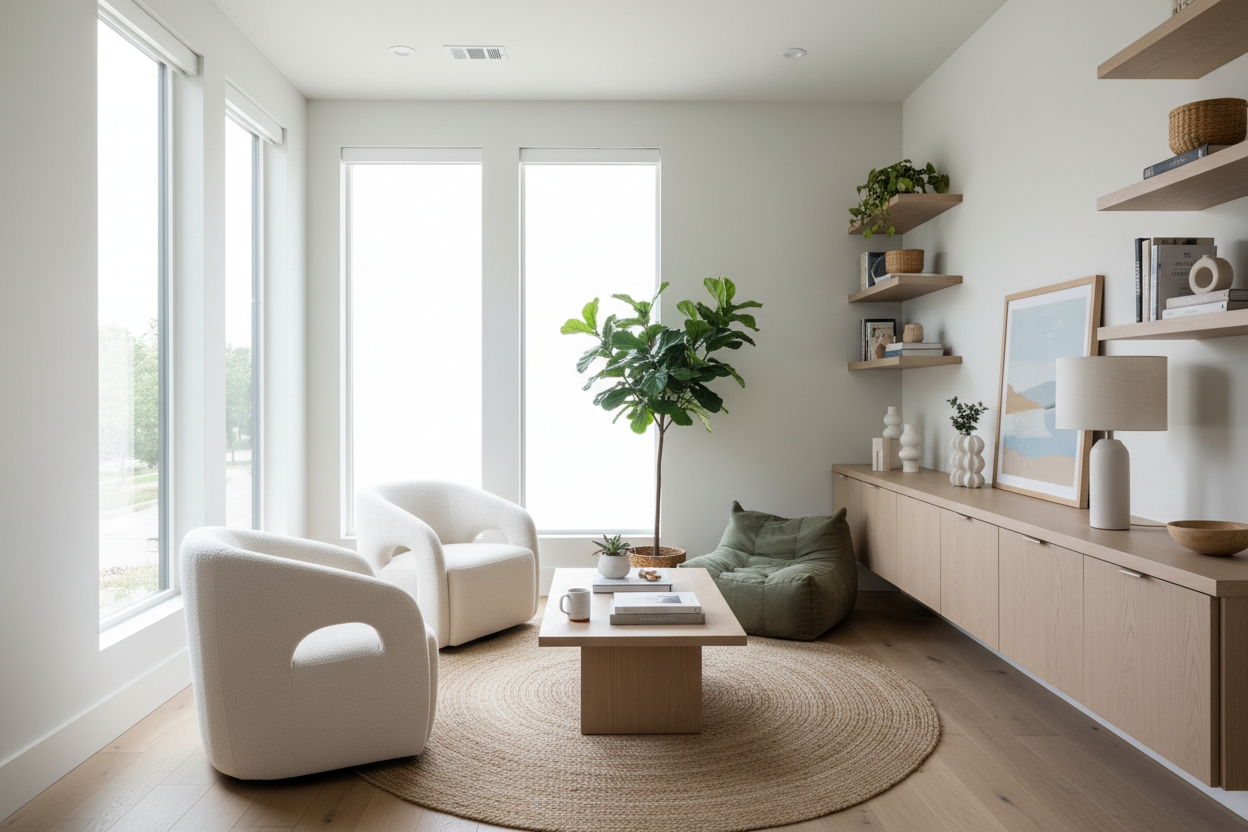
Most clients come to me with the exact same dilemma: their workspace feels like a stressful afterthought. They pushed a desk against the nearest blank wall, dragged in a spare dining chair, and now they actively avoid the room. When it comes to decorating the home office, the goal is not just building a pretty background for video calls. It is about creating a functional, comfortable layout that supports deep work while reflecting your personal style.
Whether you are tackling a dedicated room or a carved-out corner of the guest bedroom, this guide will walk you through exactly how to balance ergonomics with true residential style. Stop settling for a cubicle aesthetic in your own house.
Quick Decision Guide
- Position for power: Whenever possible, float your desk facing the door rather than staring at a blank wall.
- Prioritize ergonomics: Never sacrifice a supportive, adjustable desk chair for a trendy silhouette.
- Layer your lighting: Rely on a mix of task lamps, overhead fixtures, and natural light to reduce eye strain.
- Hide the cables: Visual clutter equals mental clutter. Invest in cable management trays and zip ties immediately.
Space Planning and Layout Rules
The Command Position
When clients ask me how to furnish office spaces, my first rule is always about placement. Pushing your desk against the wall is a classic rookie mistake. It creates a cramped, uninspiring view. Instead, try the 'command position' by floating your desk in the center of the room, facing the entrance. This opens up the room visually, gives you a commanding view of the space, and creates natural walkways.
If you are working with a smaller footprint and absolutely must face a wall, use the vertical space. Install floating wood shelves or a large-scale piece of textured art to give your eyes somewhere to rest during screen breaks. These simple at home office decorating ideas make a massive difference in how the room feels on a daily basis.
Style, Coordination, and Visual Weight
Grounding the Room
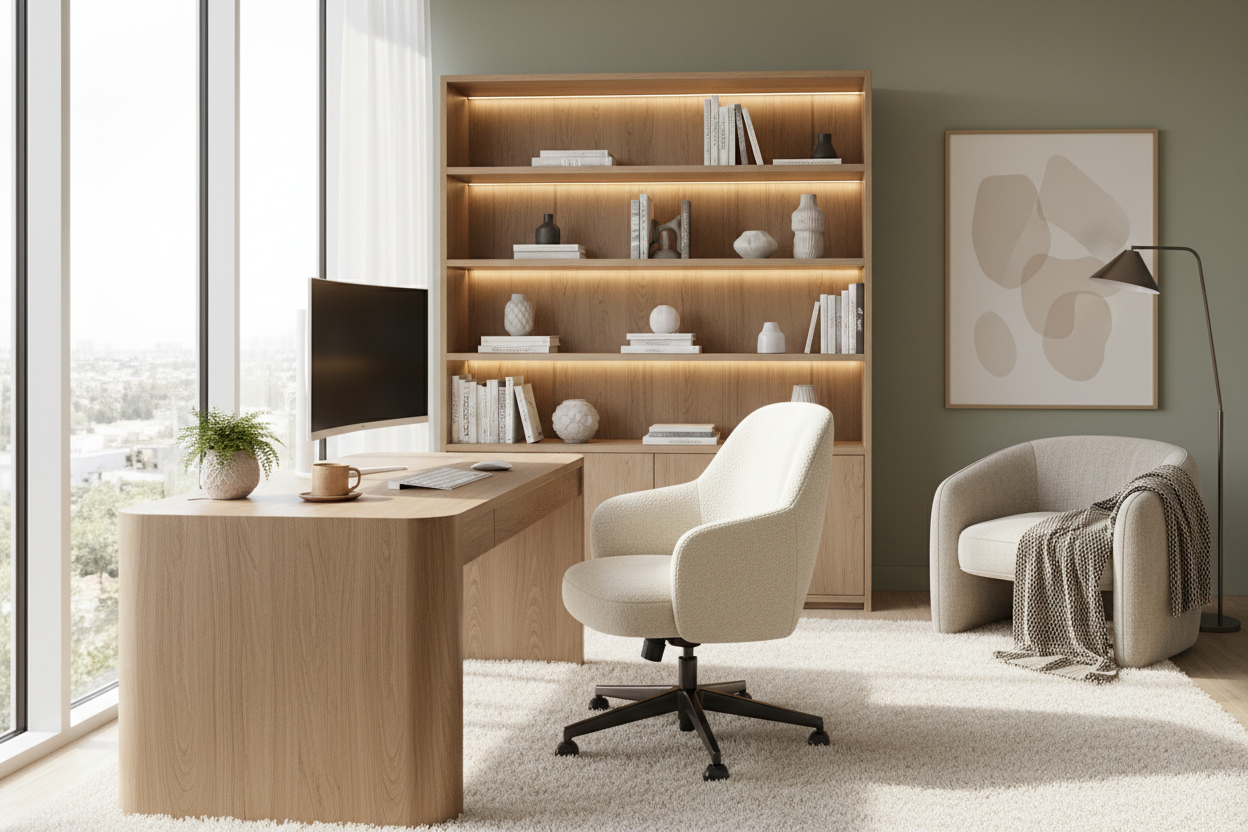
Figuring out how to style a home office often comes down to anchoring the furniture. A bare floor with a rolling chair feels cold and corporate. Add a low-pile area rug to define the workspace and absorb sound. Ensure the rug is large enough so your chair does not roll off the edge when you push back—usually an 8x10 or 6x9 works best for standard desk setups.
Curating Your Background
If you love academic office design ideas, bring in a solid walnut bookcase or a vintage credenza. This not only provides essential closed storage for ugly tech gear but also creates a sophisticated backdrop. When clients ask what to put in home office shelving, I always recommend mixing professional materials with personal artifacts: framed photos, ceramic vases, and trailing plants. This softens the hard edges of monitors and filing cabinets.
Designer's Honest Take
I get asked all the time how I decorate my home office, and I always confess my biggest early mistake. Years ago, I found a stunning, sculptural mid-century dining chair at a local flea market. It looked incredible behind my sleek writing desk. It was the ultimate photo-ready, magazine-worthy setup.
By day three, my lower back was screaming. The pitch of the seat was entirely wrong for typing, and the lack of lumbar support made long drafting sessions miserable. I learned the hard way that you can compromise on the style of your wastebasket or your curtains, but you can never compromise on the ergonomics of your chair. I eventually swapped it for a high-end ergonomic task chair. It is not as photogenic, but I can actually work a ten-hour day without needing ice packs.
Frequently Asked Questions
What are the best office decoration ideas for home workspaces?
Focus on lighting and textiles first. Swapping harsh overhead bulbs for warm, layered lighting—like a heavy brass task lamp—instantly makes the room inviting. Add custom or semi-custom drapery to soften the acoustics and hide standard builder-grade window frames.
When you decorate your home office on a tight budget, where do you start?
Start by decluttering and managing your cords; it is completely free and instantly upgrades the look. Then, invest the bulk of your budget into a quality chair. You can easily save money by repurposing a vintage dining table as a desk or buying second-hand shelving.
How much clearance do I need behind my desk?
You should leave a minimum of 36 inches between the edge of your desk and the wall or shelving behind you. This gives you enough physical space to comfortably push your chair back and stand up without hitting anything or feeling trapped.


Dejar un comentario
Este sitio está protegido por hCaptcha y se aplican la Política de privacidad de hCaptcha y los Términos del servicio.