










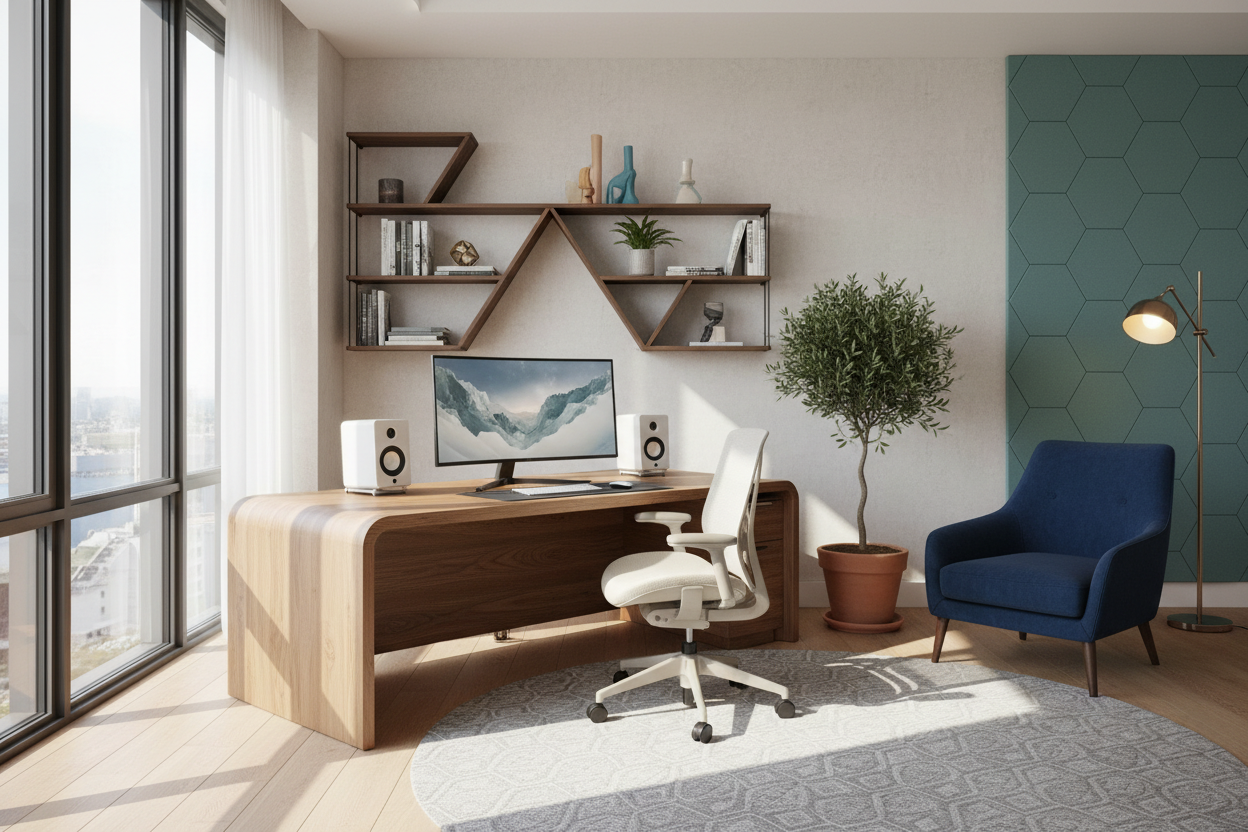
The difference between a chaotic workspace and a productive sanctuary often lies in intention. Many homeowners and business owners mistake clutter or bright colors for creativity, but a truly sophisticated workspace requires a balance of form and function. If you are looking for a cool office idea that transcends trends and offers genuine longevity, you have to look beyond the decorative surface. This guide will walk you through curating a space that feels inspiring without sacrificing the professional ergonomics required for long work hours.
Core Components of a High-Functioning Office
Before selecting furniture, review this checklist to ensure your design choices support productivity rather than hindering it. These are the non-negotiables I look for in every layout:
- Ergonomics First: A chair might look sculptural, but it must offer lumbar support and adjustable seat depth for 8-hour shifts.
- Lighting Layers: Combine ambient overhead lighting with focused task lighting (4000K temperature) to reduce eye strain.
- Acoustic Control: Use rugs, curtains, or acoustic panels to dampen echo, especially in rooms with hard flooring.
- Material Durability: Prioritize high-performance fabrics and scratch-resistant surfaces like solid wood or high-pressure laminate over cheap veneers.
Elevating the Aesthetic: Beyond the Gimmicks
When clients ask for a "cool design office," they often envision startup clichés like bean bags or neon signs. However, in a residential or professional setting, "cool" translates to curated and intentional. The goal is to create a visual narrative that reflects your workflow.
Materiality and Texture
Texture is the secret weapon of interior designers. To achieve a sophisticated look, mix materials that contrast warmly. If your desk is a sleek, matte-black metal, pair it with a chair upholstered in a bouclé or a rich cognac leather. This tactile contrast creates depth. Avoid high-gloss finishes on desktops; while they look sleek in photos, they reflect overhead glare and attract fingerprint smudges that will drive you crazy within a week.
Integrating Fun Office Designs with Function
incorporating fun office designs doesn't mean sacrificing maturity. It is about introducing elements of surprise and leisure that facilitate breaks.
The "Breakout" Micro-Zone
Even in a small home office, spatial planning is critical. Try to position your primary desk facing the room or a window (never the wall, if avoidable) to command the space. Then, dedicate a corner to a "soft seating" arrangement—perhaps a singular accent chair with a small side table. This change in posture signals to your brain that it is time to read or take a call, separating "deep work" from "creative thought."
Color Psychology
While fun office designs often utilize primary colors, a more refined approach involves deep, saturated hues. Consider painting the ceiling a moody charcoal or a deep forest green while keeping walls neutral. This draws the eye upward and creates a cozy, enveloping atmosphere without the visual fatigue of bright red or orange walls.
My Personal Take on cool office idea
In my fifteen years of designing workspaces, I have seen plenty of trends backfire. I once had a client who insisted on a hanging bubble chair—the quintessential 1960s "cool" piece—right in the center of the room. It looked incredible in the renderings.
However, the reality was much less glamorous. The acrylic shell amplified sound, meaning every time he shifted his weight during a Zoom call, the microphone picked up a loud creaking noise. Furthermore, the lack of breathability in the plastic meant it became uncomfortably warm after twenty minutes. We eventually swapped it for a stationary, high-back velvet lounge chair. The lesson? A cool office idea must survive the Tuesday morning stress test. If it annoys you when you are on a deadline, it isn't good design; it's just decoration.
Conclusion
Creating a workspace that feels fresh and inspiring is an investment in your own output. By prioritizing tactile materials, proper lighting, and intelligent zoning, you can build a space that looks impressive and works as hard as you do. Don't settle for boring beige—design a space that commands respect.
Frequently Asked Questions
How do I make a small office look cool but not cluttered?
Focus on verticality. Use floor-to-ceiling shelving to draw the eye up and keep the floor plan open. Choose furniture with exposed legs (like mid-century modern styles) rather than blocky pieces, as seeing the floor underneath makes the room feel larger.
Are standing desks considered a part of cool office design?
Absolutely, but the key is concealment. Industrial-looking standing desks can ruin a luxe aesthetic. Look for models with solid wood tops and cable management systems that hide the motor and cords inside the leg structures to maintain a clean silhouette.
What is the best lighting for a dark office space?
Avoid relying solely on a single ceiling fixture. Create a "light wash" by placing LED strips behind monitors or under shelves (bias lighting). Use a floor lamp with a linen shade to diffuse light softly, reducing the harsh shadows that cause eye fatigue.

Dejar un comentario
Este sitio está protegido por hCaptcha y se aplican la Política de privacidad de hCaptcha y los Términos del servicio.