










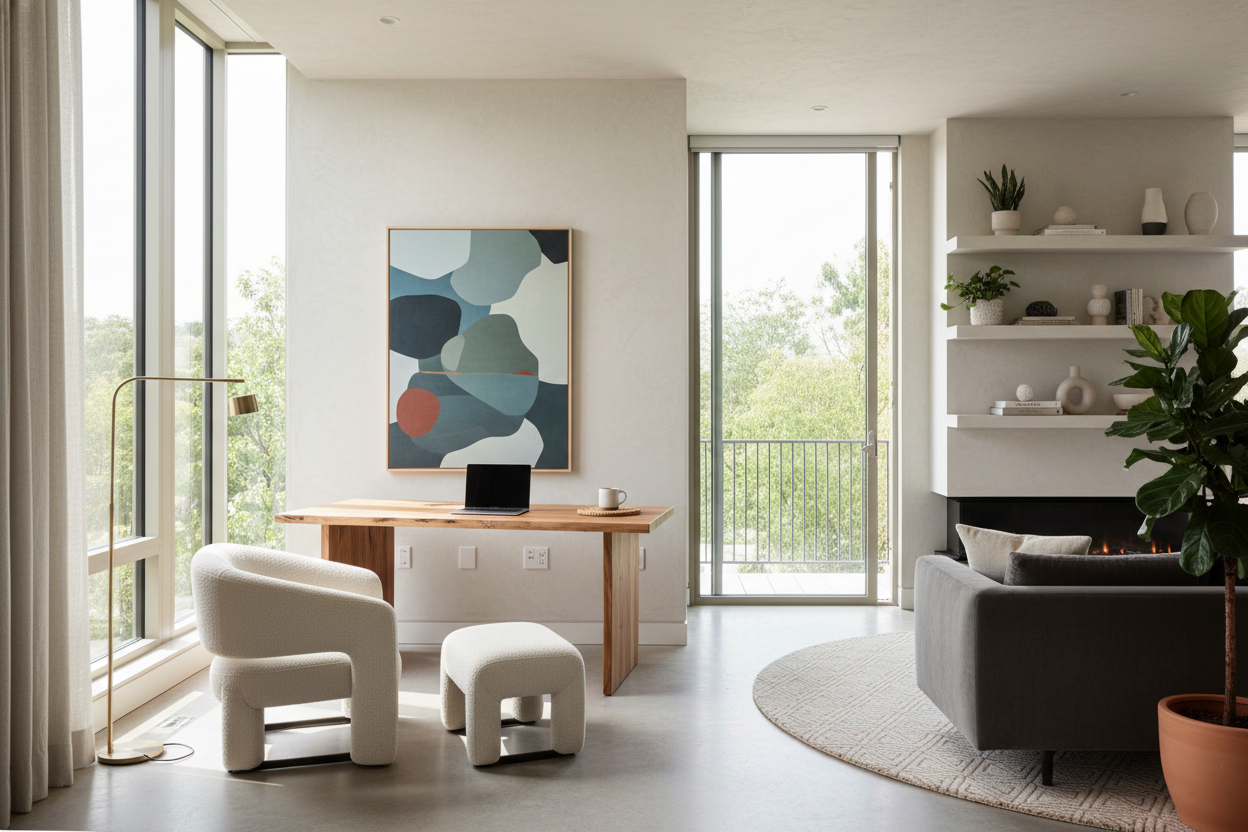
We have all been there: trying to answer emails from the dining table while dodging breakfast cereal, or staring at a spare bedroom that feels more like a sterile corporate cubicle than a part of your house. Creating a functional home with office that does not ruin your residential aesthetic is one of the most common challenges I tackle with clients today.
It is easy to buy a desk online, shove it into a corner, and call it a day. But when your workspace clashes with your living space, it creates visual clutter and mental fatigue. In this guide, you will learn exactly how to approach space planning, select pieces that blend seamlessly with your decor, and avoid the common traps of residential workspace design.
Quick Decision Guide
- Prioritize visual weight: Choose desks with open bases or slender legs to keep the room feeling spacious, especially in shared living areas.
- Match the room's architecture: Your workspace should echo the existing trim, flooring, and style of your home, not a commercial building.
- Invest in the chair, save on the desk: Ergonomics matter most where your body makes contact. Spend your budget on seating.
- Define the zone: Use area rugs, strategic lighting, or paint blocking to create a psychological boundary between "work" and "home."
Space Planning: Where Work Meets Life
The biggest mistake homeowners make is treating the workspace as an afterthought. Whether you are dedicating an entire spare room or carving out a nook in an open-concept living area, placement dictates how much you will actually enjoy using the space.
Carving Out Zones in Open Concepts
If your workspace shares a footprint with your living or dining room, you need strict boundaries. I recommend leaving at least 36 inches of clearance behind your desk chair so you can comfortably push back without hitting a sofa or a wall. Floating a desk behind a sofa—acting as a console table when not in use—is a brilliant way to integrate the function without forcing yourself to stare at a blank wall all day.
Selecting the Right Pieces
When you sit down to design home office furniture layouts, the goal is to bridge the gap between commercial durability and residential warmth. You want pieces that can handle a 40-hour workweek but still look like they belong in a cozy home.
Balancing Comfort and Silhouette
Sourcing cool home office furniture often leads people down a dangerous path of prioritizing looks over lumbar support. Mid-century modern wooden chairs look fantastic on social media, but sitting in them for eight hours will send you straight to a chiropractor. Look for transitional pieces: upholstered task chairs with hidden ergonomic adjustments, or desks made from solid walnut rather than cold, institutional melamine.
Style & Coordination
Your approach to home office design and furniture should feel like a natural extension of your house. If your home leans coastal transitional, a heavy, black metal industrial desk will stick out noticeably and disrupt the flow of the room.
Blending with Your Residential Aesthetic
Use texture to soften the technological aspect of an office. Hide monitors against dark-painted accent walls, use woven baskets for cable management, and swap harsh overhead lighting for warm brass task lamps. A vintage Persian rug under a modern desk creates a layered, collected feel that grounds the room beautifully.
Lessons from My Own Projects
Early in my career, I designed a stunning dual-workspace den for a couple in a suburban new-build. I sourced this gorgeous, matte-black linoleum-topped desk. It looked incredibly sleek on installation day, perfectly matching their minimalist aesthetic.
Fast forward two months, and I learned a hard lesson about matte finishes in high-touch areas. Every single fingerprint, coffee cup ring, and smudge showed up instantly. The clients were constantly wiping it down. I also once specified a beautiful velvet accent chair for a desk, completely ignoring the fact that velvet traps pet hair like a magnet. The family's golden retriever made that chair his own, and it looked perpetually messy. Now, I strictly recommend performance fabrics for office seating and sealed wood or high-quality laminates for work surfaces.
Frequently Asked Questions
How do I hide computer wires in a living room office?
Use a desk with a built-in modesty panel or a cable management tray mounted underneath. You can also route cables down the back of a desk leg using zip ties or cord covers that match the leg's color to make them virtually invisible.
What size desk do I need for a dual-monitor setup?
For two standard monitors, you need a desk that is at least 60 inches wide and 24 to 30 inches deep. Anything shallower, and the screens will be too close to your eyes, causing severe eye strain and neck fatigue.
Can a dining chair work as an office chair?
For occasional tasks like paying bills or quick emails, yes. But for full-time remote work, dining chairs lack the necessary seat depth, pitch, and lumbar support. Always invest in a proper ergonomic task chair if you work from home daily.


Dejar un comentario
Este sitio está protegido por hCaptcha y se aplican la Política de privacidad de hCaptcha y los Términos del servicio.