










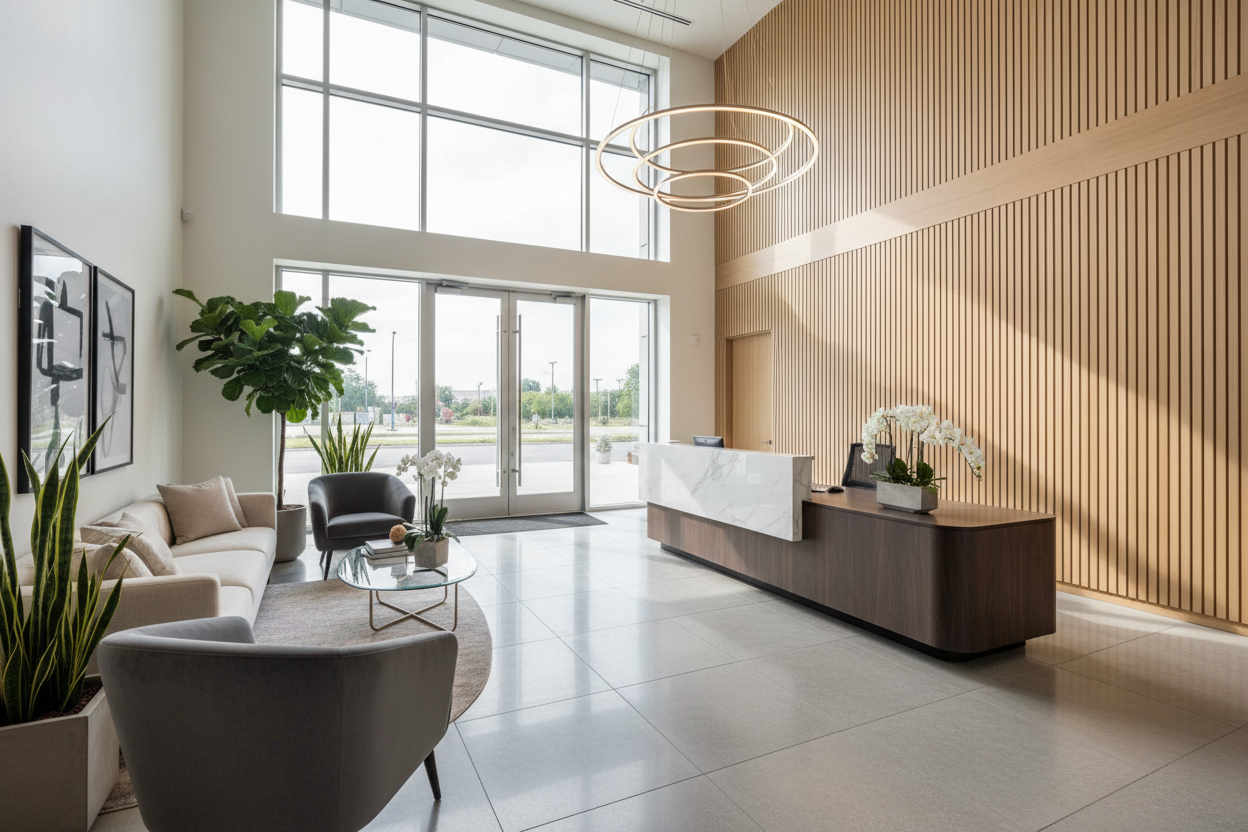
The moment a potential client or new hire steps through your door, a silent negotiation begins. Before a single hand is shaken, your company's culture, competence, and attention to detail are being assessed based solely on the environment. The entrance of office is not merely a transition space; it is a physical manifesto of your brand identity. Yet, I often see businesses treat this crucial zone as an afterthought, cluttering it with generic reception desks or uncomfortable seating. This guide explores how to curate an entry that balances high-end aesthetics with rigorous functionality.
Key Features of a Successful Office Entry
- Circulation Flow: Ensure a clear, unobstructed path from the door to the reception point to reduce visitor anxiety.
- Acoustics: Incorporate sound-absorbing materials (rugs, acoustic panels) to prevent the space from sounding hollow or chaotic.
- Lighting Layers: Combine ambient overhead lighting with warm accent lamps to create a welcoming, residential feel.
- Durability: Select commercial-grade fabrics (crypton, leather) and high-traffic flooring materials.
- Brand Integration: Use subtle color nods or logo placement rather than overwhelming the visitor with branding.
Strategic Layouts for Every Footprint
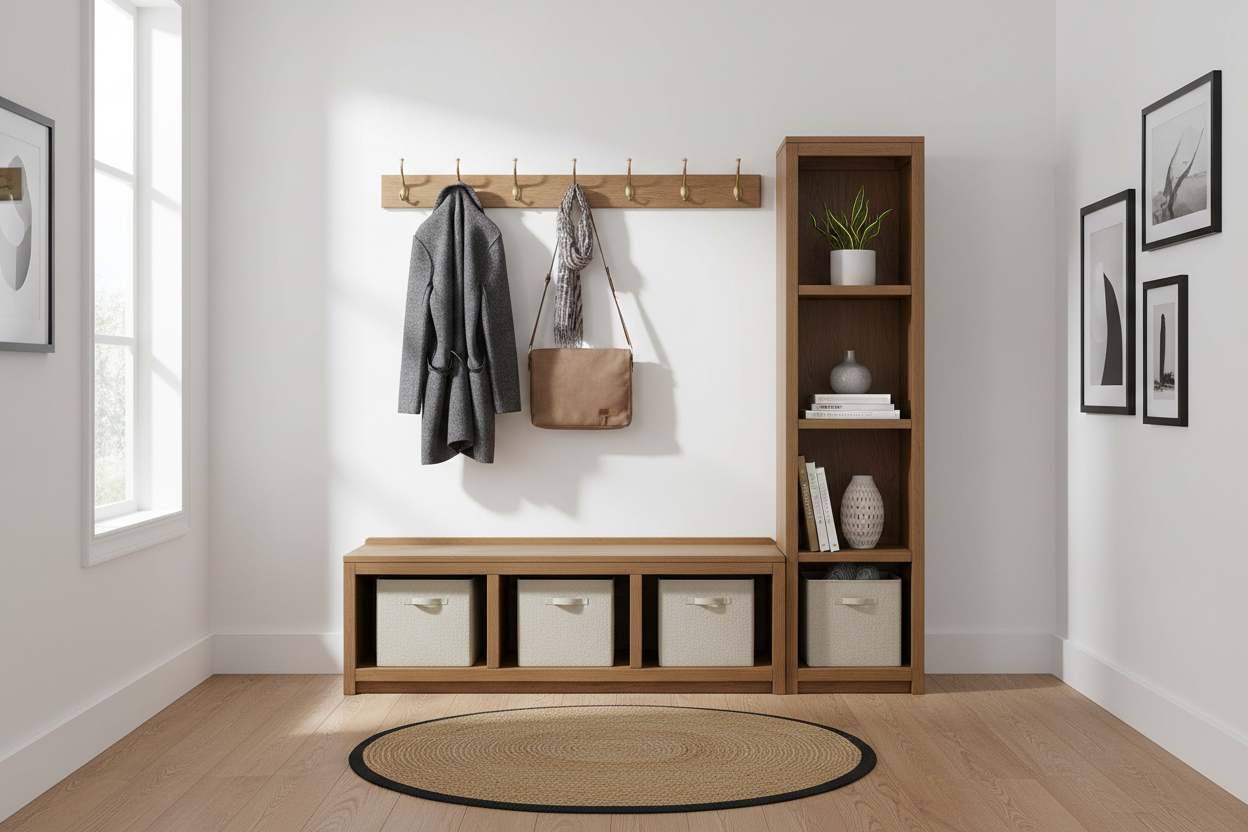
Whether you are working with a sprawling lobby or a small office entrance design, the layout dictates the user experience. In larger spaces, the challenge is often intimacy; you don't want the visitor to feel dwarfed. Here, we use area rugs and furniture groupings to create "islands" of activity. Conversely, for a compact office entry, verticality is your best friend. Floor-to-ceiling mirrors or vertical slat walls can visually expand the height, making the footprint feel less constricted.
Materiality: The Tactile Experience
The difference between a sterile clinic and a modern office entrance lies in texture. When advising clients on office entrance wall design, I steer them away from plain white drywall. Instead, consider wood veneers for warmth, textured stone for solidity, or acoustic felt panels for softness. These materials not only look expensive but also dampen the noise of opening doors and footsteps, contributing to a sense of calm authority.
Flooring Considerations
Your flooring takes the brunt of the abuse. For the immediate threshold, a high-quality walk-off mat system is non-negotiable to trap debris. Beyond that, luxury vinyl tile (LVT) or polished concrete offers the sleek look of a modern office entry while withstanding the traffic of morning commutes.
Furniture & Decor: Curating the Narrative
Office entrance decoration should never impede function. When selecting seating, look for firm, supportive cushions. Visitors in suits or skirts do not want to sink into a deep, soft sofa that is difficult to stand up from. A pair of structural armchairs with a low profile often works better than a bulky couch. Furthermore, lighting serves as the jewelry of the room. A statement pendant light can serve as a focal point, drawing the eye upward and establishing the design language of the entire workplace.
Lessons from My Own Projects
I learned the hard way that aesthetics cannot trump maintenance in an entryway. A few years ago, I designed a stunning office entrance for a boutique law firm. We installed a beautiful, high-gloss black reception desk that looked incredible in the renderings. It was sleek, modern, and intimidating.
However, one week after installation, the office manager called me. The high-gloss finish was a nightmare. Every single fingerprint, dust mote, and coffee cup ring was visible from across the room. The receptionist spent half her day Windexing the surface rather than greeting clients. Now, I always recommend matte or textured finishes (like honed stone or wood grain) for high-touch surfaces in an entrance design for office projects. It hides the daily wear and keeps the space looking pristine without constant labor.
Conclusion
Your office entrance is the handshake of your building. By investing in durable materials, ergonomic furniture, and thoughtful lighting, you create a space that respects your visitors' time and elevates your brand's perception. Don't settle for generic; design an entry that works as hard as you do.
Frequently Asked Questions
How do I make a small office entrance look bigger?
Use mirrors to reflect light and create depth. Additionally, keep furniture off the floor by using wall-mounted consoles or chairs with thin legs to maintain visual openness.
What is the best lighting for an office entrance?
Layered lighting is essential. Use 3000K (warm white) LED bulbs for a welcoming atmosphere. Avoid harsh fluorescent tubes which can make the space feel clinical and uninviting.
How can I incorporate branding without it looking tacky?
Focus on office entrance ideas that use your brand's color palette in subtle ways, such as through throw pillows, artwork, or an accent wall, rather than plastering giant logos everywhere.

Dejar un comentario
Este sitio está protegido por hCaptcha y se aplican la Política de privacidad de hCaptcha y los Términos del servicio.