










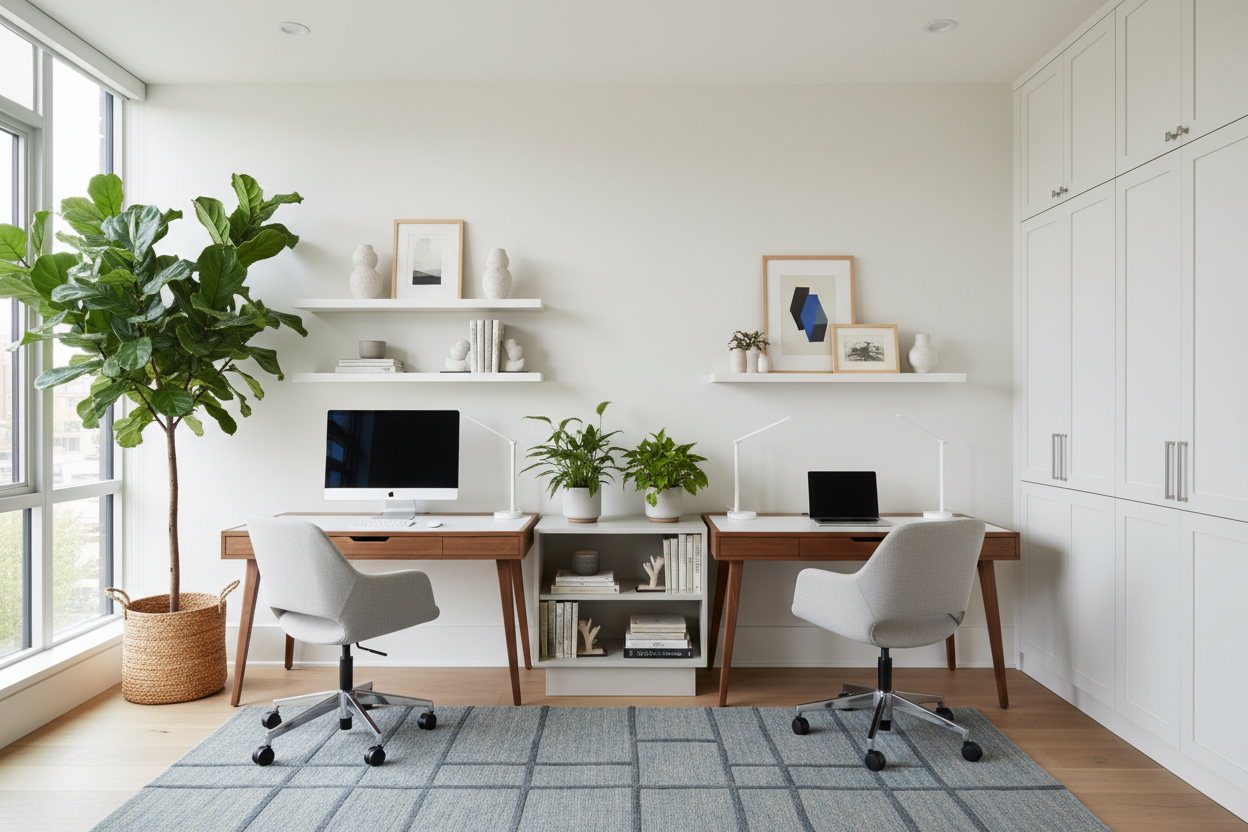
Designing a shared workspace is rarely as simple as placing two desks in a room and calling it a day. It is a complex exercise in psychology, ergonomics, and spatial planning. The challenge lies in balancing collaboration with privacy, ensuring that neither occupant feels cramped or distracted. Whether you are converting a spare bedroom or redesigning a corporate corner, the success of your project hinges entirely on the floor plan two person office layout you choose. This guide explores how to curate a space that respects individual workflow while maintaining a cohesive, professional aesthetic.
Quick Decision Guide: Key Layout Factors
Before purchasing furniture or knocking down walls, consider these critical elements to ensure your layout functions long-term:
- Traffic Flow & Clearance: Ensure a minimum of 36 to 48 inches behind each chair for comfortable movement without collision.
- Work Style Compatibility: Do users need to collaborate constantly (face-to-face) or focus individually (back-to-back or side-by-side)?
- Light Source Orientation: Position monitors perpendicular to windows to prevent glare, rather than directly facing or backing them.
- Power Access: Identify outlet locations early; floor-mounted outlets or desk-integrated power grommets prevent trip hazards.
- Acoustics: In shared spaces, soft surfaces (rugs, acoustic panels, upholstered chairs) are essential to dampen voice reverberation.
Strategic Layout Configurations
The Face-to-Face Island
Placing two desks together in the center of the room creates a commanding focal point. This layout is ideal for partners who collaborate frequently. However, it requires a larger footprint to allow for circulation around the entire perimeter. If you choose this route, ensure the desk depth is substantial—at least 30 inches per side—to prevent accidental kicking under the table and to provide adequate monitor separation.
The T-Shape Arrangement
For a small floor plan two person office layout, the T-shape is often the unsung hero. By positioning one desk against a wall and the second perpendicular to it, you utilize the room's length rather than its width. This setup defines distinct zones without requiring physical dividers, allowing for shared reference material or a printer to sit at the intersection of the two surfaces.
The Perimeter Setup (Side-by-Side)
Running a continuous work surface along one long wall is excellent for maximizing floor space. It opens up the center of the room for a lounge chair or a shared meeting table. The caveat here is visual distraction; looking at a wall can feel stagnant. I recommend installing floating shelves or artwork above the monitors to add depth and visual interest to the vertical plane.
Materiality and Visual Weight
The materials you select dictate how "heavy" the room feels. In a shared office, visual clutter doubles. To combat this, consider legs with a slim profile or open metal frames rather than heavy, solid wood pedestal desks which can make the room feel boxy.
If you opt for natural wood, ensure the grain direction aligns across both workstations for a sense of continuity. For high-traffic shared spaces, high-pressure laminate (HPL) or Fenix finishes offer superior resistance to scratches and coffee rings compared to wood veneers, which require more delicate care.
Ergonomics and Personal Space
Symmetry looks beautiful in photos, but functionality often requires asymmetry. One user might need dual monitors while the other works from a laptop. Ensure your floor plan allows for these differences without making the room feel lopsided. Using matching task chairs is a simple trick to maintain visual cohesion even if the desk setups differ. Pay close attention to the "elbow room"—a minimum of 30 inches of desk width per person is necessary, but 48 inches is the luxury standard for feeling uncrowded.
Lessons from My Own Projects: The "Monitor Wall" Mistake
Early in my career, I designed a home office for a couple of attorneys. We selected a stunning, custom walnut partner's desk where they would face each other. It looked incredible on the plan. However, I failed to account for the evolution of technology. Within six months, they both upgraded to ultra-wide curved monitors.
The result? They were essentially sitting behind a wall of black plastic, unable to see each other, yet close enough to hear every breath. The intimacy of the face-to-face layout was ruined by the hardware. We eventually had to pivot the layout to a side-by-side arrangement against the window wall. The lesson I learned is that hardware dictates the layout just as much as the room dimensions. Now, I always ask clients to measure their screen height and width before we finalize the floor plan. If you use large screens, avoid face-to-face layouts unless the desk is exceptionally deep.
Conclusion
Creating a functional shared office is about negotiating territory and respecting workflow. By prioritizing clearance distances and selecting materials that reduce visual bulk, you can design a space that fosters productivity rather than friction. Measure your equipment, map out your electrical needs, and build a layout that works for the way you actually work.
Frequently Asked Questions
What is the minimum room size for a two-person office?
Ideally, you need a room that is at least 10x10 feet to accommodate two desks and necessary circulation. For a small floor plan two person office layout, you might manage with 8x10 feet if you utilize a built-in perimeter desk, but this leaves little room for additional storage.
How do I manage noise in a shared office floor plan?
Hard surfaces bounce sound. To mitigate noise, introduce an area rug that covers at least 70% of the floor. Additionally, consider acoustic felt pinboards above desks or heavy velvet drapery on windows. If the echo is significant, acoustic ceiling baffles are a modern, architectural solution.
Should desks face the wall or the room?
Facing the room (the "command position") creates a sense of authority and reduces anxiety, as you can see the door. However, facing the wall is generally better for deep focus work as it minimizes visual distractions from your office partner. The choice depends on whether your work requires collaboration or deep concentration.


Dejar un comentario
Este sitio está protegido por hCaptcha y se aplican la Política de privacidad de hCaptcha y los Términos del servicio.