










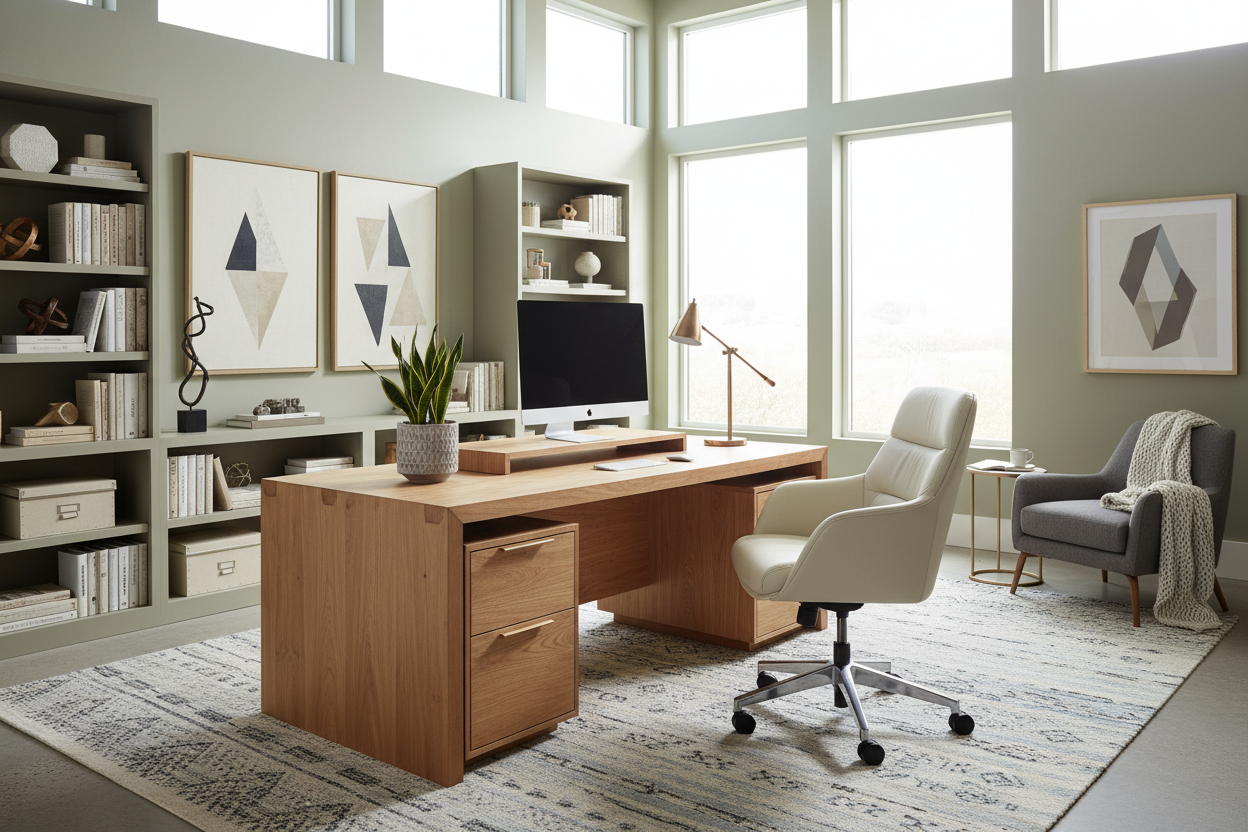
We have all experienced the fatigue of working in a space that feels temporary or sterile. Whether you are in a corporate high-rise or a converted spare bedroom, the environment you inhabit directly influences your cognitive output and emotional well-being. The challenge lies not just in filling a room with furniture, but in curating decor for office spaces that balances professional functionality with personal comfort.
Key Features to Look For
Before purchasing specific items, evaluate your potential decor against these core design principles to ensure longevity and utility:
- Ergonomics First: Aesthetic appeal should never compromise posture. Look for chairs with lumbar support and desks at appropriate typing heights.
- Material Tactility: Incorporate mix-materials like wood, leather, or textured fabrics to prevent the space from feeling cold or clinical.
- Lighting Layers: Ensure you have a mix of ambient (overhead), task (desk lamp), and accent lighting to reduce eye strain.
- Acoustic Control: Soft furnishings like rugs and curtains are essential office room decoration items that dampen echo and reduce noise distractions.
Establishing the Layout and Flow
The foundation of exceptional office room decor begins with spatial planning. A common error is pushing the desk flush against a wall, leaving the occupant staring at blank paint. If space permits, position your desk perpendicular to a window or in a 'command position' facing the door. This layout reduces subconscious anxiety and allows natural light to wash over your work surface rather than creating glare on your monitor.
Selecting Materials: The Balance of Home & Office Decor
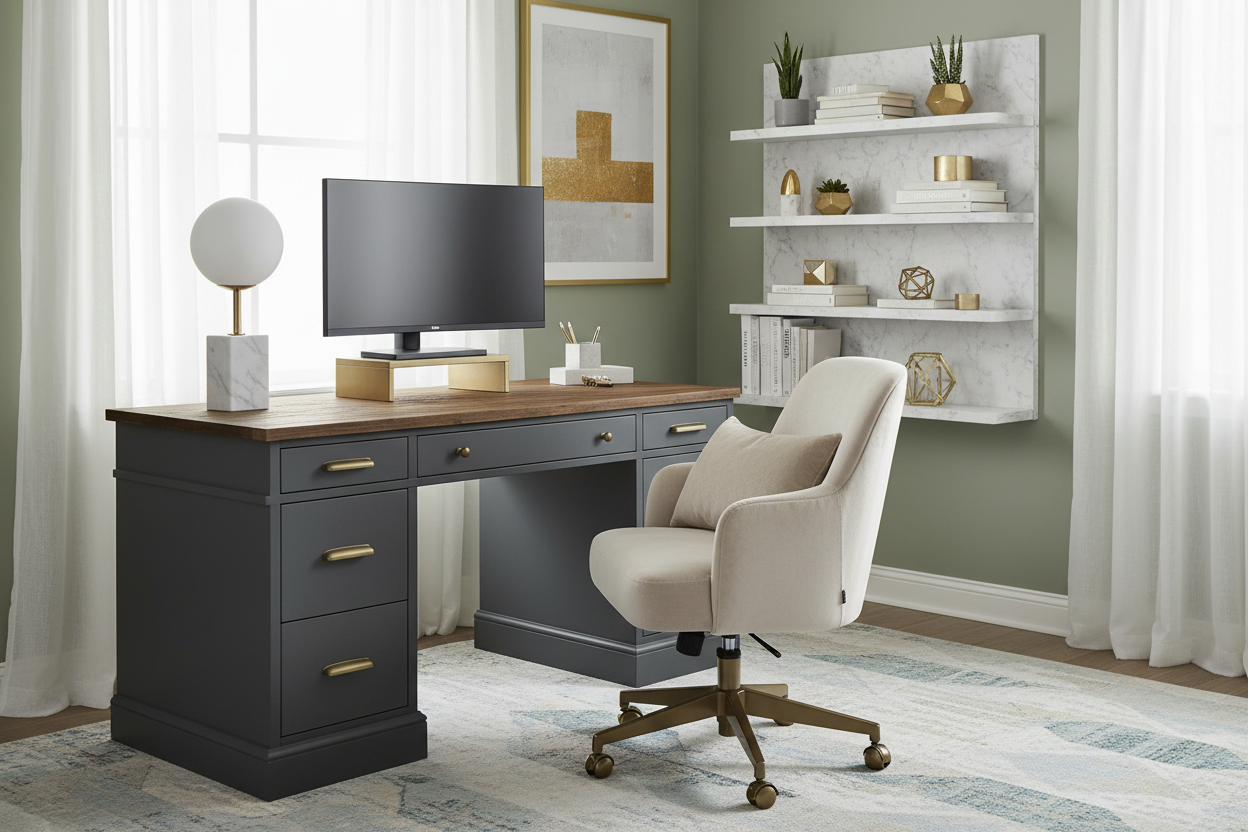
When selecting home decor for office integration, blur the lines between residential comfort and commercial durability. Solid wood desks offer a grounding, substantial feel that veneer often lacks, though high-pressure laminates have come a long way in resisting coffee rings and scratches.
For seating, consider the 'rub count' of the fabric. Commercial offices decor usually requires 50,000+ double rubs, but for a private office, you can opt for softer velvets or bouclés that add texture and warmth, making the room feel less like a cubicle and more like a library or study.
Visual Balance and Styling
Styling office decoration items requires restraint. A cluttered visual field leads to a cluttered mind. Utilize the 'triangle rule' when styling bookshelves or floating shelves: arrange objects in groups of three, varying the height and texture. For example, pair a tall structural vase, a mid-sized stack of books, and a low organic paperweight.
Don't neglect the walls. The office room decor should include large-scale art or a gallery wall that provides a focal point away from the screen. This allows your eyes to rest and refocus, which is crucial for maintaining creativity throughout the day.
Lessons from My Own Projects
I learned a hard lesson early in my career regarding office room decorations and surface finishes. I once specified a stunning, high-gloss black lacquer desk for a client who wanted a 'sleek, executive' look. It looked incredible in the rendering.
However, within two weeks of installation, the client called me. The issue wasn't the look—it was the usability. The high-gloss finish acted like a mirror for the overhead recessed lighting, creating a glare that caused massive eye strain. Furthermore, the surface was a magnet for fingerprints; simply resting a hand on the desk left a smudge. We ended up having to commission a custom matte leather desk blotter to cover 60% of the surface just to make it usable. Now, I always advise clients to test surface samples under task lighting before committing to high-gloss finishes in work zones.
Conclusion
Transforming your workspace isn't about buying the most expensive furniture; it is about intentionality. By selecting the right decor for office environments—focusing on lighting, material warmth, and ergonomic layouts—you create a space that respects your workflow and elevates your daily experience.
Frequently Asked Questions
How do I decorate a small office without cluttering it?
Focus on vertical storage and wall-mounted office room decoration items. Use floating shelves to keep the floor clear and choose furniture with exposed legs (like a writing desk rather than a pedestal desk) to maintain a sense of openness.
What is the best color temperature for office lighting?
Aim for a color temperature between 3500K and 4000K. This range mimics natural daylight, which promotes alertness and focus. Avoid warm white (2700K) as it can be too relaxing, or cool daylight (6000K+) which can feel harsh and clinical.
Is it worth investing in a rug for a home office?
Absolutely. A rug anchors the furniture, defines the zone within a larger room, and crucially, improves acoustics. Ensure the rug is large enough that your chair casters don't catch on the edge when you roll back.

Dejar un comentario
Este sitio está protegido por hCaptcha y se aplican la Política de privacidad de hCaptcha y los Términos del servicio.