










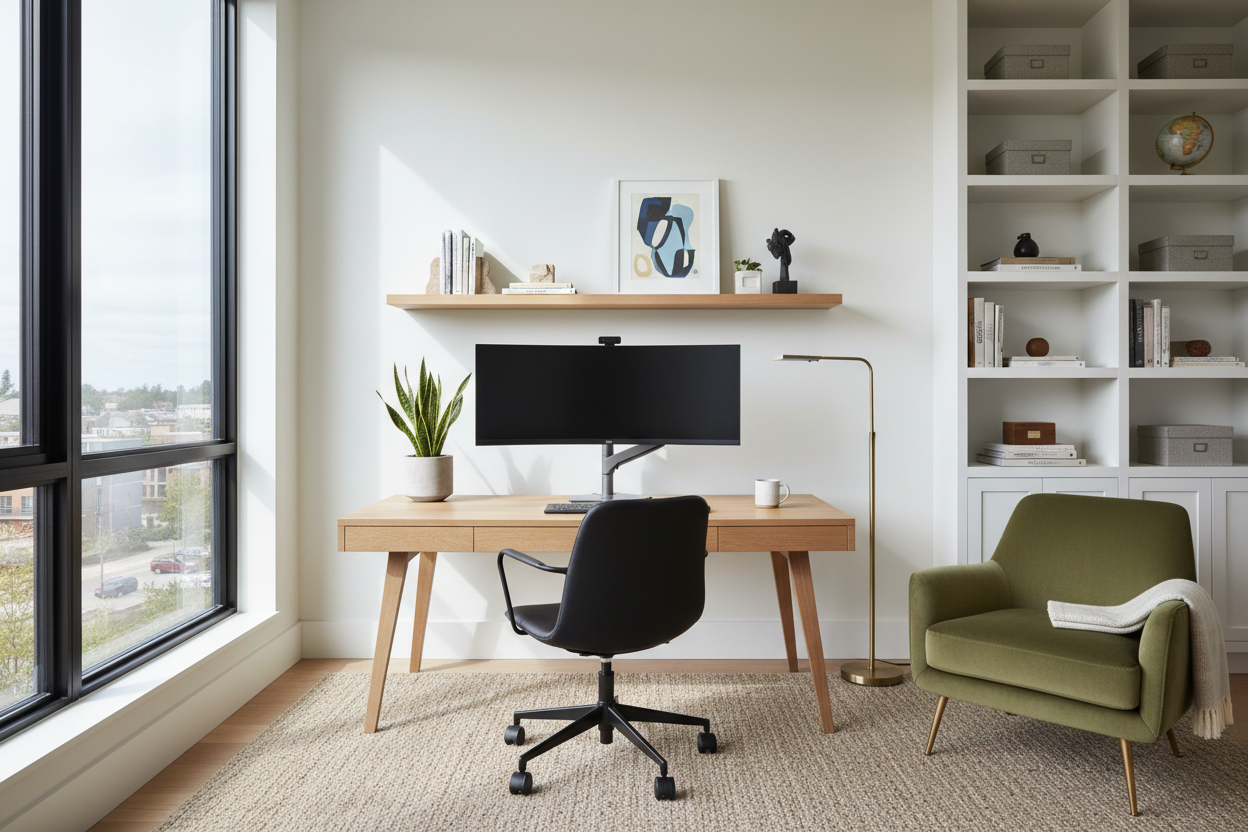
We have all been there: trying to conduct a professional video call while balancing a laptop on a dining room table, or struggling to focus in a corner cluttered with household debris. The shift to remote work has turned dedicated home offices from a luxury into a necessity. But creating a space that balances professional functionality with residential comfort is a nuanced design challenge. It is not just about fitting a desk into a room; it is about crafting an environment that sustains your energy and focus throughout the day.
Key Features of a High-Performance Workspace
- Ergonomics First: Prioritize an adjustable chair with lumbar support and a desk at the correct typing height (usually 28-30 inches).
- Lighting Layers: Combine ambient overhead light with focused task lighting to reduce eye strain.
- Material Durability: Choose work surfaces like solid wood or high-pressure laminate that resist heat and scratches.
- Acoustics: Incorporate soft furnishings (rugs, curtains) to dampen echo and absorb sound.
- Storage Solutions: Vertical shelving or credenzas to maintain a clean visual field.
Mastering the Layout and Flow
When I consult on residential projects, the first thing we address is orientation. Many images of home office ideas you see online position the desk facing a wall. While space-efficient, this can feel confining. If square footage allows, I always recommend 'floating' the desk. This commands the room and allows you to face the door, a principle known as the 'command position' in design psychology.
However, if you must face a wall, functionality is key. Ensure you have a minimum of 48 inches behind your chair to slide back comfortably. When browsing photos of home offices for inspiration, notice how the best layouts account for traffic flow—you should never have to squeeze past furniture to get to your workstation.
Selecting Materials: Beyond the Aesthetic
The tactile experience of your furniture defines the quality of your workday. While a glass desk might look sleek in a home office picture, it is often impractical for daily heavy use. Glass is cold to the touch, shows every fingerprint, and lacks the acoustic dampening of wood.
Solid Wood vs. Veneer
For a sense of permanence and warmth, solid hardwoods like walnut or white oak are superior. They can be refinished if scratched. However, high-quality wood veneers are an excellent alternative if you want the look of grain without the weight or cost. Avoid cheap thermofoil finishes; they tend to peel at the edges over time, ruining the look of your space.
Visual Styling and Lighting
Lighting is the unsung hero of awesome home office design. Relying solely on a ceiling fixture creates harsh shadows that cause fatigue. You need a mix. I recommend a dedicated task lamp with an adjustable arm for your desk surface. When looking at home office pics for styling cues, observe how designers use floor lamps to add warmth to corners.
Furthermore, consider the background of your video calls. This is your digital storefront. Instead of a blank wall, curate a bookshelf or hang art that reflects your personality. Real home office pictures often feature plants; this isn't just a trend. Biophilic design (bringing nature indoors) is proven to lower stress levels.
My Personal Take on Home Offices
I learned a hard lesson early in my career regarding home office space images versus reality. I once designed a stunning, minimalist office for a client based on a high-gloss lacquer concept we saw in a magazine. It looked incredible in the photo of home office portfolios.
However, three months later, the client called me. The high-gloss surface was a nightmare. It reflected the overhead lights directly into his eyes, causing glare on his monitor, and the surface felt sticky during humid summer days. We ended up swapping it for a matte-finished rift-sawn oak desk. The lesson? Always prioritize the tactile feel and light reflectivity of a surface over how it looks in a static picture. A matte finish is almost always more forgiving and comfortable for a workspace than a glossy one.
Conclusion
Designing a home office is about more than just buying furniture; it is about engineering a space that respects your workflow. By focusing on ergonomic layouts, durable materials, and layered lighting, you create a sanctuary that fosters productivity. Don't just copy pictures of offices in homes; analyze them, adapt them, and build a space that works for you.
Frequently Asked Questions
How do I fit a home office into a small bedroom?
Look for images of home office setups in alcoves. Use vertical wall-mounted shelving to save floor space and consider a 'ladder desk' or a wall-mounted drop-leaf desk that can be tucked away when not in use.
What is the best color for a home office?
While home office photos ideas often show moody dark colors, these can absorb too much light for some. Sage greens and warm neutrals are generally best for focus and calmness without being sterile.
Is a standing desk worth the investment?
Absolutely. If you look at modern pics of home office trends, sit-stand desks are ubiquitous. The ability to change posture reduces back strain and keeps energy levels high throughout the day.

Dejar un comentario
Este sitio está protegido por hCaptcha y se aplican la Política de privacidad de hCaptcha y los Términos del servicio.