










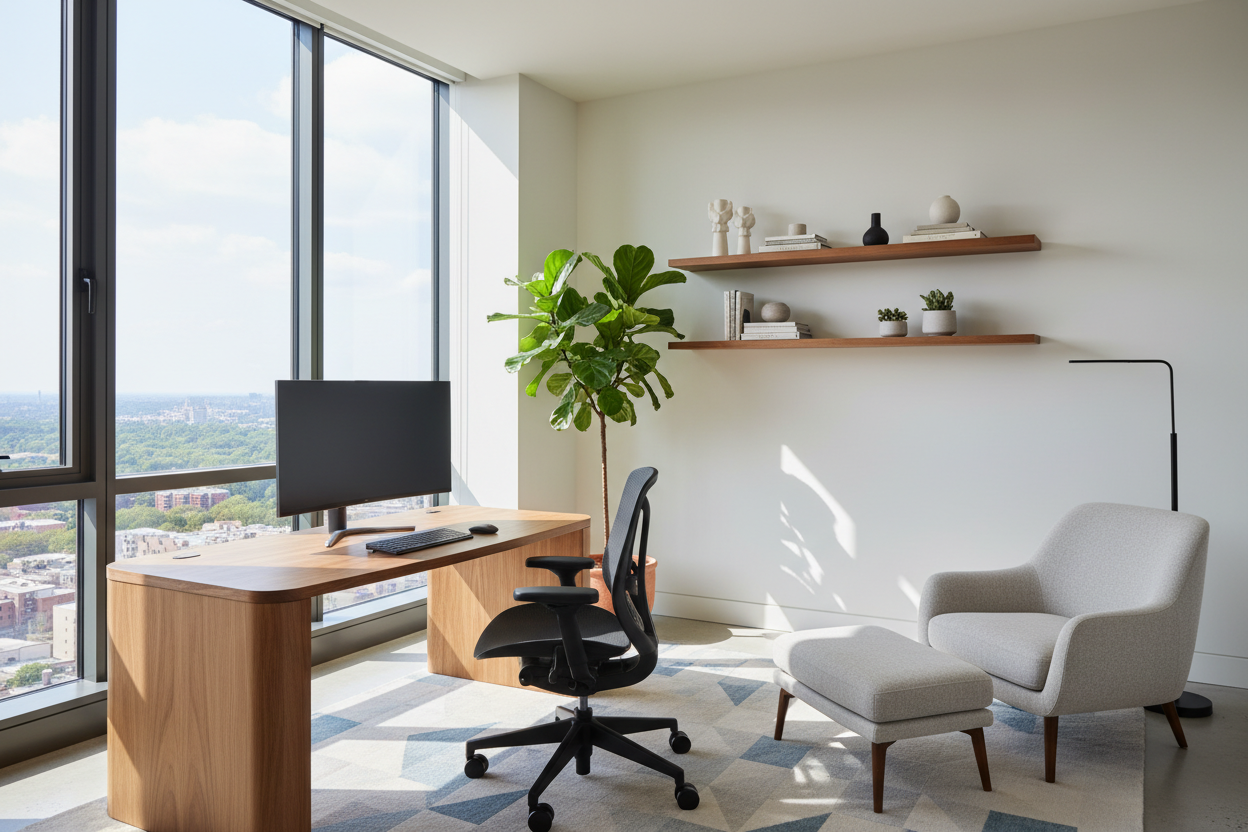
The transition from a corporate headquarters to a residential workspace is rarely as simple as opening a laptop on the kitchen island. As an interior designer, I have seen countless clients struggle with productivity simply because their environment contradicts their workflow. When you secure a job can do from home, the physical boundaries of your space define your mental clarity. It is not merely about finding a flat surface; it is about curating an environment that balances professional functionality with residential comfort.
Key Features of a High-Performance Home Office
- Ergonomic Integrity: Prioritize chairs with adjustable lumbar support and seat depth over purely aesthetic silhouettes.
- Material Durability: Choose desk surfaces (hardwood or high-pressure laminate) that resist heat from electronics and coffee rings.
- Lighting Layers: Combine ambient overhead lighting with focused task lighting to reduce eye strain.
- Acoustic Control: Incorporate textiles like rugs or upholstered panels to dampen echo during calls.
- Spatial Flow: Ensure a minimum of 36 inches of clearance behind your chair for movement.
The Anchor: Selecting the Right Desk Material
When curating a workspace, the desk is your focal point. The material you choose dictates both the longevity of the piece and the tactile experience of your workday. For jobs do from home that require heavy equipment or multiple monitors, I always recommend solid walnut or oak. Unlike veneer, which can chip and reveal the particleboard underneath, solid wood develops a patina over time and can be refinished.
However, if you are working with a tighter budget, look for thermally fused laminate (TFL). It mimics the grain of wood but offers superior scratch resistance—essential if your workspace doubles as a dining area.
Seating: The Intersection of Style and Ergonomics
The most common complaint I hear from clients who say "i need a job from home" is actually back pain developing within the first month. The mistake is often buying a chair that looks beautiful in a catalog but lacks engineering. Avoid unbreathable synthetics if you work long hours; they trap heat. Instead, look for a high-quality mesh backing or a top-grain leather that regulates temperature.
Visually, the chair should complement the room's palette, but mechanically, it must offer a synchro-tilt mechanism, allowing the seat and back to move in unison, supporting your posture through dynamic movement.
Lighting and Layout Strategy
Lighting is the unsung hero of the home office. Poor lighting leads to fatigue, which kills motivation for jobs to do from home. Avoid placing your desk directly facing a window, as the contrast between the bright outdoors and your screen causes eye strain. Instead, position the desk perpendicular to the window.
Layer your lighting. Start with a warm ambient light (2700K-3000K) for the room, and add a cool-toned task lamp (4000K) for your desk. This combination creates a professional atmosphere that looks excellent on video calls.
Defining the Zone in Small Spaces
Not everyone has a spare room. If you are thinking, "i need a job i can do from home but I live in a studio," the solution lies in zoning. Use a console table behind a sofa as a desk, or invest in a secretary desk that closes up to hide the clutter. This psychological separation is vital; being able to "close" the office helps maintain work-life balance.
Lessons from My Own Projects
I recall a specific project where a client was desperate to transition to remote work. She kept saying, "Need a job from home, need a change," but her setup was a glass dining table and a rigid wooden chair. We swapped the glass—which is cold to the touch and creates distracting reflections—for a matte-finish teak desk. The immediate change in the room's acoustics and the tactile warmth of the wood completely shifted her focus.
Personally, I learned a hard lesson about finishes in my own home office. I initially chose a high-gloss lacquer desk for its sleek, modern look. Within two weeks, the fingerprint marks and dust visibility drove me crazy. I spent more time wiping it down than designing. I replaced it with a textured oak veneer that hides dust and feels much more organic. Function must always precede form in a high-traffic zone.
Conclusion
Creating a dedicated workspace is an investment in your career longevity. By selecting durable materials, prioritizing ergonomic support, and thoughtful lighting, you elevate your daily experience. Whether you have a sprawling study or a compact nook, the right design choices turn a simple room into a productivity powerhouse.
Frequently Asked Questions
What is the ideal desk depth for a home office?
For standard laptop work, 24 inches is sufficient. However, if you use multiple monitors, aim for a depth of 30 inches to ensure the screens are at a comfortable viewing distance.
How do I choose a rug for a rolling chair?
Select a low-pile rug or a flat-weave construction. High-pile or shag rugs will catch the casters, making movement difficult and damaging the rug fibers over time.
Can I use a dining chair for my desk?
Generally, no. Dining chairs lack the lumbar support and adjustability required for 8-hour workdays. If you must use one for aesthetic reasons, add a dedicated lumbar pillow and ensure the seat height aligns with your elbows at a 90-degree angle.


Dejar un comentario
Este sitio está protegido por hCaptcha y se aplican la Política de privacidad de hCaptcha y los Términos del servicio.