










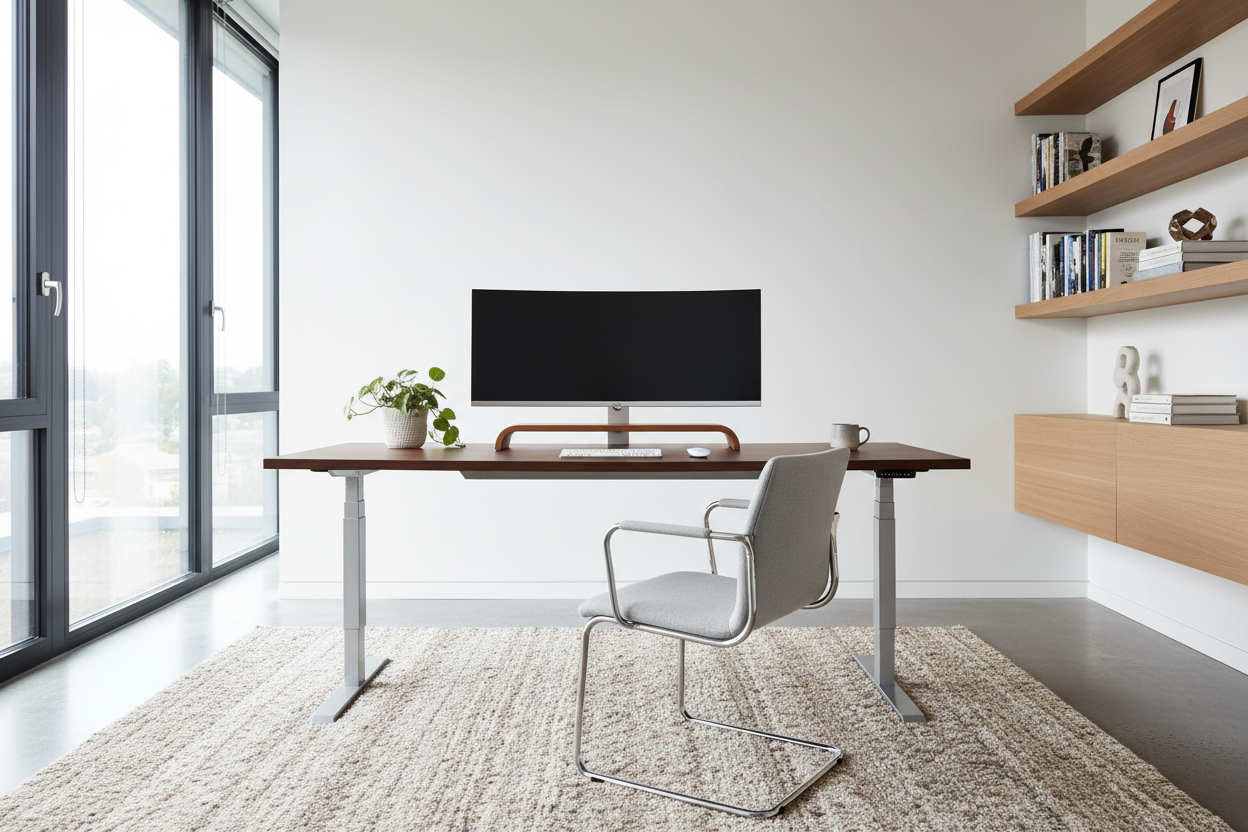
Integrating a workspace into your home is rarely as simple as pushing a table against a wall. It requires a delicate balance between ergonomic necessity and the existing aesthetic narrative of your living space. The challenge many homeowners face is preventing the workspace from feeling sterile or clinical. When planning desks room layouts, the goal is to curate a piece that serves your workflow without disrupting the visual harmony of your sanctuary.
Key Features to Look For
- Scale and Proportion: Ensure the desk occupies no more than 15-20% of the room's floor space to maintain flow.
- Material Durability: Look for sealed hardwoods or high-pressure laminates if you use the surface daily.
- Cable Management: Integrated grommets or hidden channels are essential for maintaining a clean visual profile.
- Leg Clearance: A minimum of 24 inches of height clearance is required for standard ergonomic comfort.
Selecting the Right Silhouette for Your Space
The shape of your furniture dictates the flow of traffic. For a dedicated desk office room, an executive L-shaped configuration commands authority and offers ample surface area. However, in multi-purpose spaces, visual weight is the enemy. I often advise clients to look for residential desks with slender legs or open frame designs. These allow light to pass through, keeping the room feeling airy rather than cluttered.
Materiality and Texture
While a room to go computer desk might offer immediate convenience and budget-friendly pricing, consider the longevity of the materials. Veneers can be beautiful, but thin veneers over particle board may chip with heavy daily use. For a piece intended to last decades, solid walnut or oak provides a tactile richness that develops a patina over time. If you prefer a modern aesthetic, tempered glass is sleek but requires constant maintenance to remain smudge-free.
Placement: The "Power Position"
Where you place an office desk for room functionality is just as critical as the desk itself. Avoid facing a wall if possible; it creates a claustrophobic energy. Instead, position the desk perpendicular to a window to maximize natural light without causing screen glare. If space allows, floating the desk in the center of the room—facing the door—establishes a "command position" that feels more architectural and intentional.
My Personal Take on Desks Room Design
I learned a hard lesson early in my career regarding surface texture. I once specified a stunning, rough-hewn reclaimed wood desk for a client who was a graphic artist. Visually, it was a masterpiece that anchored the room perfectly. However, three days after installation, the client called me in frustration. The texture was so deep that he couldn't sketch or write on a single sheet of paper without his pen punching through or deviating.
We had to commission a custom glass top to overlay the wood, which compromised the matte look we were going for. Now, I always run the "fingernail test" on surfaces. If I can feel a ridge with my nail, it’s too rough for a writing surface without a blotter. It is these unpolished details—the tactile reality versus the visual ideal—that dictate whether a piece of furniture truly works in your daily life.
Conclusion
Selecting the right desk is an investment in your productivity and your home's atmosphere. By prioritizing scale, material integrity, and proper placement, you can create a workspace that feels like a natural extension of your home rather than an intruder.
Frequently Asked Questions
How do I hide cords on a floating desk?
If your desk is not against a wall, cord management is vital. I recommend using floor-mounted outlets if you are renovating. For existing spaces, use a cord cover that matches your flooring color or route cables down a leg using velcro ties facing away from the room's entrance.
What is the ideal depth for a residential desk?
For laptop work, 20 to 24 inches is sufficient. However, if you use multiple monitors or require space for physical documents, aim for a depth of 30 inches to prevent eye strain and clutter.
Can I use a dining table as a desk?
You can, but be mindful of height. Dining tables are typically 30 inches high, while the ergonomic standard for typing is often slightly lower (around 28-29 inches). You may need an adjustable chair that goes higher than standard dining chairs to compensate.

Dejar un comentario
Este sitio está protegido por hCaptcha y se aplican la Política de privacidad de hCaptcha y los Términos del servicio.