










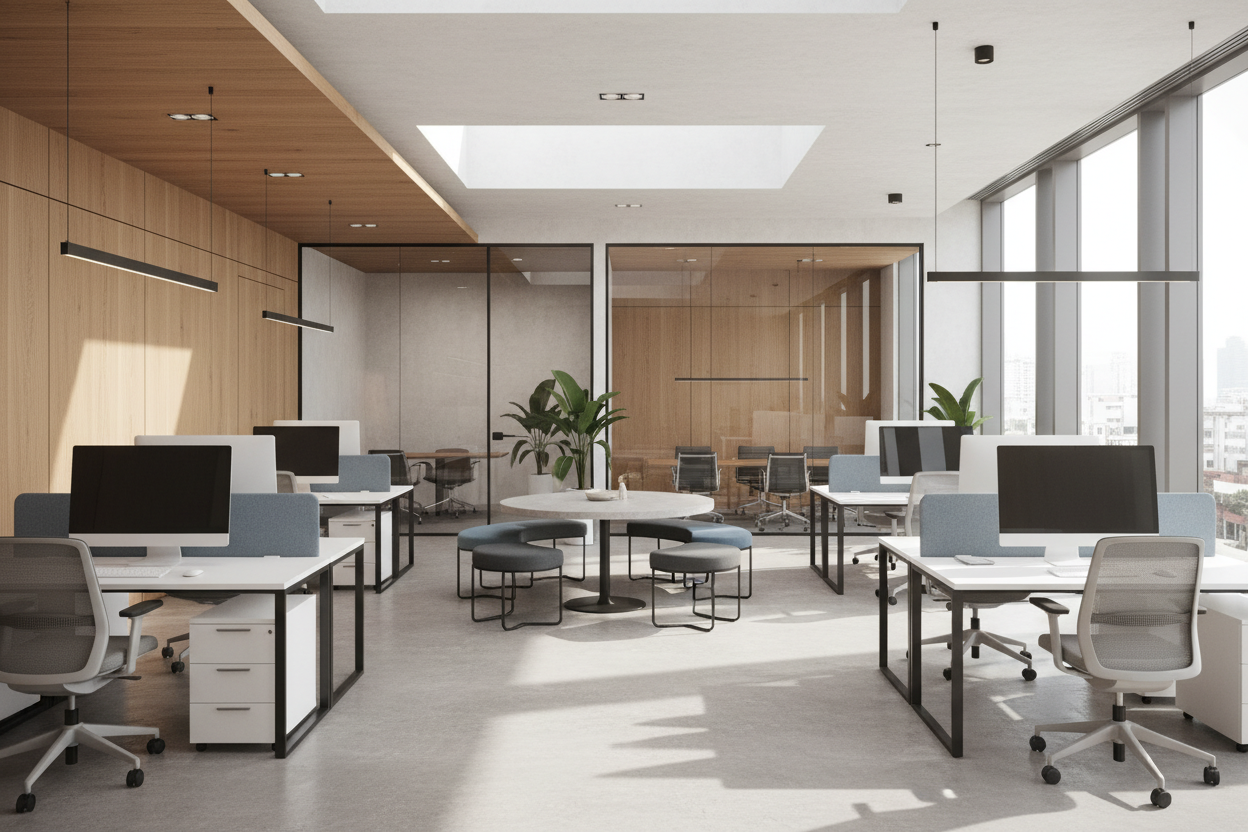
There is a misconception that a limited footprint equals limited potential. As a designer, I argue the opposite: a small office building offers a unique opportunity to curate a highly specialized, boutique environment that large corporate towers simply cannot replicate. The challenge lies not in the square footage, but in how you manipulate volume, light, and flow to create a space that feels expansive rather than restrictive. Whether you are retrofitting an existing structure or planning new construction, the intersection of architecture and interior fit-out is where your brand identity is truly forged.
Key Features to Look For
Before breaking ground or signing a lease, consider these fundamental elements that dictate the success of a compact workspace:
- Glazing and Light Penetration: Floor-to-ceiling windows maximize natural light, reducing the need for artificial ambient lighting and visually expanding the space.
- Column-Free Interiors: Modern engineering allows for wider spans; avoiding internal structural columns provides flexibility for furniture layouts.
- Vertical Volume: High ceilings allow for vertical storage and acoustic baffles, preventing the space from feeling claustrophobic.
- Integrated Tech Infrastructure: In small builds, messy cabling is more visible. Look for raised floors or perimeter trunking to hide data lines.
Defining the Shell: Modern Small Office Buildings
The architecture of modern small office buildings sets the stage for everything inside. Unlike sprawling campuses where you can hide design flaws in distant corridors, a small building exposes every detail. We are seeing a shift away from compartmentalized layouts toward simple small office building design philosophies that utilize glass partitions and industrial materials.
Materiality and Visual Weight
When dealing with small office construction, the materials you choose for the shell heavily influence the furniture selection. If your building features exposed concrete or brick (common in modern makeovers), you need to balance that visual heaviness with lighter furniture profiles. I often advise clients to pair raw architectural elements with warm walnut veneers or matte black metal finishes to create a sophisticated, grounded aesthetic without overcrowding the visual field.
Space Planning and Layout Strategies
Small office building design ideas often fail when they try to mimic large office layouts on a micro scale. You cannot simply shrink a boardroom; you must reimagine it.
The Multi-Functional Hub
In a compact building, single-use rooms are a luxury you rarely have. Instead of a dedicated conference room that sits empty 80% of the time, consider a library-style layout with a large, communal table. This serves as a breakout space, a lunch spot, and a meeting zone. Acoustically, this requires high-quality soft furnishings—think wool-upholstered banquettes or acoustic lighting fixtures—to dampen sound reverberation, which is notoriously difficult to manage in smaller volumes.
Ergonomics in Tight Quarters
Modern small office building design demands furniture that is scaled correctly. A standard executive desk (often 72 inches wide) can dominate a small room. Opt for 60-inch desks with deeper returns. The goal is to maintain a minimum 36-inch circulation path between zones. If staff have to squeeze sideways to pass a colleague, the design has failed, regardless of how beautiful the aesthetic is.
Lessons from My Own Projects
I recently consulted on a modern small office building project for a tech boutique in a converted shipping container complex. On paper, the small office building design looked flawless—sleek, industrial, and minimal. However, once we moved the furniture in, we realized a critical oversight: the HVAC ductwork.
Because the ceiling height was barely eight feet, the exposed ducts created a visual "ceiling" that felt incredibly oppressive once seated. I had to make a last-minute pivot, swapping out high-back executive chairs for mid-back mesh profiles and changing the dark walnut tabletops to a light ash. It sounds minor, but that shift in color and silhouette "lifted" the room. It taught me that in small buildings, the vertical plane is just as important as the floor plan. If you don't account for what's hanging above your head, even the most expensive furniture will feel cramped.
Conclusion
Designing a small office building is an exercise in restraint and precision. By focusing on verticality, choosing furniture with a light visual footprint, and embracing multi-functional zones, you can build a workspace that punches well above its weight class. It is not about hiding the size of the building; it is about celebrating the intimacy and focus it provides.
Frequently Asked Questions
How do I reduce noise in a small office building with an open plan?
Acoustics are vital. Incorporate sound-absorbing materials like acoustic ceiling baffles, carpet tiles in high-traffic areas, and upholstered partitions between desks. Even heavy velvet curtains on glass walls can significantly reduce echo.
Is custom joinery worth the investment for small offices?
Absolutely. In small spaces, off-the-shelf storage often leaves "dead space" in corners or above units. Custom built-ins maximize every inch of vertical and horizontal space, providing a cleaner, more architectural look.
What is the best color palette for small office interiors?
While white is the go-to for expanding space, it can feel clinical. I recommend "greige" (warm gray) or soft taupe tones for walls, paired with a darker ceiling (like charcoal) if you have high ceilings, as this adds drama without shrinking the room.

Dejar un comentario
Este sitio está protegido por hCaptcha y se aplican la Política de privacidad de hCaptcha y los Términos del servicio.