










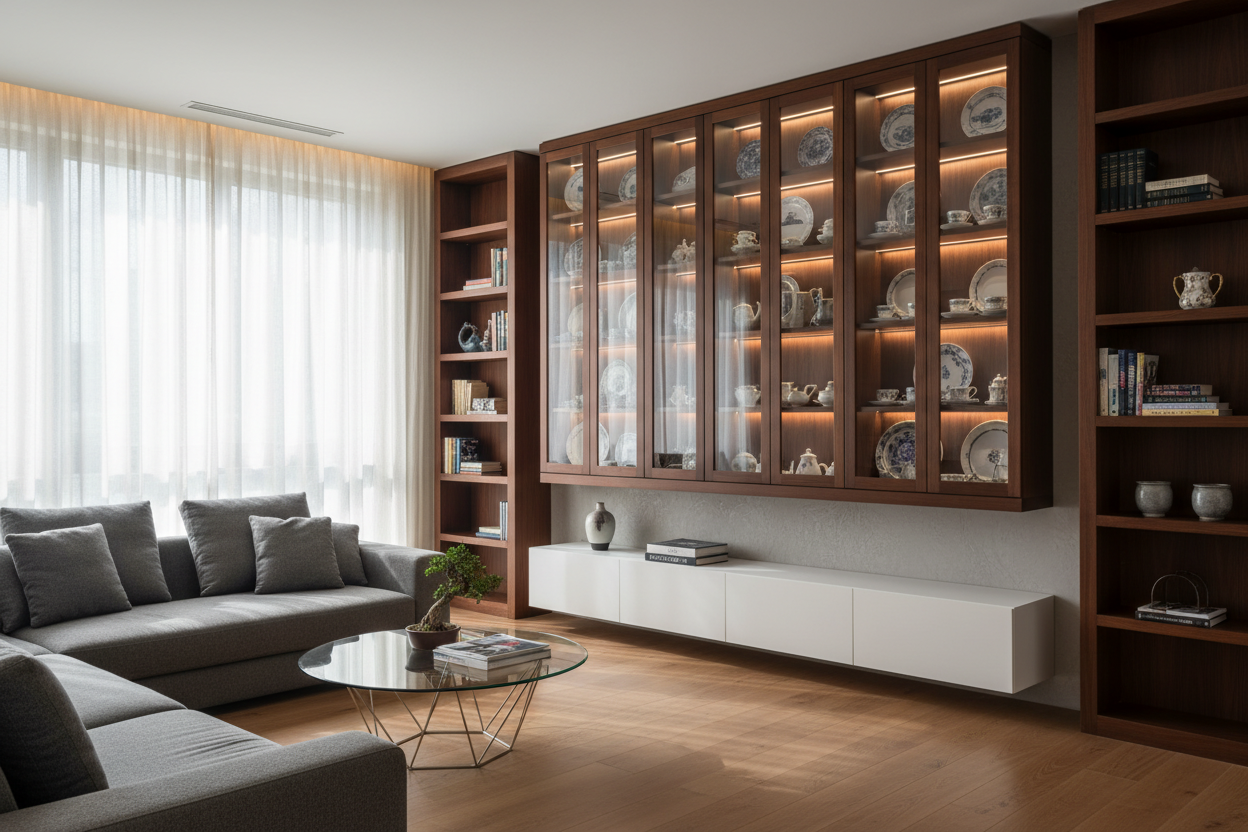
I remember walking into a client's new condo last year. She'd just downsized from a large suburban home and was staring at her collection of heirloom teacups, looking completely lost. 'Where do I put these now?' she asked. The floor space was precious, but the walls were tall and bare. That's when I suggested her first wall mounted china cabinet. It wasn't just storage; it became the focal point of her entire dining nook.
If you're dealing with a small dining area, an awkward hallway, or just want to free up floor space, hanging your display is the smart move. Here's what I've learned from installing these in over 200 homes.
Quick Takeaways
- Always locate and anchor into wall studs, not just drywall, for safety.
- For a balanced look, the cabinet width should be roughly 2/3 the width of the wall it's on.
- Integrated LED strip lighting is easier to install and gives a cleaner look than puck lights.
- Leave at least 30 inches of clearance from the bottom of the cabinet to any furniture below for access.
Why Wall Mounted China Cabinets Are a Designer's Secret Weapon
Let's be honest: a bulky freestanding curio can dominate a room. I've seen them make a 12x14 dining room feel cramped. A wall-mounted version solves this by creating visual space. Your eye travels up the wall, making the ceiling feel higher, while the floor stays completely clear for traffic flow. This is crucial in open-concept North American homes where the dining area flows into the living room. You need that 36-inch walkway to remain unobstructed.
The design flexibility is the real win. In a traditional dining room, a display cabinet on wall holds your formal china. In a modern loft, the same piece can display art glass or vinyl records. It's a chameleon. I once used a long, low wall hung china cabinet in a narrow galley kitchen to store colorful glassware, turning a purely functional wall into a design feature.
Choosing Your Perfect Wall Mounted Curio: A Buyer's Checklist
Start with your wall. Measure its width and height. For a standard 8-foot wall, a cabinet between 36 and 48 inches wide works well. Next, consider depth. A shallow cabinet, around 8 inches deep, is perfect for plates and shallow collectibles. For deeper items like vases, look for 12 to 15 inches.
Lighting is non-negotiable for display. Integrated LED strips are my go-to. They're low-profile, energy-efficient, and cast even light without hot spots. Some clients love the dramatic effect of a black cabinet with glass doors paired with warm LED lighting—it makes everything inside pop.
Glass matters. Doors should be tempered safety glass. Clear glass offers maximum visibility, while frosted or reeded glass adds texture and softens the view of cluttered shelves. For the frame, solid wood or high-quality MDF with a wood veneer will hold up over time, unlike cheaper particleboard that can sag. A clean-lined, white wall mounted glass cabinet suits most contemporary spaces, while a piece with crown molding fits traditional decor.
The Installation Guide: Getting It Right and Keeping It Safe
This is the most important step. A poorly installed cabinet is a hazard. You'll need a stud finder. Studs are typically 16 inches apart, center-to-center, in North American homes. The cabinet's mounting bracket must be secured directly into at least two studs.
For a typical medium-sized cabinet holding 50-75 pounds of items, use 3-inch long, #10 or #12 wood screws. For a large wall curio cabinet that's deeper and holds heavier collectibles, consider using lag bolts. Always use a level during installation—don't trust your eye. If your wall is plaster, pre-drill holes to prevent cracking. I keep a box of different length screws and a variety of wall anchors in my kit for those tricky situations where a stud is just slightly off.
Beyond the Dining Room: Creative Placement Ideas
Don't box yourself into one room. In a living room, a wall mounted curio display cabinet above a console table is perfect for a curated collection of travel souvenirs or vintage cameras. It adds personality without taking up sofa space.
Hallways are wasted space. A series of small wall curios, staggered at different heights, can turn a boring pass-through into a mini art gallery. In a home office, use one to display awards, certifications, or a prized collection—it's more interesting than a plain diploma frame.
Awkward corners are prime real estate. A wall mounted corner display cabinet utilizes that dead space beautifully, especially in a bedroom for displaying delicate perfume bottles or jewelry boxes.
Styling Your Wall Hung China Display Cabinet Like a Pro
Think of each shelf as a vignette. Start with your largest items in the back, medium in the middle, and smallest up front to create depth. Group items by color or material for a cohesive look. For example, cluster all your white porcelain together, then add a group of cobalt blue glass.
Texture is key. Mix the smooth surface of china with the rough weave of a small basket or the organic shape of a piece of driftwood. In a tall white china curio cabinet, I often style the top shelves with airier items and place heavier, more substantial pieces on the bottom for visual stability. Turn on the lights even during the day—it adds a layer of warmth and makes your items look special.
Personal Experience: The Honest Downside
I love these cabinets, but they're not for every collection. The biggest limitation is weight capacity. You can't load them like a floor-standing unit. I had a client who inherited a massive set of stoneware dinner plates. Each plate weighed over 3 pounds. A wall-mounted unit wasn't safe for that load. We ended up using a sturdy sideboard for storage and used the wall cabinet for her lighter teacups. It's about choosing the right tool for the job.
FAQ
Can I install a wall mounted china cabinet on drywall without a stud?
Never. Drywall anchors are for pictures, not furniture holding weight. You must find and screw into the wooden studs behind the drywall. It's the only safe method.
How high should I hang it?
The bottom of the cabinet should be at least 48 inches from the floor if it's going over a piece of furniture like a sideboard. If it's on a bare wall, you can go lower, but never lower than 30 inches from the floor to avoid it feeling cramped.
What's the difference between a curio and a china cabinet?
Traditionally, a china cabinet has solid lower doors for hiding less-attractive items, while a curio is all glass for 360-degree viewing. Today, the terms are often used interchangeably for wall-mounted units, which are typically all-glass for display.
Can I add lighting to a cabinet that doesn't have it?
Yes, but it's a project. Battery-operated LED puck lights are an option, but you'll be changing batteries. The cleanest method is to hire an electrician to run a wire inside the wall to an outlet, allowing you to install a hardwired LED strip.


Dejar un comentario
Este sitio está protegido por hCaptcha y se aplican la Política de privacidad de hCaptcha y los Términos del servicio.