










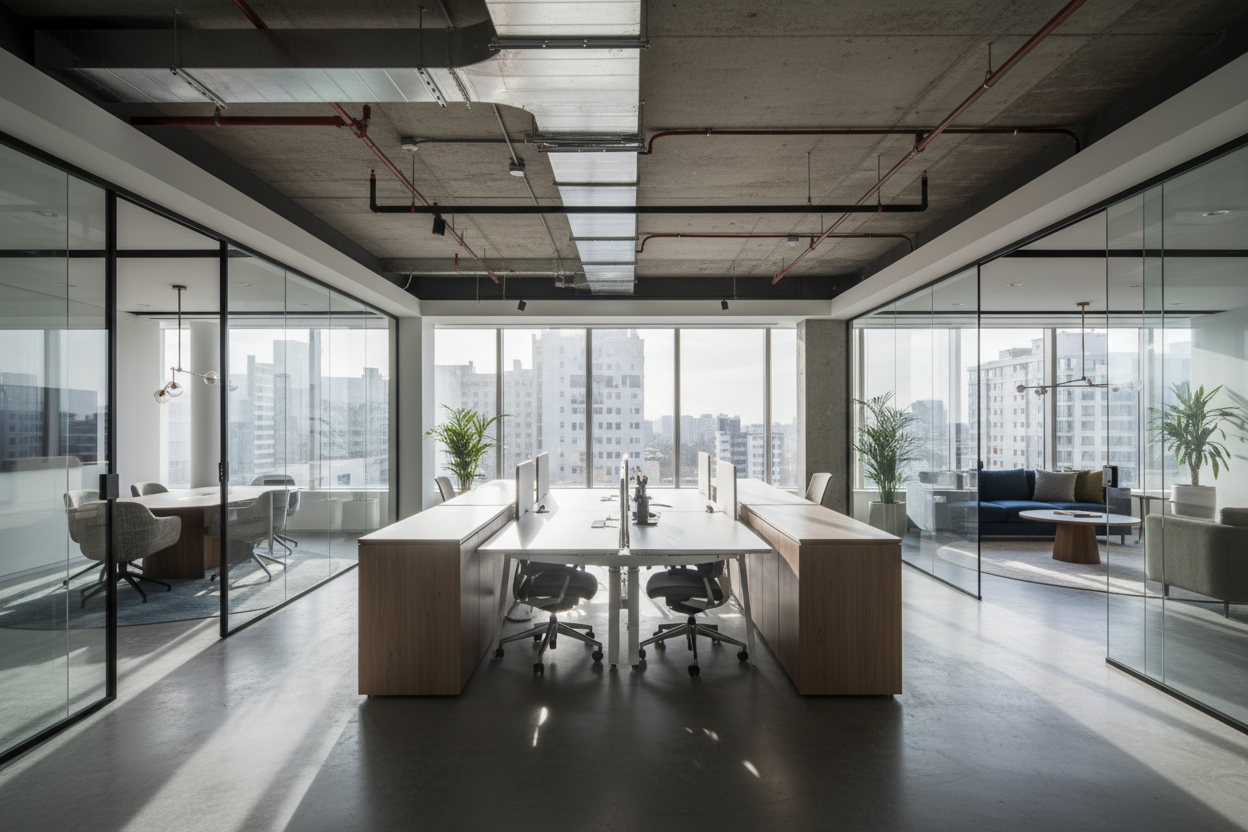
The physical environment where your team gathers is more than just square footage; it is a tangible manifestation of your corporate culture. Many business owners treat company building design as a purely logistical exercise, focusing solely on desk counts and meeting room capacities. However, as a designer, I see the workspace as a tool for retention and productivity. If the layout feels sterile or the acoustics are chaotic, talent walks out the door. Whether you are retrofitting an existing space or starting a new office building design from the ground up, the goal is to balance aesthetic appeal with rigorous functionality.
Quick Decision Guide: The Essentials
- Zoning & Flow: Establish clear distinctions between collaborative hubs and deep-work quiet zones to prevent acoustic bleed.
- Material Durability: Prioritize commercial-grade fabrics (50,000+ double rubs) and high-pressure laminates or solid surfaces for high-traffic touchpoints.
- Lighting Temperature: Layer ambient lighting (3000K-3500K) with task lighting to reduce eye strain and avoid the clinical "hospital" feel.
- Ergonomics: Invest in adjustable furniture that accommodates diverse body types and working styles.
- Infrastructure Integration: Ensure office construction design accounts for seamless power and data access in flooring or furniture bases.
Defining the Spatial Narrative
Before selecting a single piece of furniture, we must address the architectural shell. Successful office building design relies on "collision points"—areas strategically placed near coffee stations or printers that force cross-departmental interaction. However, these zones must be visually and acoustically separated from heads-down work areas.
The "Resimercial" Approach
The stark line between home and office has blurred. The current standard in high-end design is "Resimercial"—bringing the comfort of residential furniture into a commercial setting. We achieve this by swapping stiff, corporate seating for lounge chairs with softer silhouettes and tactile fabrics like wool blends or felt. However, the internal structure must remain contract-grade to withstand daily abuse.
Materiality: Visual Warmth vs. Commercial Reality
When executing office construction design, the finishes you choose dictate the maintenance budget for the next decade. While natural stone and untreated wood look stunning in a rendering, they are often impractical for a company building.
For conference tables and reception desks, I recommend engineered quartz or high-quality wood veneers with a catalyzed conversion varnish. These finishes resist the dreaded "coffee ring" and maintain their luster without constant polishing. For flooring, consider luxury vinyl tile (LVT) in high-traffic corridors for durability, transitioning to carpet tiles with heavy face weights in workstations to dampen sound.
Lighting and Biophilia
Lighting is the most underestimated element in company building design. Relying solely on overhead grid lighting creates shadows and fatigue. A sophisticated lighting plan layers suspension fixtures to lower the visual ceiling height, making expansive spaces feel intimate. Pair this with biophilic elements—not just a potted plant, but integrated green walls or preserved moss insets—to soften the hard lines of office architecture and improve air quality perception.
Lessons from My Own Projects
A few years ago, I designed a headquarters for a fintech firm that insisted on a sleek, all-glass aesthetic. They wanted a massive, high-gloss black lacquer conference table to serve as the room's focal point. I advised against it, warning about maintenance, but the CEO loved the "drama" of the reflective surface.
Three months post-installation, I visited for a follow-up. The table was a disaster. It wasn't just scratches; it was the fingerprints. Every time someone rested their hand on the table or set down a laptop, it left a greasy smear that was visible from across the room. The office manager told me she had to wipe it down five times a day. We eventually had to retrofit the top with a matte, anti-fingerprint laminate overlay. The lesson? In a working building, texture is your friend. Matte, honed, and textured finishes hide the reality of daily use, keeping the space looking pristine between cleaning cycles.
Conclusion
Great design is an investment in your workforce's daily experience. By focusing on durable materials, layered lighting, and intuitive layouts, you create a space that supports the work rather than hindering it. Don't just build an office; curate an environment where people actually want to spend their time.
Frequently Asked Questions
How do I balance open-plan design with privacy?
The solution lies in acoustic furniture. Utilize high-backed booth seating, acoustic felt baffles suspended from the ceiling, and mobile partitions to create "rooms within rooms" without building permanent walls.
What is the most durable fabric for office lounge areas?
Look for solution-dyed acrylics or wool blends with a Crypton finish. These offer stain resistance and easy cleanability while maintaining a soft, residential hand-feel.
How early should a designer be involved in the construction process?
Ideally, during the schematic phase of office construction design. This ensures that electrical floor boxes and data ports are poured in the correct locations to match the furniture layout, avoiding unsightly power poles later.

Dejar un comentario
Este sitio está protegido por hCaptcha y se aplican la Política de privacidad de hCaptcha y los Términos del servicio.