










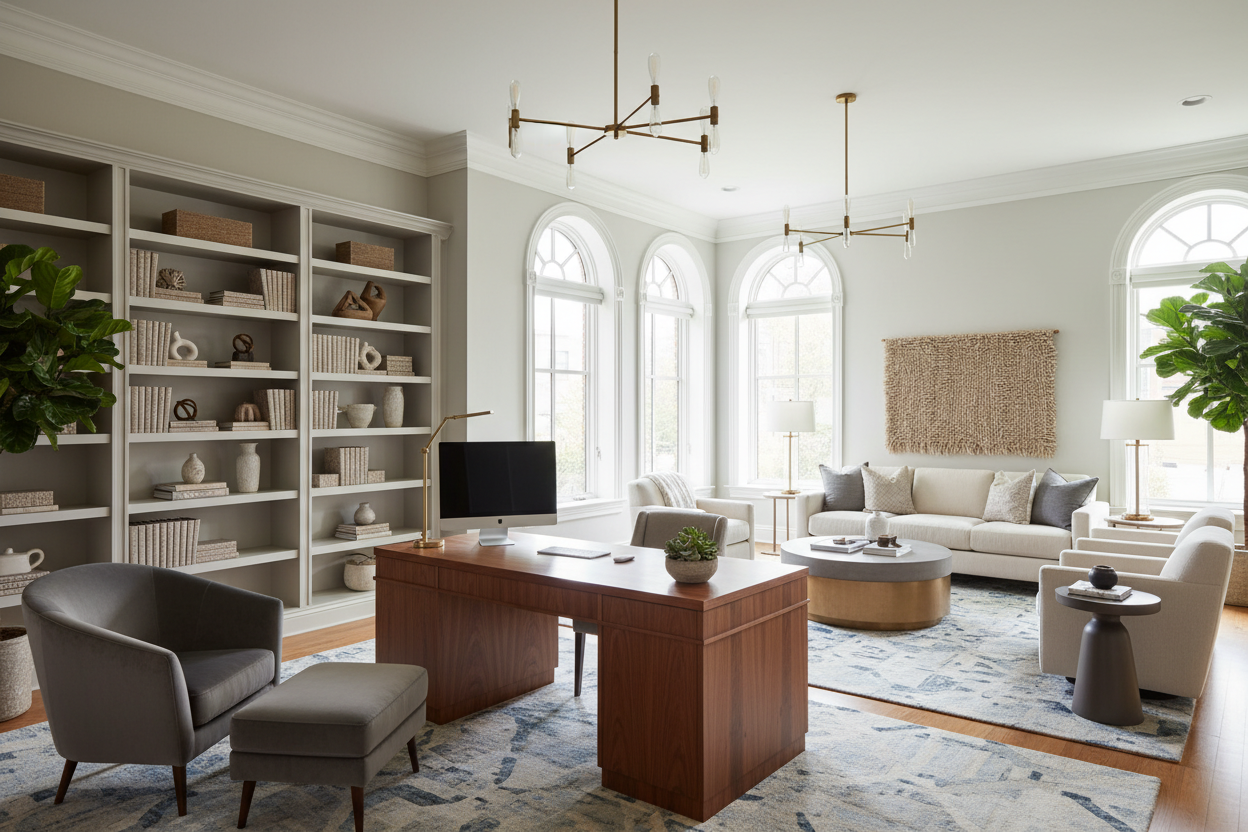
The formal living room is often the most architecturally significant space in a home, featuring bay windows, fireplaces, or intricate molding. Yet, for many homeowners, it remains a pristine museum that is rarely entered. In modern interior architecture, functionality must align with lifestyle. The shift toward remote work has made the decision to convert formal living room to office space not just a trend, but a necessity for maximizing square footage.
This isn't about shoving a utilitarian metal desk into a corner. It is about curating a professional environment that respects the existing elegance of your home while providing the ergonomic support required for an eight-hour workday.
Key Considerations for Transformation
Before moving furniture, consider these core design elements to ensure the space functions effectively as a workspace while maintaining its aesthetic value:
- Acoustics: Formal rooms often echo due to high ceilings and hardwood. Incorporate plush area rugs and drapery for sound absorption.
- Privacy Control: Determine if you need French doors or pocket doors to separate the office from the foyer or hallway.
- Lighting Layers: Combine ambient overhead lighting with task lighting to reduce eye strain without relying solely on harsh recessed cans.
- Power Access: Locate outlets early. Floating a desk in the center of the room requires floor outlets or clever cord management to avoid trip hazards.
- Visual Weight: Select furniture that matches the scale of the room; a small desk will get lost in a large formal living room.
Strategic Layout and Space Planning
When you are turning living room into home office spaces, the layout is the primary dictator of success. Unlike a bedroom corner, a formal living room usually sits off the main entry. This visibility means the room must always remain presentable.
The Executive Floating Layout
For a true formal living room turned office, avoid pushing the desk against the wall. Instead, "float" the desk in the center of the room, facing the door. This command position offers a view of the household and greets guests with a sophisticated visual. Ground this setup with a high-quality wool or silk-blend rug that extends at least 24 inches beyond the chair when pulled out.
The Hybrid Library Approach
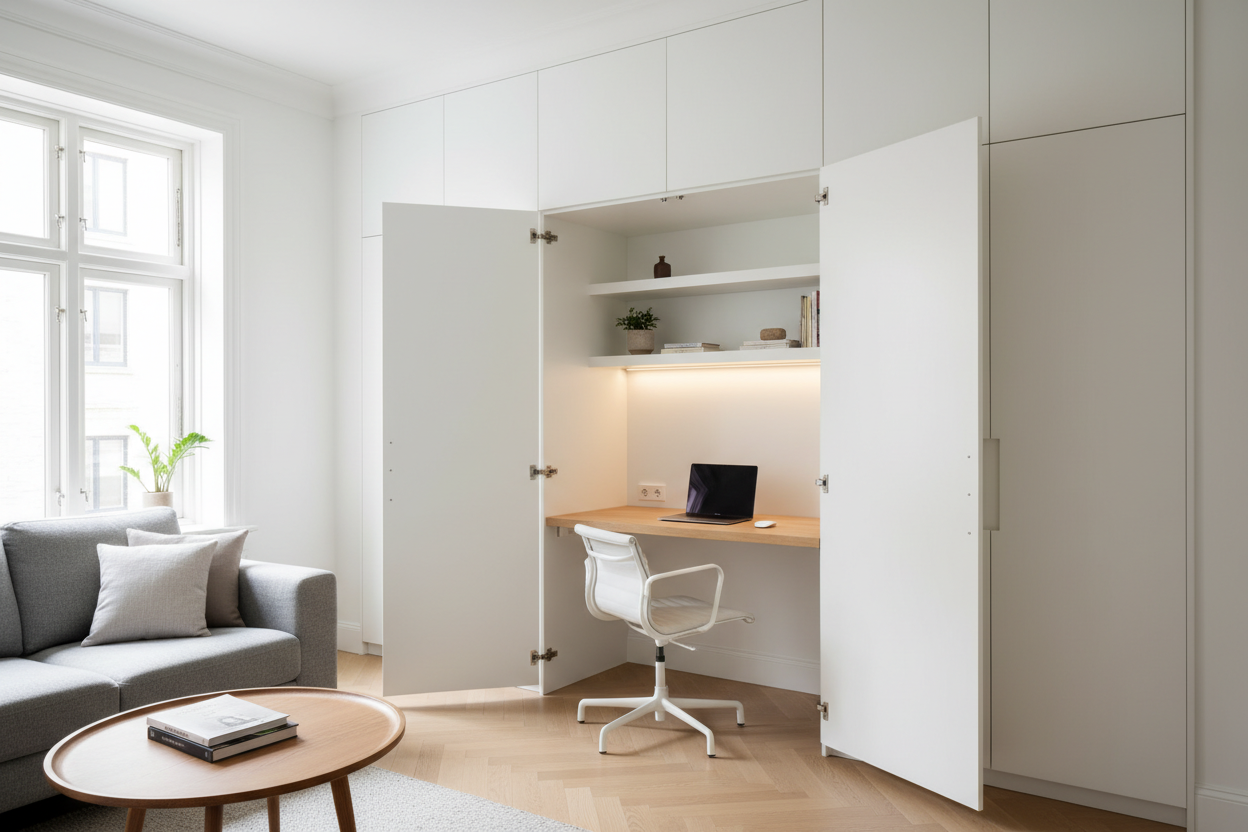
If you need to maintain some sitting area functionality, consider a room in room office layout. Place a writing desk behind a floating sofa, or dedicate one wall to custom built-in cabinetry that houses your technology, leaving the rest of the room for armchairs. This is ideal for formal living room office ideas where the space must double as a reading lounge in the evenings.
Furniture Selection: Balancing Form and Function
As a specialist, I advise clients to avoid "big box" office furniture for these spaces. The aesthetic should lean towards "residential library" rather than "corporate cubicle."
The Desk as a Focal Point
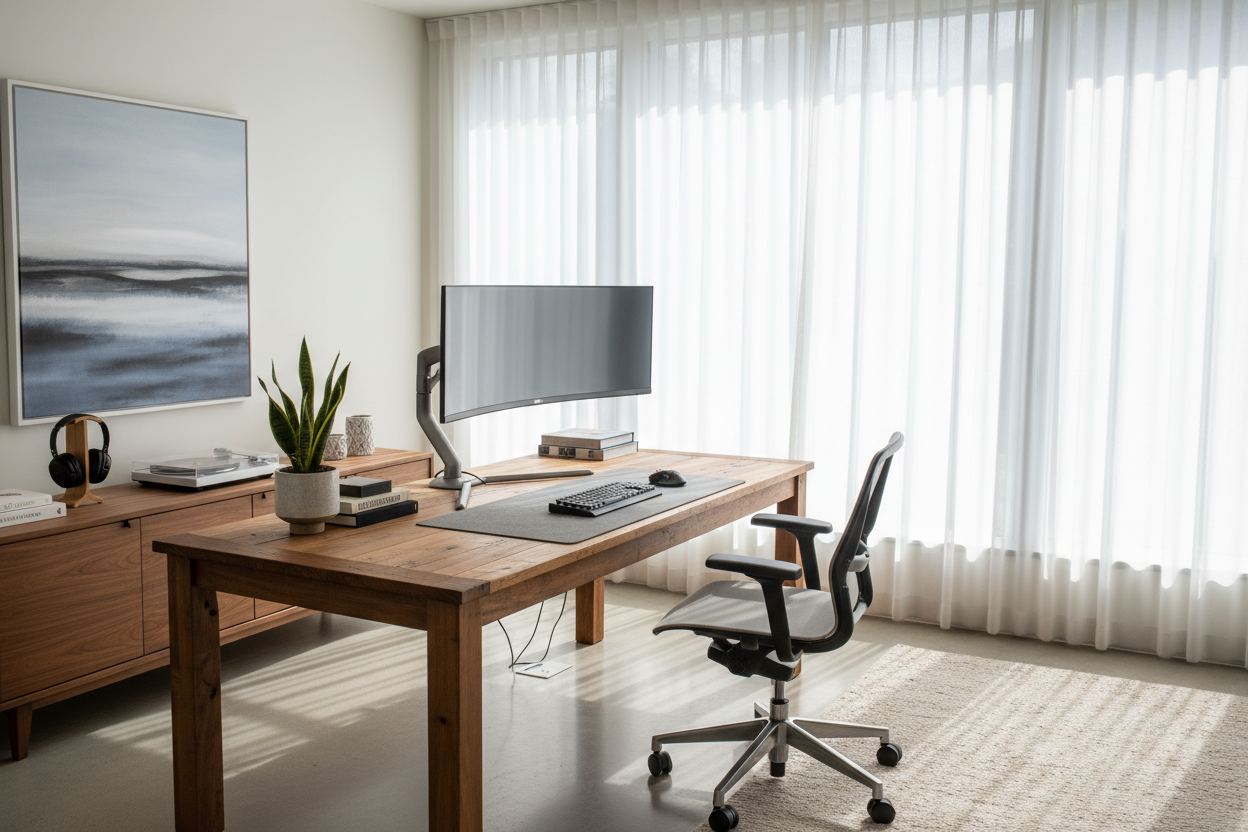
Your desk is the anchor. Look for solid wood construction—walnut or white oak are timeless choices that age beautifully. If your desk faces the entry, ensure it has a "modesty panel" or a finished back so visible wiring doesn't ruin the look. For a home office in formal living room settings, a writing table with drawer storage often looks more elegant than a bulky pedestal desk.
Seating and Ergonomics
This is where many fail. Do not sacrifice your back for style, but do not ruin the room with a racing-style gaming chair. Invest in a high-back executive chair upholstered in top-grain leather or performance velvet. Look for chairs with hidden ergonomic features like lumbar support and tilt tension that maintain a classic silhouette.
Lighting and Ambiance
To successfully convert formal living room to study areas, lighting is critical. Formal living rooms often rely on a central chandelier. While beautiful, this creates shadows on your work surface. Layer the lighting by adding a substantial brass or bronze library lamp on the desk and a floor lamp near the seating area. This creates a warm, productive atmosphere that feels intentional.
Lessons from My Own Projects
I recently worked on a project in a Georgian-style home where the client wanted to convert formal living room to office use. We selected a stunning mahogany partner's desk and floated it in the center of the room. It looked incredible in the renderings.
However, once installed, we realized a critical oversight: the "Fishbowl Effect." Because the room was directly off the foyer with large glass doors, the client felt exposed every time a delivery person came to the door or family members walked by. It wasn't just about noise; it was visual distraction.
We had to pivot. We installed sheer linen roller shades inside the window frames to filter the view without blocking light, and we re-oriented the desk 45 degrees so the client wasn't making direct eye contact with the front door. We also added a large potted Ficus Audrey to create a subtle visual screen. The lesson? When planning a living room into office conversion, sit in a chair in the proposed spot for an hour before buying furniture. Check your sightlines—privacy is just as important as the furniture finish.
Conclusion
Deciding to convert formal living room to office space is a brilliant way to reclaim underused square footage. By focusing on residential-grade materials, proper scale, and a layout that commands the room, you can create a workspace that is as impressive as it is productive. Don't let the room sit empty; make it the engine of your daily success.
Frequently Asked Questions
How do I handle storage without ugly file cabinets?
Utilize vertical space with floor-to-ceiling built-ins or a credenza that mimics a sideboard. Hide the printer and files inside closed cabinetry so the room retains a polished, formal appearance when not in use.
Can I still use the room for guests?
Yes. By using a "hybrid" layout with a pair of accent chairs opposite the desk, the room can function as a study for meetings or a quiet place for evening conversation, effectively blending the formal living room turned office concept.
What is the best window treatment for a front-facing office?
Plantation shutters or top-down/bottom-up Roman shades are excellent. They allow you to control light and privacy from the street level while still letting natural light flood the upper part of the room.

Dejar un comentario
Este sitio está protegido por hCaptcha y se aplican la Política de privacidad de hCaptcha y los Términos del servicio.