










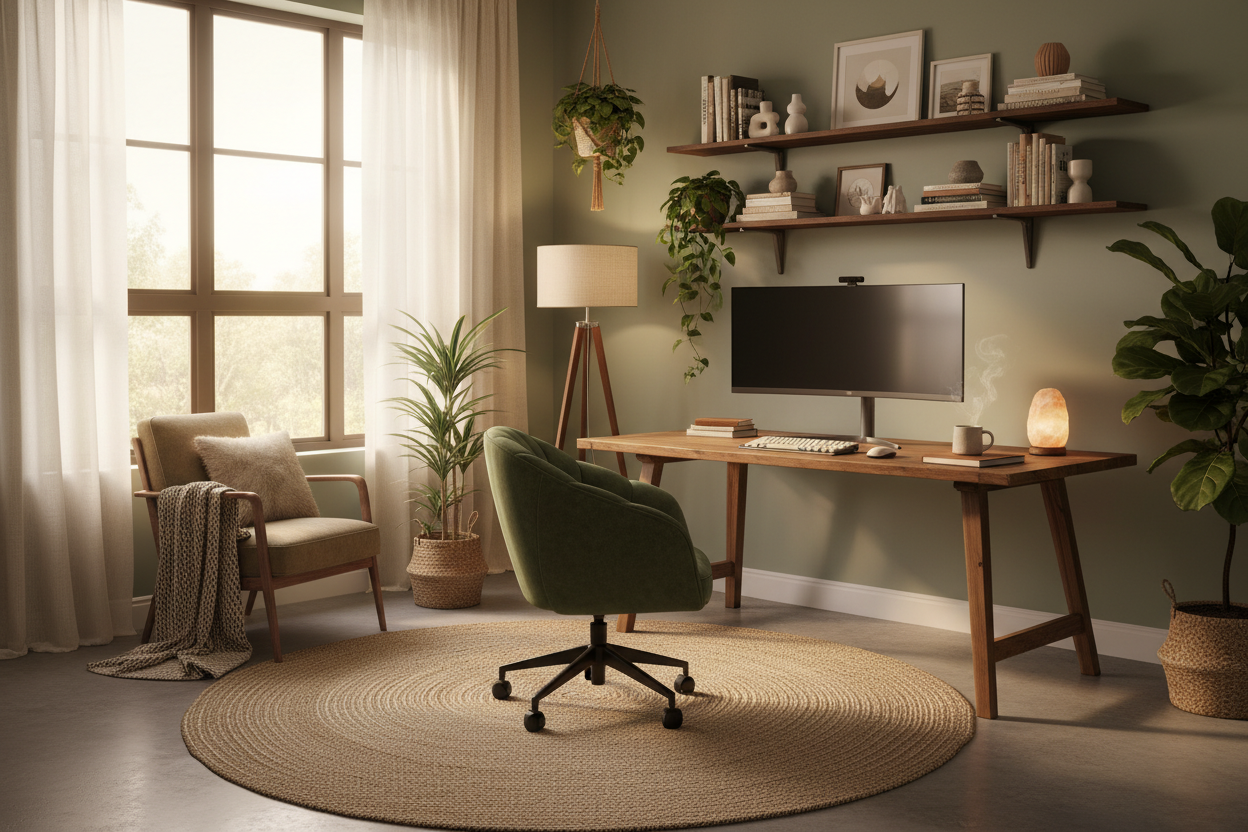
There is a pervasive misconception in the corporate world that productivity requires sterility. We have been conditioned to believe that clean lines must be cold, and that focus can only be achieved in the absence of comfort. As an interior designer, I see this as the primary failure in modern workspace planning. A room that feels like a clinic will eventually drain your creative energy. The solution lies in a design philosophy that marries high-performance ergonomics with residential warmth—making your office cozy without sacrificing its professional integrity.
Quick Decision Guide: Key Features for Warmth
If you are wondering how to make an office cozy while maintaining functionality, prioritize these four design elements. These are the non-negotiables I look for when sourcing for private clients:
- Lighting Temperature: Swap 5000K (daylight) bulbs for 2700K–3000K (warm white) to reduce eye strain and soften the room's edges.
- Tactile Materials: Choose cozy office furniture featuring solid wood (walnut or white oak) or matte finishes rather than glass or high-gloss lacquer.
- Acoustic Softening: Utilize high-pile rugs or upholstered wall panels to absorb the "echo" that makes a room feel empty and cold.
- Ergonomic Textures: Look for task chairs upholstered in fabric or leather rather than industrial mesh for a more residential feel.
Curating Cozy Office Furniture
The centerpiece of any cozy workspace is the desk, but the mistake most homeowners make is selecting a piece that looks too industrial. To achieve a high-end look, treat the desk as a dining table for one. Look for rich wood grains that offer visual depth. A solid wood desk warms to the touch, unlike glass or metal which remain cold and sap body heat from your wrists and forearms.
The Seating Dilemma
finding comfy offices usually comes down to the chair. While the skeleton of the chair must support your lumbar spine, the skin of the chair defines the mood. I often recommend chairs wrapped in cognac leather or heavy-weave fabrics. These materials age beautifully, developing a patina that adds character, whereas synthetic mesh simply degrades.
Lighting: The Secret to a Cozy Work Office
When clients ask how to make your work office cozy, I immediately look at their lighting plan. Overhead lighting is the enemy of ambiance. To create a space that invites you to sit down, you need to lower the light source.
Introduce a library lamp or an architectural table lamp with a linen shade. The linen diffuses the light, casting a warm glow that highlights the texture of your desk surface. This creates a "pool of light" effect, focusing your attention on your work while letting the rest of the room fade into a soft, relaxing background. This is a critical technique in learning how to make an office feel cozy.
Textural Layering and Accessories
Cozy work office ideas often fail because they lack depth. A room with flat walls and a flat floor feels two-dimensional. You must layer textures to build a cozy office cozy atmosphere.
Softening the Hard Edges
Start with window treatments. Replace aluminum blinds with floor-to-ceiling drapery. Even if you don't close them, the fabric stacks on the side absorb sound and visually soften the sharp corners of the window frames. Furthermore, consider an area rug. It anchors the furniture and provides a soft landing for your feet, which is a subtle but powerful psychological cue for comfort.
Layout and Flow
Finally, regarding how to make work office cozy, reconsider your layout. Pushing a desk directly against a wall is a "cubicle" habit. If space permits, float your desk in the room, facing the door. Place a small armchair or a floor lamp in the corner behind you. This arrangement creates depth and ensures you aren't staring at a blank wall, making the room feel more like a study and less like a workstation.
My Personal Take on Office Cozy
I learned a hard lesson about how to make office more cozy during a project for a tech executive in a converted loft. The client was obsessed with the "bouclé" trend—that knobby, wool-like fabric everyone loves on Pinterest. We upholstered a vintage reading chair in cream bouclé for his office corner.
It looked stunning in photos. However, three months later, he called me. The texture was a nightmare for a workspace. It trapped crumbs from his desk lunch, and more importantly, ink from a dropped pen wicked into the loops instantly. But the real issue was the heat; bouclé doesn't breathe well during long conference calls.
We swapped it for a distressed saddle leather chair. Not only did it look better with wear, but the smooth, cool texture was far more comfortable for long-term sitting. The lesson? True coziness requires materials that can handle the reality of work, not just the aesthetic of rest.
Conclusion
Transforming a sterile room into a sanctuary doesn't require a complete renovation. By swapping harsh lighting for ambient lamps, choosing materials that age with grace, and layering textures, you can design a space that pulls you in rather than pushing you away. A truly cozy office is one where the design supports your workflow while soothing your senses.
Frequently Asked Questions
How do I make a small office cozy without cluttering it?
In small spaces, rely on vertical texture rather than floor clutter. Use wall-mounted cork or fabric pinboards and floor-to-ceiling curtains. Keep the floor clear to maintain visual flow, which prevents the "cozy" vibe from turning into a "cramped" feeling.
Is a rug necessary for a cozy office?
From a design perspective, yes. Hard flooring (wood, tile, laminate) reflects sound, creating a cold acoustic environment. A rug dampens noise and visually zones the workspace, anchoring the desk and chair so they don't feel like they are floating in space.
How can I make a rental office feel cozy?
Focus on lighting and textiles, as these are non-permanent. A high-quality desk lamp with a warm bulb and a throw blanket draped over your chair can instantly change the room's temperature. If you can't paint, use large framed art leaning against the wall to break up the white space.

Dejar un comentario
Este sitio está protegido por hCaptcha y se aplican la Política de privacidad de hCaptcha y los Términos del servicio.