










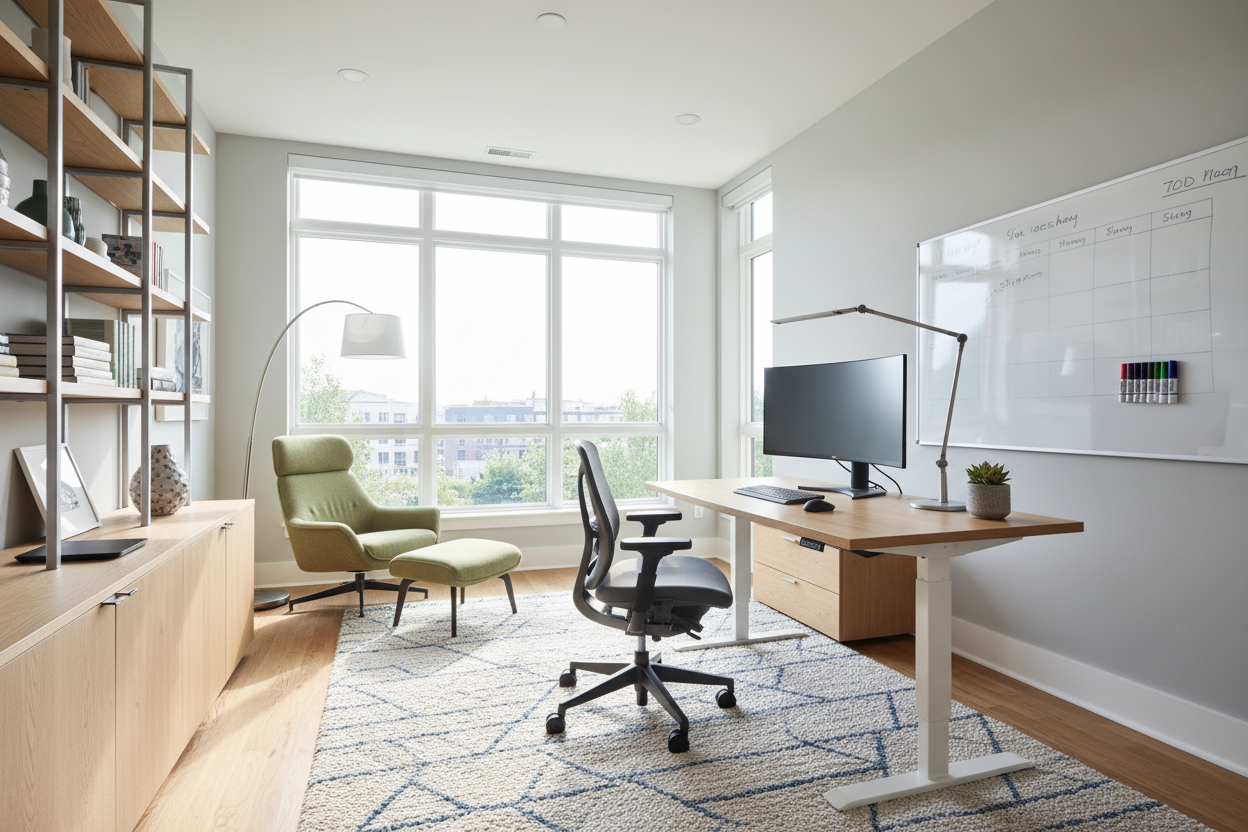
We often blame our lack of discipline when the real culprit is our environment. You sit down to work, but the lighting casts a glare on your screen, the chair encourages a slump, and the visual clutter in your peripheral vision creates mental static. As an interior designer, I see this constantly: clients trying to force efficiency in spaces designed for relaxation. The secret to being more productive at home isn’t just about time management apps; it is about curating a physical space that triggers a neurological shift into 'work mode' the moment you sit down.
Key Features to Look For in a Workspace
- Ergonomic Integrity: Prioritize chairs with adjustable lumbar support and seat depth to prevent fatigue.
- Lighting Temperature: Aim for 4000K (Cool White) bulbs for task lamps to stimulate alertness, rather than warm 2700K ambient light.
- Surface Material: Choose matte finishes (wood or laminate) over glass or high-gloss lacquer to reduce eye-straining glare and fingerprints.
- Acoustic Control: Incorporate soft textiles like rugs or upholstered panels to dampen echo and reduce 'visual noise.'
- Spatial Zoning: Distinctly separate work areas from rest areas using rugs, lighting changes, or physical dividers.
The Ergonomic Foundation: Seating and Surfaces
To feel productive at home, you must first address physical discomfort. The most common mistake I see is the use of dining chairs for eight-hour workdays. A dining chair is designed for a 45-minute meal, not a marathon strategy session. When selecting a task chair, look beyond the aesthetic silhouette. You need a mechanism that moves with you.
Regarding your desk, consider the tactile experience. Solid wood offers a grounding, warm texture that veneers often lack, though high-quality high-pressure laminates (HPL) have come a long way. If you are wondering what to do to be productive at home regarding desk selection, ensure the depth is at least 30 inches. This allows you to extend your legs and keeps your monitor at a safe focal distance, reducing eye strain.
Lighting: The Invisible Productivity Tool
Lighting is the most underutilized tool in interior design. Most residential homes are outfitted with 'warm' lighting (2700K-3000K) which mimics the sunset and signals the brain to relax. To be more productive at home, you need to layer your lighting. Introduce a dedicated task lamp with a cooler temperature (around 4000K). This mimics daylight and suppresses melatonin, keeping you alert.
However, avoid the 'interrogation room' effect. Balance your cool task light with softer ambient light to soften shadows. If your desk faces a window, position it perpendicular to the glass to avoid the high contrast of backlighting or direct glare on your screen.
Visual Balance and Zoning
In open-concept floor plans, the bleed between 'living' and 'working' is the enemy of focus. One of my top tips on how to be productive at home is to create a 'psychological threshold.' If you don't have a separate room, use an area rug to anchor your desk. This creates a visual island.
Furthermore, manage your 'visual noise.' Open shelving is trendy, but if it is cluttered with paperwork, it increases cognitive load. Utilize closed storage—credenzas or filing cabinets—to hide the chaos. Keep only essential, inspiring objects in your direct line of sight, such as a sculptural paperweight or a small plant, to provide a resting place for your eyes without distraction.
My Personal Take on Being More Productive at Home
Years ago, I designed a stunning home office for myself centered around a sleek, tempered glass desk. It looked incredible in photos—airy, modern, and chic. But after a week, I hated it. The glass was cold on my wrists, the mouse didn't track well without a pad, and every single fingerprint or coffee cup ring screamed at me, demanding to be wiped. instead of working, I was cleaning.
I swapped it for a vintage walnut desk with a leather inlay. The difference was immediate. The leather was warm and forgiving, the wood absorbed sound rather than reflecting it, and the imperfections in the timber made me feel less precious about the space. It taught me a valuable lesson I pass to clients: a showroom aesthetic is useless if the materials don't support the way you actually live and work. Sometimes, the 'messier' organic material is the more functional choice.
Conclusion
Transforming your home workspace requires a shift in perspective. It is not just about buying a desk; it is about engineering an environment that respects your physiology and psychology. By investing in the right materials, controlling your lighting, and establishing clear zones, you stop fighting your home and start working with it.
Frequently Asked Questions
How can I be productive in a small apartment without a spare room?
Focus on verticality and multi-functional furniture. A wall-mounted secretary desk or a ladder shelf with a drop-down surface allows you to 'close up shop' at the end of the day. Use a distinct scent (like a peppermint diffuser) only during work hours to trigger a sensory cue for focus.
Does the color of my walls affect my productivity?
Absolutely. While white is clean, it can be sterile and fatiguing. Soft greens and blues are biophilic colors that are proven to reduce eye strain and improve concentration. If you can't paint, consider a large piece of art or a bulletin board in these tones behind your monitor.
Is a standing desk worth the investment for home productivity?
Yes, but only if you use it correctly. The benefit comes from the transition between sitting and standing, which keeps blood flowing. If you buy a standing desk, ensure it has a memory preset function; if you have to manually crank it, you will likely stop using the feature after a month.


Dejar un comentario
Este sitio está protegido por hCaptcha y se aplican la Política de privacidad de hCaptcha y los Términos del servicio.