










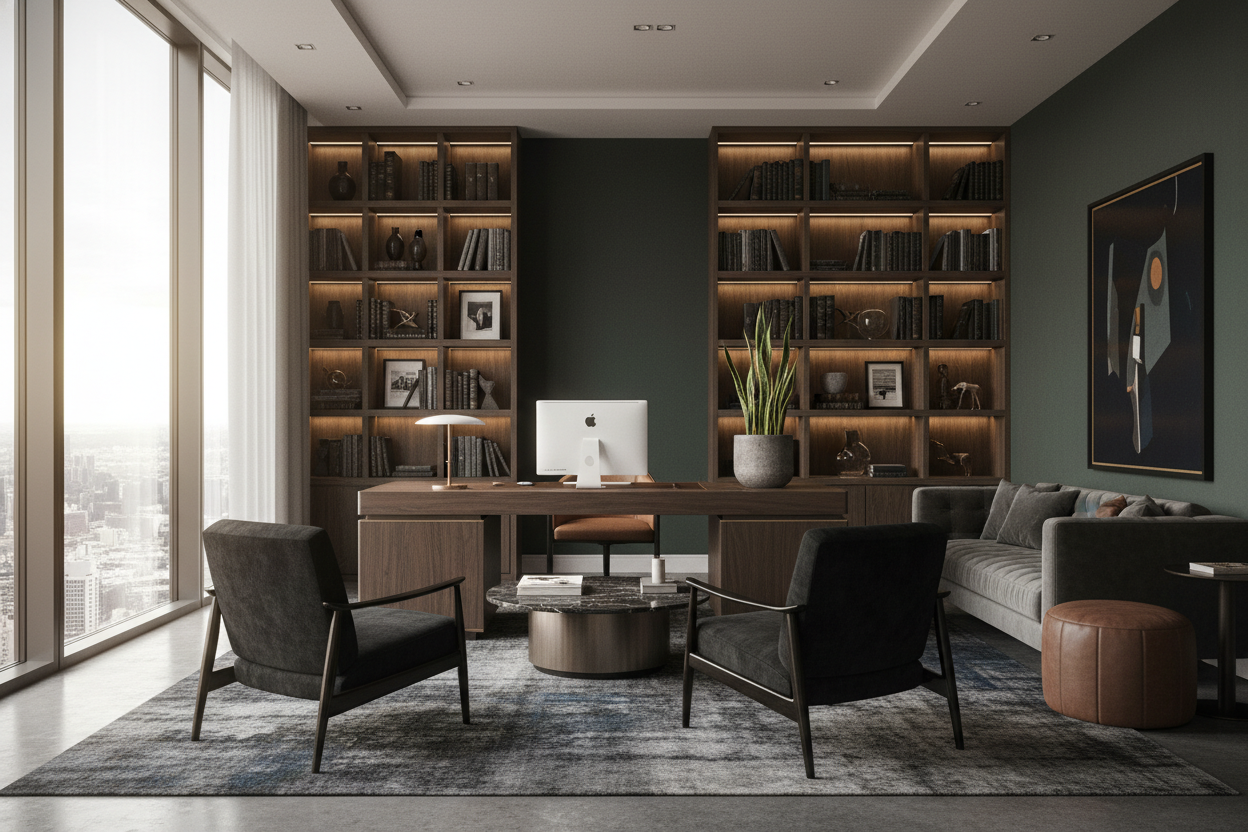
We have all experienced the dreaded mid-afternoon fatigue—that moment when focus drifts and a headache begins to pulse behind the eyes. While many blame caffeine crashes, as a designer, I look up. The culprit is often poor light design for office environments. Lighting is not merely about illumination; it is the silent partner in your productivity and the defining element of your room's architecture. Whether you are outfitting a corporate floor or a home study, the way light interacts with surfaces and screens dictates both comfort and aesthetic authority.
Key Features of a High-Performance Lighting Plan
- Color Temperature (Kelvin): Aim for 3500K to 4000K for alertness; avoid warm, sleepy 2700K bulbs in task areas.
- Layering Strategy: Never rely on a single source. Combine ambient, task, and accent lighting.
- Color Rendering Index (CRI): Look for CRI 90+ to ensure finishes and documents look true to color.
- Adjustability: Articulating arms and dimmable drivers are essential for adapting to time of day.
- Glare Control: Choose fixtures with diffusers or baffles to prevent screen washout.
The Architecture of Illumination: Layering
Effective office lighting design relies on a hierarchy of light sources. In my showroom consultations, I often see clients looking for one "bright" ceiling fixture to do all the heavy lifting. This is a mistake that leads to flat, clinical spaces.
Ambient Foundation
This is your base layer. For modern office lighting design, we are moving away from harsh fluorescent troffers. Instead, consider suspended linear LED profiles or recessed cans with deep baffles. The goal is uniform light that bounces off walls and ceilings to reduce shadows, rather than beaming directly down onto heads.
Precision Task Lighting
This is where ergonomics meets style. A quality task lamp offers focused lumens exactly where you read or write. When selecting workspace lighting, pay attention to the fixture's movement. A double-arm mechanism allows you to pull the light close for detailed sketching or push it away for video calls. The material of the lamp shade matters here; metal shades direct light downward (good for focus), while glass or fabric shades diffuse light outward (better for general glow).
Space Planning & Layout Considerations
Your office lighting layout must converse with your furniture plan. A common error is placing overhead lights directly behind the seated position, which casts a shadow of the user’s body onto the desk. Ideally, the light source should come from the side or slightly in front.
Strategies for Compact Areas
Small office lighting design requires ingenuity. Floor space is premium, so avoid floor lamps. Wall sconces with swing arms are a brilliant solution here—they free up desk real estate while providing directional light. Alternatively, under-shelf LED strips installed above a built-in desk provide excellent shadow-free illumination without visual clutter.
Materiality and Visual Balance
Office interior lighting interacts physically with your furniture materials. If you have a high-gloss lacquer desk or a glass top, direct downlighting will create blinding hotspots. In these cases, matte-finish fixtures and indirect uplighting are non-negotiable. Conversely, a rich walnut or oak desk absorbs light, requiring a slightly higher lumen output to maintain brightness. Balance the visual weight of the fixture with the desk; a chunky, solid wood executive desk can handle a substantial brass lamp, whereas a floating glass desk demands a slim, linear silhouette.
Lessons from My Own Projects
I learned the hard way about the relationship between screen glare and fixture placement during a project for a graphic design studio. We installed beautiful, exposed-filament pendants—very trendy, very industrial. It looked stunning in photos.
However, within a week, the designers were complaining. The filaments were creating "veiling reflections" on their monitors, essentially invisible hotspots that forced their eyes to constantly refocus. I had to go back in and retrofit the fixtures with custom frosted diffusers and lower the hanging height by six inches.
Another detail I always check now is the "knuckle" quality on adjustable lamps. I once specified a budget-friendly task lamp for a bulk order, and after six months of daily adjusting, the tension springs gave out, leaving the lamps drooping like wilted flowers. Now, I physically test the tension mechanisms. If it feels loose in the showroom, it will be broken in the office. Quality hardware has a distinct, heavy resistance when you move it.
Conclusion
Treating lighting as an afterthought is the quickest way to devalue a workspace. By thoughtfully layering your light sources and respecting the interplay between lumens and materials, you create an environment that supports deep work and looks exceptional. Invest in fixtures that offer flexibility, and your eyes—and your productivity—will thank you.
Frequently Asked Questions
What is the best color temperature for a home office?
For most workspaces, 4000K (Cool White) is the sweet spot. It mimics daylight and promotes concentration. Anything lower (3000K or 2700K) is too yellow and relaxing, while 5000K and above can feel harsh and clinical in a residential setting.
How do I light a desk without causing glare on my monitor?
Position your task light to the side of your monitor, not directly behind or in front of it. Ensure the bottom of the shade is at eye level so you aren't looking directly into the bulb. Bias lighting (LED strips behind the monitor) can also reduce eye strain.
Is smart lighting worth it for office design?
Absolutely. Smart bulbs allow you to adjust color temperature throughout the day—cool white in the morning for focus, shifting to warm white in the evening to help your circadian rhythm wind down. This adaptability is crucial for long workdays.


Dejar un comentario
Este sitio está protegido por hCaptcha y se aplican la Política de privacidad de hCaptcha y los Términos del servicio.