










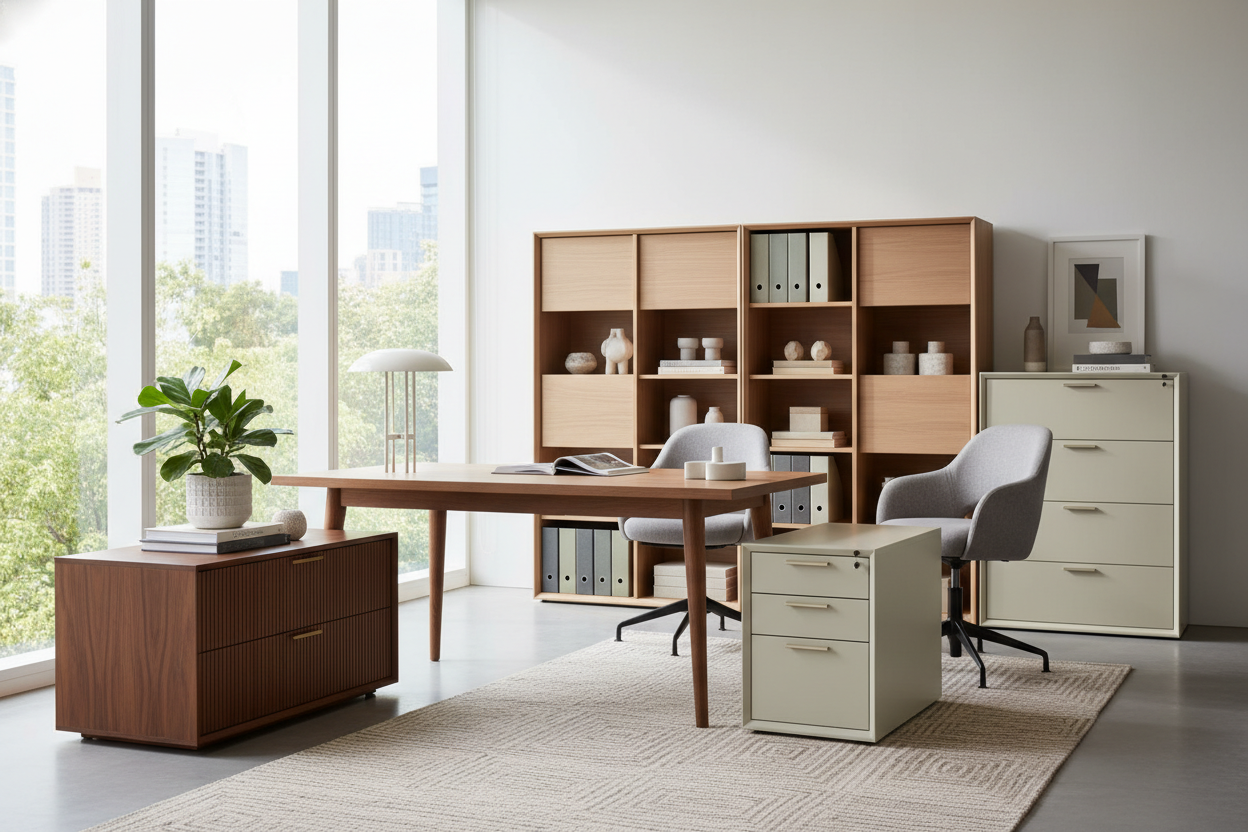
There is nothing that disrupts the visual flow of a curated study quite like a utilitarian, industrial metal box. For years, homeowners have treated file storage as a necessary evil, tucked into closets or hidden beneath desks. However, in modern design, storage should contribute to the room's narrative, not detract from it. Finding the right home office file cabinet ideas is about balancing the pragmatic need for organization with the aesthetic demand for sophistication.
Key Features to Look For
- Suspension Quality: Look for full-extension ball-bearing glides to ensure you can reach files at the very back without the drawer jamming.
- Anti-Tip Mechanisms: Essential for vertical units; this interlocking system allows only one drawer to open at a time to prevent tipping.
- Material Integrity: Prioritize solid wood or high-grade veneer over particle board, which often bows under the weight of heavy paper.
- Mobility vs. Stability: Decide if you need casters for flexibility or a plinth base for a permanent, built-in aesthetic.
Rethinking the Silhouette: Lateral vs. Vertical
The first decision in your procurement process is the orientation. In luxury residential projects, I often steer clients toward lateral filing cabinets. Unlike the tall, towering vertical cabinets typical of corporate cubicles, lateral files are wider and lower. This profile allows them to serve a dual purpose: storage below and a display surface above. When styled with a table lamp and curated books, a lateral file mimics a high-end credenza, softening the room's corporate edge.
Vertical cabinets, however, are indispensable for tight footprints. To avoid the "office drone" look, seek out vertical units with architectural details—fluted wood fronts, brass hardware, or shaker-style paneling—that echo the millwork found elsewhere in your home.
Materiality and Texture
The finish of your storage determines the mood of the workspace. If your desk is a heavy mahogany or walnut, introducing a painted finish (like charcoal or navy) for your filing system can prevent the room from feeling too heavy or "matched."
Wood Veneers vs. Laminates
Be wary of cheap laminates masquerading as wood. In a home office, tactile quality matters. A genuine wood veneer offers warmth and texture that develops a patina over time. However, if you are looking for home office filing cabinet ideas for a high-traffic family zone, a high-pressure laminate (HPL) offers superior scratch resistance against pets and children, provided it has a matte finish to reduce light reflection.
Integrating Storage into the Layout
Placement is as critical as the piece itself. A common design strategy is the "floating" technique. Rather than shoving the cabinet against a wall, consider placing a finished-back cabinet perpendicular to your desk to create an L-shaped executive setup. This defines your working zone within a larger room and keeps files within arm's reach without cluttering your primary desktop.
Lessons from My Own Projects
I learned a hard lesson early in my career regarding weight distribution. I once specified a gorgeous, custom-lacquered mobile file cabinet for a client in a historic brownstone. It looked stunning. However, I hadn't accounted for the sheer density of the client's legal files. Once fully loaded, the cabinet was so heavy that the "designer" casters I chose actually indented the original pine flooring when moved.
Now, I have a strict rule: if a client has significant archival needs, we skip the casters entirely and opt for a piece with a solid plinth base or bun feet. Furthermore, I always test the drawer pull before buying. You want a resistance that feels substantial, not a drawer that flies open and bounces back. That "soft-close" feel isn't just luxury; it prevents the internal rails from warping over years of use.
Conclusion
Your filing system does not have to be an eyesore. By selecting pieces that prioritize architectural details, quality hardware, and proper scale, you turn a functional necessity into a design asset. A well-organized space is the foundation of a clear mind.
Frequently Asked Questions
What is the standard size for a home office file cabinet?
Standard vertical cabinets are typically 15 inches wide (for letter size) or 18 inches wide (for legal size) and 29 inches deep. Lateral files generally range from 30 to 42 inches in width. Always measure your intended space, accounting for the depth of the drawer when fully extended (usually an additional 18-24 inches).
Can I use a regular chest of drawers for filing?
You can, but it requires modification. Standard dresser drawers lack the internal rails needed to hang folders and often lack the heavy-duty bottom reinforcement required for paper weight. You would need to install a metal hanging file frame insert, which is a viable DIY solution for light paperwork.
How do I maintain wood file cabinets?
Treat them like fine furniture. Dust regularly with a microfiber cloth and control humidity levels in the room to prevent the wood from swelling, which can cause drawers to stick. Avoid placing the cabinet in direct sunlight to prevent the veneer from fading unevenly.

Dejar un comentario
Este sitio está protegido por hCaptcha y se aplican la Política de privacidad de hCaptcha y los Términos del servicio.