










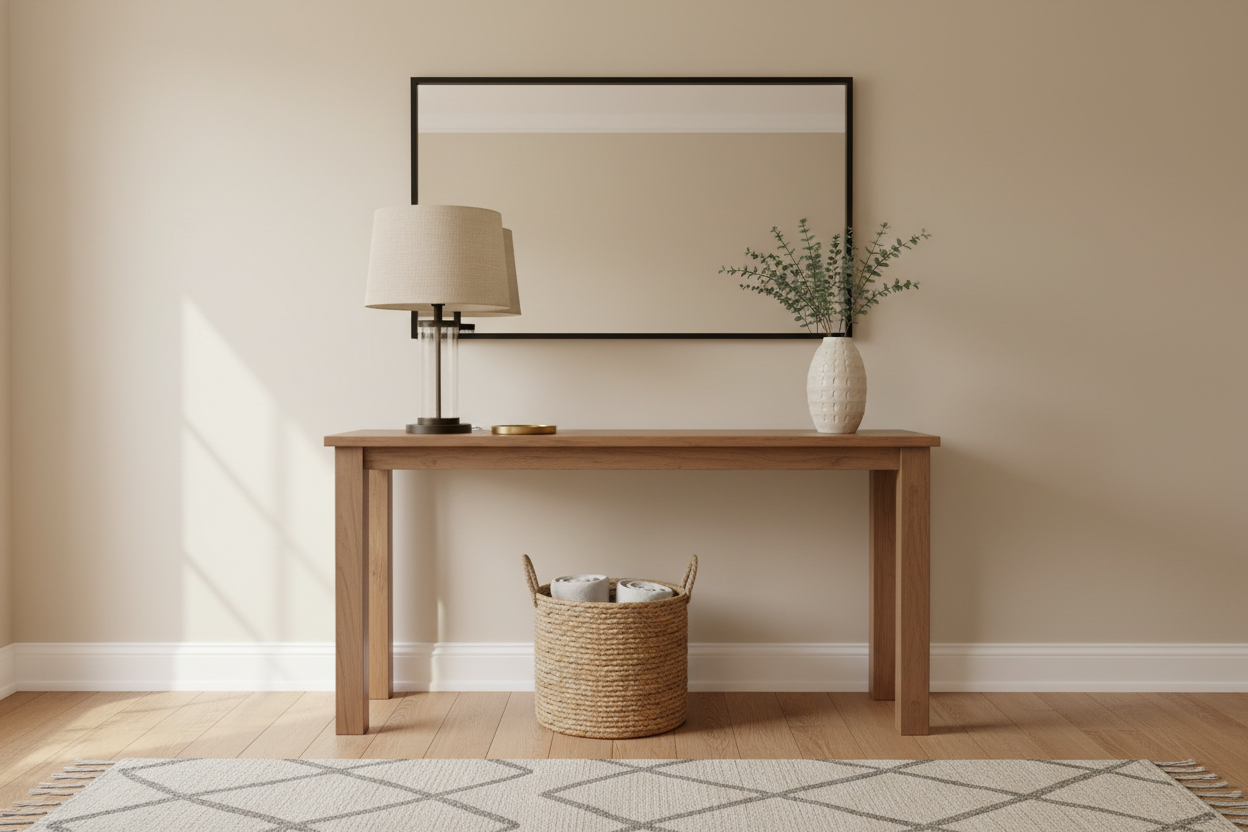
The entryway is the handshake of your home. It sets the tone for the entire living space before a guest even takes off their coat. At the center of this transitional space sits the elegant hall table, a piece of furniture that must juggle the demanding roles of being highly functional and aesthetically striking. A truly elegant table isn't defined merely by its price tag or ornamentation, but by how well it respects the architecture of the foyer while offering a curated surface for life’s daily transitions. It anchors the space, providing a focal point that draws the eye away from the clutter of shoes or coats and toward a deliberate design moment.
Choosing the right piece requires looking beyond the catalog photo. You have to consider the flow of traffic, the quality of materials, and the lighting in your specific corridor. Whether you lean toward a slender minimalist console or a curved demi-lune, the goal is to create a vignette that feels welcoming rather than obstructing.
The Fine Line Between Grandeur and Obstruction
I learned the hard way that measuring the floor space isn't enough; you have to measure the "visual weight" of the furniture. A few years ago, I fell in love with a heavy, carved oak huntboard that I was convinced would be the perfect elegant hall table for my entryway. Physically, it fit. The tape measure said I had two inches to spare on either side. However, once I wrestled it into place, the hallway felt claustrophobic. The dark wood absorbed all the light, and the solid base made the floor space look significantly smaller. I ended up bruising my hip on the corner within a week. I replaced it with a glass-top console with brass legs. The dimensions were nearly identical, but the transparency of the glass and the open legs allowed the eye to travel through the piece, instantly making the hallway breathe again. This experience taught me that in narrow spaces, silhouette matters just as much as inches.
Selecting Materials for Timeless Appeal
The material composition of elegant hallway tables dictates the mood of the entrance. High-gloss lacquer or polished stone tends to project a more formal, sophisticated atmosphere, ideal for homes that want to make a sharp, modern statement. Marble tops are particularly effective because they reflect light, which can brighten dim hallways often found in older homes. However, marble is porous, so if this table is a drop zone for keys and coffee cups, a sealed finish is non-negotiable.
Wood brings warmth, but the grain and stain need to converse with your flooring. You generally want to avoid matching the wood tone of the table exactly to the floor, as the furniture will disappear visually. A contrast is better—think a dark walnut table on light oak floors, or a painted finish against dark slate. For a lighter, airier feel, acrylic or wrought iron bases with glass tops work wonders in tighter corridors, providing surface area without visual bulk.
Mastering Proportions and Clearance
Functionality in a hallway is governed by flow. A standard hallway is often between 36 and 48 inches wide. If you place a table that is 18 inches deep in a 36-inch hallway, you have created a bottleneck. A comfortable walkway requires a minimum of 36 inches of clearance. If your space is tight, look for "skinny" consoles that are 10 to 12 inches deep. These narrow elegant hallway tables are specifically designed to hug the wall while still providing that essential surface for a lamp or a mail tray.
Height is equally critical. Most console tables stand between 30 and 36 inches tall. This places the surface at a comfortable level for dropping keys without bending over, and it aligns well with the back of a sofa if you ever repurpose the piece. If your ceilings are exceptionally high, a low-slung table might look like a toy; in this case, a taller table or one with a significant vertical element (like a tall mirror leaning on top) helps bridge the gap.
The Demi-Lune Solution
If you have a hallway that involves turns or is particularly high-traffic, consider a demi-lune (half-moon) table. The rounded edges are not only graceful but also practical. Without sharp corners jutting out, the traffic flow feels smoother, and there is less risk of bumping into the furniture when rushing to answer the door. The curve inherently softens the linear, boxy nature of most corridors.
The Art of Styling the Surface
Once the furniture is in place, the styling determines whether it looks like a display piece or a dumping ground. The most effective approach relies on the concept of a "landing strip" paired with vertical balance. You need a focal point above the table to draw the eye up—typically a large mirror or a piece of art. A mirror is usually the superior choice for hallways as it bounces light and creates the illusion of depth.
On the surface itself, use the rule of three. Group three items of varying heights. For example:
- Height: A tall buffet lamp or a vase with branches adds vertical interest and connects the table to the wall decor.
- Weight: A stack of coffee table books or a substantial sculptural bowl anchors the arrangement.
- Function: A small, decorative tray serves as the designated spot for keys and loose change. This keeps the clutter contained, maintaining the look of an elegant hall table even when it's being used daily.
Lighting is the secret weapon here. Hallways often rely on overhead recessed lighting, which can cast harsh shadows. A table lamp introduces a layer of soft, ambient light that makes the entryway feel warm and inviting in the evening. If you lack an outlet, rechargeable sleek LED lamps are now available that mimic the look of high-end wired fixtures.
Balancing Storage with Aesthetics
There is often a debate between open consoles and those with drawers. If your entryway lacks a closet, a table with drawers is essential for hiding utility items like dog leashes, sunglasses, or mail. However, drawers add visual bulk. If you choose an open table but need storage, place matching baskets or ottomans underneath. This utilizes the dead space below the table, adds texture (wicker, felt, or leather), and keeps the visual weight near the floor, allowing the top of the table to remain airy and uncluttered.
Ultimately, the perfect piece creates a pause. It transforms a corridor from a mere passage into a destination, offering a glimpse of the style that awaits inside while serving the practical needs of a busy household.
Frequently Asked Questions
How wide should a mirror be over a hall table?
Ideally, the mirror should be narrower than the table itself to maintain proper visual balance. A good rule of thumb is to choose a mirror that is roughly two-thirds to three-quarters the width of the console table beneath it. If the mirror is wider than the furniture, the arrangement can feel top-heavy and unstable.
Can I use a desk as a hallway table?
Yes, a writing desk can serve as an excellent elegant hall table, provided the depth doesn't obstruct the walkway. Desks often offer more drawer space than standard consoles, making them practical for storage. Just ensure the chair (if you keep one there) can be tucked completely under the table so it doesn't become a tripping hazard.
What is the standard height for a console table?
Most console tables range from 30 to 36 inches in height. This is similar to standard countertop height, making it ergonomic for dropping off items as you walk in. If you are placing the table behind a sofa rather than against a wall, ensure the table is not taller than the sofa back.

Dejar un comentario
Este sitio está protegido por hCaptcha y se aplican la Política de privacidad de hCaptcha y los Términos del servicio.