










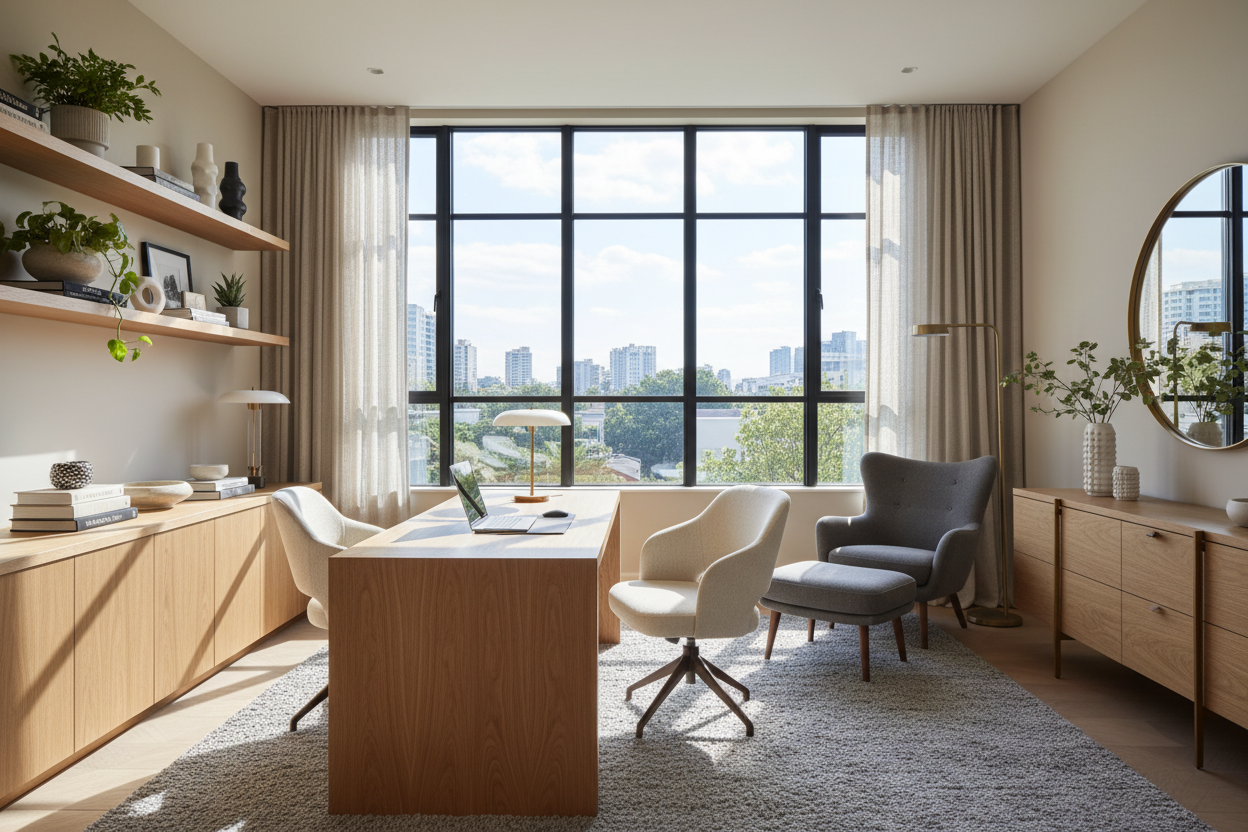
We have all been there: you clear out the spare bedroom, buy a matching desk-and-bookshelf set online, and suddenly your workspace feels like a sterile corporate cubicle. The room feels heavy, the lighting is harsh, and that trendy chair is wreaking havoc on your lower back. Furnishing a home office requires a delicate balance between residential comfort and commercial functionality.
If you are tired of working in a space that drains your energy, this guide will walk you through the exact layout rules, ergonomic non-negotiables, and styling tactics I use to design workspaces that actually inspire productivity.
Quick Decision Guide
- Float the desk: Whenever possible, face the door or a window rather than staring directly at a blank wall.
- Invest in the chair first: Allocate at least thirty percent of your budget to a highly adjustable, ergonomic task chair.
- Mix materials: Avoid buying matching furniture sets. Combine warm woods with matte metals and soft textiles to soften the room.
- Plan for wire management: A beautiful workspace is instantly ruined by a tangle of black cords. Buy desks with integrated routing.
Mastering the Workspace Layout
Before you even look at furniture silhouettes, you have to nail the floor plan. Most North American spare bedrooms are roughly ten by twelve feet, which quickly feels cramped if you buy oversized, blocky furniture.
The Command Position
In interior design, we often talk about the 'command position.' This means placing your desk so you have a clear view of the door, but you are not directly in line with it. Floating the desk in the middle of the room, rather than shoving it against a wall, reduces the visual weight of the furniture and makes the room feel intentional. If you must face a wall, pull the desk out at least four inches to allow for monitor arms and cord drops.
Clearances and Walkways
A major mistake I see is inadequate push-back clearance. You need a minimum of 36 inches between the edge of your desk and the wall (or bookshelf) behind you. This allows you to slide your chair out comfortably without scraping the baseboards. If the room serves as a pathway, leave 48 inches for major traffic routes.
Ergonomics Over Aesthetics
It is tempting to buy that gorgeous, cane-backed mid-century chair you saw on Instagram. Do not do it. When it comes to daily use, your physical health has to dictate your purchases.
The Truth About Desk Chairs
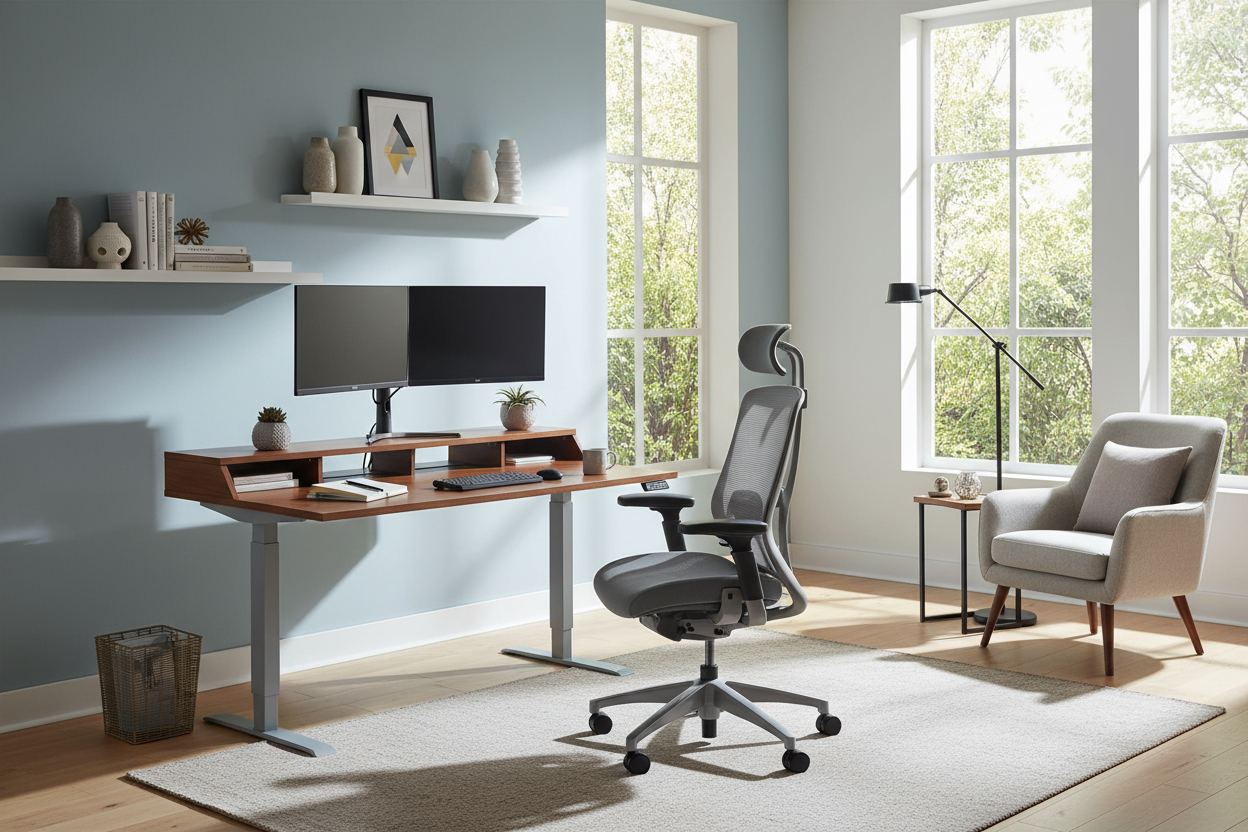
A proper task chair should have adjustable seat depth, lumbar support, and armrests that can drop below your desk height. Look for commercial-grade fabrics or breathable mesh. If you hate the look of a traditional ergonomic chair, soften its appearance by draping a textured throw over the back when not in use. Your desk should sit between 28 and 30 inches high; anything taller will force your shoulders up, causing tension over an eight-hour day.
Curating the Aesthetic
Once the layout and ergonomics are locked in, we can focus on the visual layer. If you are wondering how to style home office spaces without making them feel cluttered, the secret is negative space and intentional lighting.
Layering Textures and Lighting
When styling a home office, you have to move away from the 'office in a box' mentality. Pair a sleek, matte-black metal desk with a vintage Persian rug and a solid walnut credenza. This mix of eras and materials feels collected over time. For lighting, ditch the harsh overhead fixtures. You need three light sources: ambient (a soft ceiling fixture), task (a directional desk lamp), and accent (a floor lamp or wall sconce) to reduce eye strain and create a warm atmosphere.
Designer's Honest Take
Early in my career, I designed an office for a client who insisted on a massive, solid mahogany executive desk. It looked incredible in the showroom. But once we got it into their standard suburban study, it swallowed the room whole. The dark wood absorbed all the natural light, and the sheer scale of it made the space feel like a cave.
We ended up swapping it for a glass-topped writing desk with slender brass legs. The lesson? Visual weight matters just as much as physical dimensions. I also learned the hard way that gorgeous velvet desk chairs are a nightmare if you have pets; I spent more time lint-rolling my own chair than actually working in it before finally switching to a high-performance mesh back.
Frequently Asked Questions
How much space do I need behind a desk?
You should leave an absolute minimum of 36 inches from the edge of the desk to the wall or furniture behind it. This provides enough room to push your chair back and stand up without feeling trapped.
Is a standing desk worth the investment?
Yes, but only if you buy one with a dual-motor mechanism. Cheaper single-motor standing desks wobble noticeably at their highest settings, which makes typing incredibly frustrating. Pair it with an anti-fatigue mat for real comfort.
How can I make a small home office look bigger?
Opt for leggy furniture rather than pieces with solid bases that sit flush on the floor. Being able to see the floor underneath the desk and shelving creates an illusion of more square footage. Utilize vertical wall space for storage instead of wide, bulky filing cabinets.

Dejar un comentario
Este sitio está protegido por hCaptcha y se aplican la Política de privacidad de hCaptcha y los Términos del servicio.