










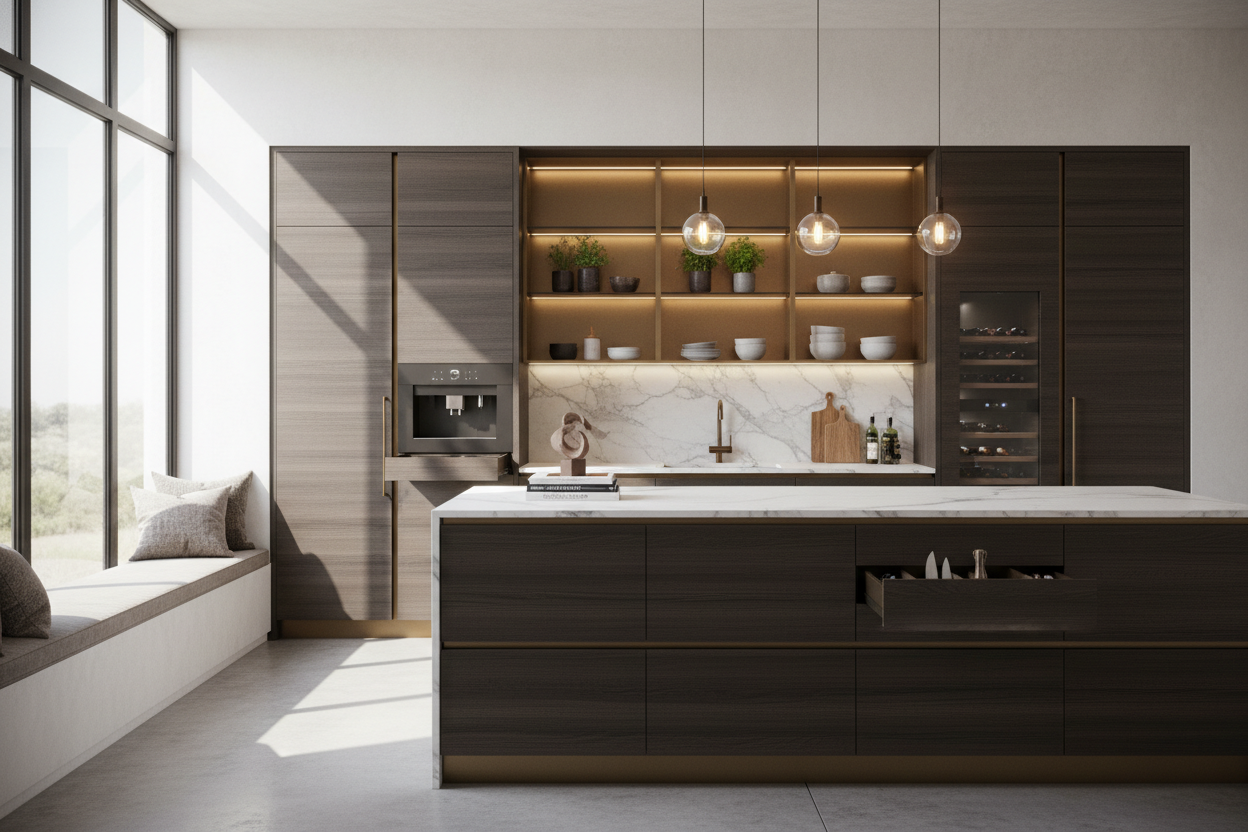
I've walked into hundreds of kitchens where the homeowners told me the same thing: 'We have plenty of cabinets, but it still doesn't work.' The counter is a landing pad for mail and grocery bags. The small appliances live on the counter because there's no dedicated home for them. The space between the fridge and the stove feels like a dead zone. If this sounds familiar, you're not alone. The solution isn't more built-in boxes; it's strategic furniture for kitchen cabinets.
Quick Takeaways
- Think of furniture as your kitchen's 'supporting cast'—it adds function where cabinets can't.
- Always measure for a 42-inch walkway between furniture and cabinets or appliances.
- Match wood tones, not exact species. A maple buffet can work with oak cabinets if the stain is similar.
- Weight capacity matters. A sideboard holding dishes needs a solid frame, not just particleboard.
Why Your Kitchen Cabinets Need Furniture, Not Just Boxes
Your built-in cabinets are the foundation. They're fixed, permanent, and designed for wall storage. Furniture kitchen cabinet solutions are the flexible players. I think of it like this: cabinets are your kitchen's skeleton; furniture is the muscle that makes it move. A client recently had a beautiful but narrow galley kitchen. The wall cabinets were full, but the workflow was terrible. Adding a 24-inch deep, 48-inch wide freestanding island on locking casters gave her a prep station right between the sink and stove. Suddenly, she wasn't walking back and forth across the kitchen. The island wasn't just storage; it was a functional pivot point that the fixed layout couldn't provide.
The 3 Furniture Pieces Designers Actually Add to Kitchen Cabinets
First, freestanding islands and carts. These are my go-to for adding flexible prep space. Look for one with a solid wood top at least 1.5 inches thick—it can handle chopping and hot pans. I often recommend checking out our collection of kitchen islands for ideas on size and features like drop leaves or built-in power strips.
Second, buffets and sideboards. This is where you gain serious storage without a renovation. A good buffet, like this large sideboard buffet, gives you deep drawers for table linens and a closed cabinet for serving platters you only use on holidays. It keeps those items out of your everyday cabinet rotation.
Third, specialty cabinets. This includes tall, freestanding pantry cabinets or a hutch. I used a 72-inch tall, 24-inch wide freestanding pantry with adjustable shelves to solve a client's cereal box and snack chaos. It fit perfectly in a blank wall space next to the fridge, something a standard upper cabinet couldn't do.
How to Match Furniture Style with Your Kitchen Unit
The goal is harmony, not matchy-matchy. If your kitchen unit furniture is a sleek, white slab cabinet, a rustic farmhouse table might clash. Instead, look for shared elements. Do your cabinets have a warm oak tone? Find a sideboard with a similar warmth, even if it's a different wood. Scale is critical. In a small kitchen, a massive, ornate armoire will swallow the room. A good rule: your furniture piece shouldn't be wider than the longest run of base cabinets. And remember, the style conversation extends to your dining area. Think about what designers notice about kitchen tables and chairs to create a cohesive flow.
The Hidden Functional Upgrade: Furniture That Solves Kitchen Problems
This is where furniture shines. Problem: 'My coffee maker and toaster are always on the counter.' Solution: A narrow, 12-inch deep console table against a blank wall gives them a dedicated home, freeing up prime prep space. Problem: 'The corner between my corner cabinet and the wall is useless.' Solution: A slender, 15-inch deep étagère fits there, creating vertical storage for cookbooks or decorative items. For truly challenging corners, a specialized piece like this corner pantry cabinet set can be a game-changer, turning dead space into accessible storage.
In open-plan homes, a large sideboard can visually define the kitchen area from the living room, all while hiding small appliances behind closed doors.
Making It Work: A Designer's Checklist for Kitchen Cabinet Furniture
- Measure for Flow: Before buying anything, tape its footprint on the floor with painter's tape. Ensure you maintain at least 36 inches of clearance for walkways and 42 inches for primary work aisles.
- Check the Build: For pieces holding weight, look for kiln-dried hardwood frames and solid wood drawer boxes. Pressed cardboard backs won't last.
- Test Access: Can you fully open the oven door or dishwasher with the new furniture in place? Don't block appliance arcs.
- Plan for Power: If you want a lamp on a buffet or to plug in a mixer on an island, is there an outlet nearby? You may need a decorative extension cord or a furniture piece with a built-in power hub.
- Create Visual Flow: Stand in the adjoining room and look into the kitchen. Does the new piece feel like it belongs? For more on this, explore stylish and functional dining kitchen furniture ideas to tie the whole space together.
Personal Experience: The Downsides Are Real
I once specified a beautiful, antique pine dresser for a client's kitchen. It looked perfect. The downside? The drawers, built for clothing, were too shallow for dinner plates. We had to retrofit them with custom dividers. The lesson: furniture not originally designed for kitchen use might need modification. Always consider the depth and internal configuration for what you actually plan to store.
FAQ
Can I use a regular bookcase as kitchen furniture?
You can, but be cautious. Most bookcases aren't built to handle the humidity and weight fluctuations of a kitchen. If you do, choose one made of solid wood (not MDF) and avoid placing it right next to the stove or sink.
How do I stop furniture from scratching my floor?
Always add felt pads to the feet. For heavier pieces like islands, use non-marking, locking casters designed for hard floors. This also makes cleaning underneath much easier.
Is it okay to mix metal and wood furniture with wood cabinets?
Absolutely. A metal baker's rack or a glass-and-metal cart can add a lovely industrial or modern contrast. The key is to repeat that material elsewhere, like in your cabinet hardware or light fixtures, so it feels intentional.
What's the biggest mistake you see?
Choosing a piece that's purely for looks. That delicate, spindly-legged console might be beautiful, but if you need it to hold a 30-pound stand mixer, it's going to wobble—or worse. Always prioritize function first; the beauty follows.

Dejar un comentario
Este sitio está protegido por hCaptcha y se aplican la Política de privacidad de hCaptcha y los Términos del servicio.