










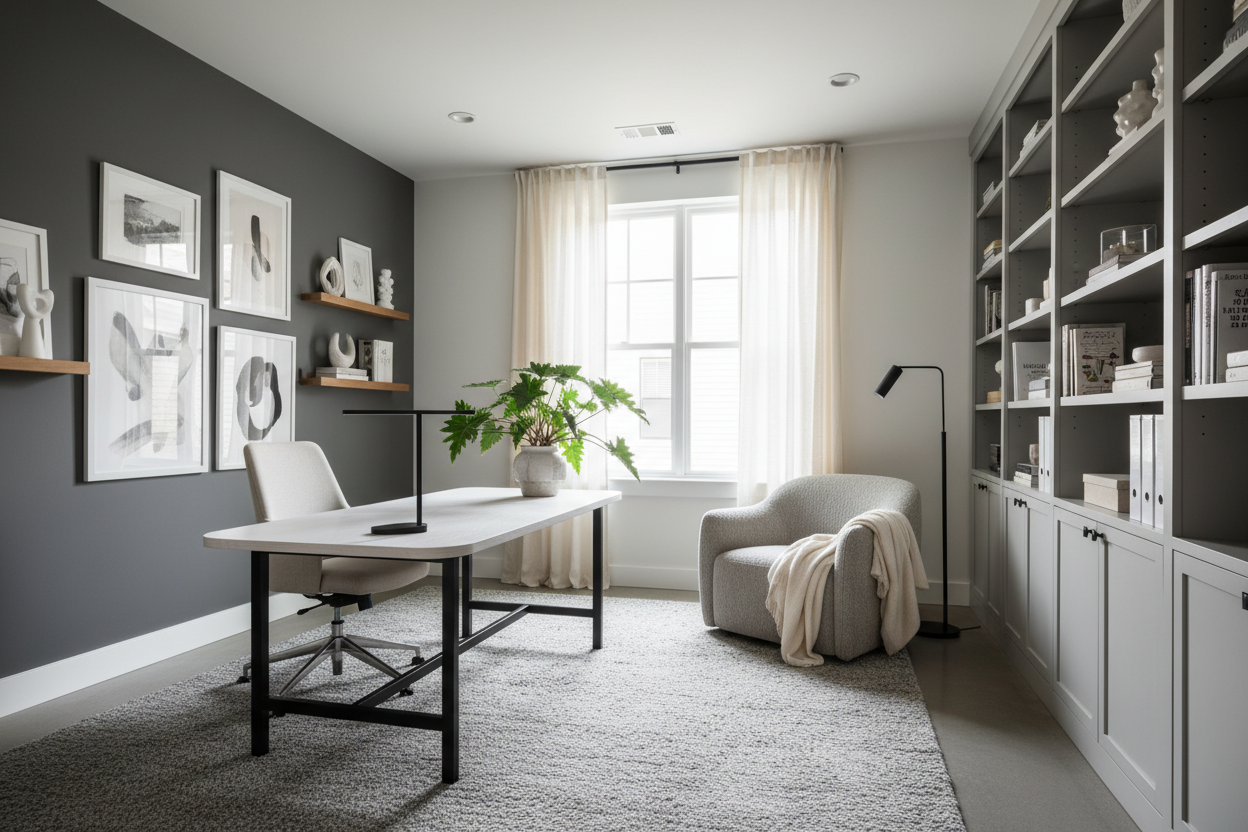
You paint the walls a crisp white, bring in a sleek slate desk, and sit down to work—only to realize your room feels more like a sterile corporate cubicle than an inspiring sanctuary. It is a common trap. A gray and white home office looks incredibly sophisticated on a mood board, but translating that cool palette into a lived-in North American home requires careful planning.
Without the right textures, lighting, and contrast, neutral rooms quickly fall flat. In this guide, I will show you how to balance visual weight, layer materials, and introduce grounding elements so your workspace feels both focused and inviting.
Quick Decision Guide
- Vary your shades: Relying on a single shade of gray makes a room feel one-dimensional. Mix dove gray walls with charcoal upholstery to create depth.
- Layer in natural textures: Warm up cool color palettes by introducing organic materials like white oak flooring, linen drapery, or a leather desk pad.
- Anchor with dark accents: Incorporating gray and black office ideas—like matte black hardware or a dark metal task lamp—gives the eye a place to rest.
- Prioritize warm lighting: Cool grays look clinical under daylight bulbs. Stick to bulbs in the 2700K to 3000K range to keep the space welcoming.
Balancing Visual Weight and Proportion
The 60-30-10 Rule for Neutrals
When clients ask me for grey and white home office ideas, the first thing we discuss is proportion. If you split the colors 50/50, the room lacks a clear focal point. Instead, use the 60-30-10 rule. Let white serve as your dominant 60 percent, covering the walls and ceiling to maximize natural light. Use gray for your 30 percent secondary color, applying it to larger furniture pieces like a desk, rug, or built-in cabinetry.
The final 10 percent should be your accent color. This is where a black white and gray home office truly shines. By using black for your desk chair, picture frames, or cabinet pulls, you provide sharp contrast that outlines the softer neutral tones.
Material Selection and Texture Layering
Softening a Modern Aesthetic
A modern grey home office often leans heavily on hard materials: glass, metal, and engineered wood. While these are durable and easy to wipe down, they do not absorb sound or offer tactile comfort. To prevent your office from feeling like a waiting room, you have to introduce texture.
If you choose a sleek, high-gloss white desk, pair it with a nubby boucle or distressed leather chair. Swap out metal blinds for heavy, woven linen roman shades. These soft additions do more than just look good—they improve the acoustics of the room, cutting down on the echo during your video calls.
Introducing Contrast and Depth
Grounding the Room with Hardware and Accents
One of the biggest mistakes I see in DIY home offices is a fear of dark colors. People think dark tones will make a room feel small, but in reality, they create necessary boundaries. Exploring grey and black office ideas is the easiest way to elevate a standard neutral room.
You do not need to paint a wall black to get this effect. A dark charcoal rug under a light gray desk grounds the workspace. Matte black floating shelves against a white wall draw the eye upward. These subtle applications of dark tones establish visual hierarchy, ensuring the room feels intentionally designed rather than just empty.
Lessons from My Own Projects
A few years ago, I designed a minimalist office for a client in Toronto. We went all-in on the aesthetic: a high-gloss white desk, pale gray walls, and a matching light gray ergonomic chair. It photographed beautifully at noon. But at 8 PM, the glare from the monitor against the glossy desk gave my client headaches, and the pure white chair showed noticeable blue dye transfer from their jeans within two months.
I learned the hard way that a workspace has to endure daily friction. Now, I always specify matte or satin finishes for work surfaces to reduce eye strain. And if a client wants light seating, we use commercial-grade performance fabrics—though I still gently steer them toward darker charcoal or leather options for their primary desk chair.
Frequently Asked Questions
How do I keep a gray and white home office from looking boring?
Texture is your best tool. Mix materials like ribbed glass, brushed nickel, natural wood, and woven fabrics. A monochromatic room only feels boring when every surface reflects light the exact same way.
Is a black white and gray home office too dark for a small room?
Not if you manage your proportions. Keep your walls and ceiling white to reflect light, use gray for your mid-sized furniture, and reserve black strictly for thin silhouettes—like the legs of a desk, a desk lamp, or drawer hardware.
What wood tones pair best with this color scheme?
White oak and pale ash look beautiful with lighter, cooler grays, maintaining a breezy Scandinavian feel. If you are leaning into darker gray and black office ideas, rich walnut provides a stunning, high-contrast warmth that feels very mid-century.

Dejar un comentario
Este sitio está protegido por hCaptcha y se aplican la Política de privacidad de hCaptcha y los Términos del servicio.