










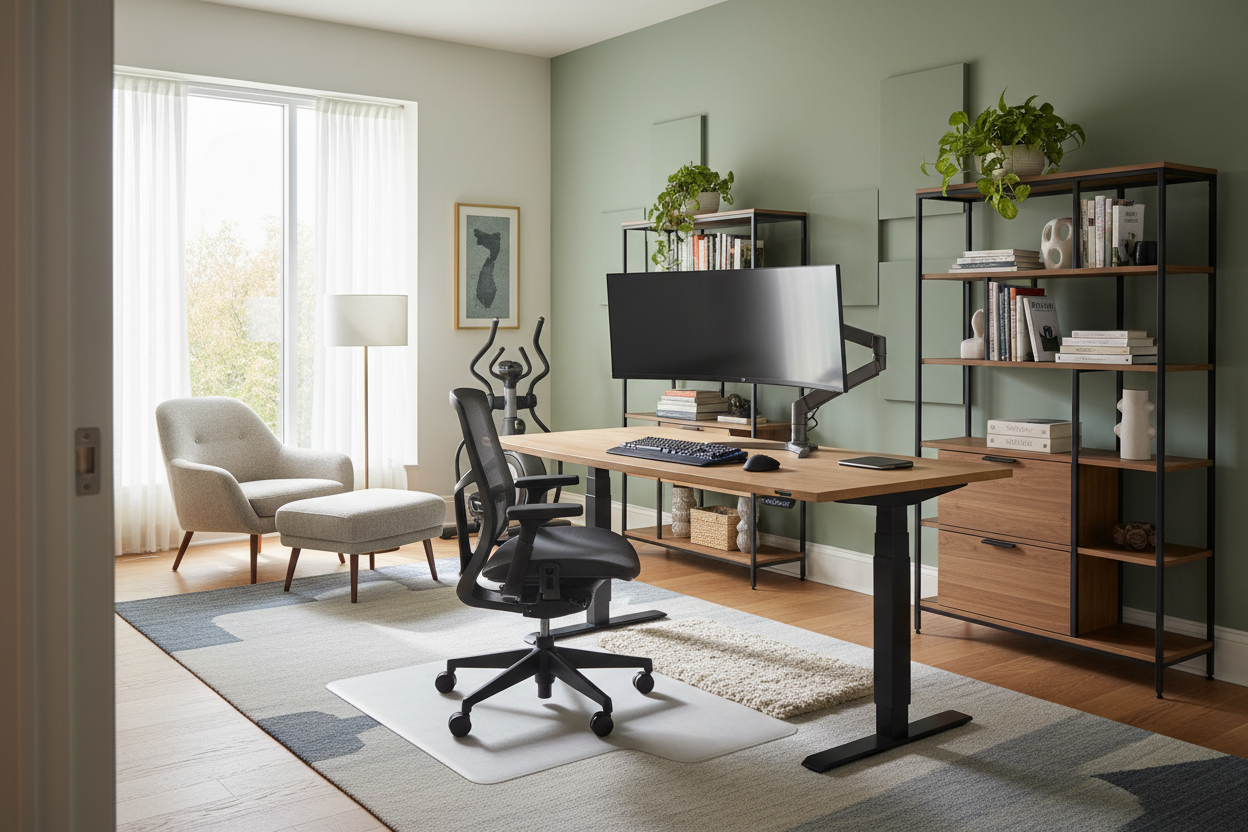
We have all been there: you sit down at your desk with a fresh cup of coffee, ready to tackle the day, but you cannot stop shifting in your seat. The lighting casts a harsh glare on your monitor, and the clutter on your desk makes the room feel chaotic before you even open an email. What started as a temporary remote setup has become a permanent fixture, and your body—and focus—are paying the price.
Investing in home office upgrades is not just about making a room look ready for a magazine spread; it is about creating a physical environment that supports your posture and your productivity. Today, we are going to walk through how to improve your home office by focusing on the changes that actually matter, bypassing the trendy gadgets that end up collecting dust.
Quick Decision Guide
- Prioritize ergonomics over aesthetics: A supportive chair and proper desk height yield the highest return on investment for your physical health.
- Command your space: Floating your desk to face the door reduces glare and provides a psychological sense of control over the room.
- Soften the acoustics: Hard surfaces create echo and fatigue; bring in rugs and drapery to absorb sound during video calls.
- Layer your lighting: Relying solely on overhead lights causes eye strain. Always pair ambient lighting with a dedicated task lamp.
Comfort and Ergonomics: The Foundation of Work
When clients ask me how to improve home office spaces, my first question is always about their chair and desk height. You can have the most beautifully curated room, but if your seating is wrong, you will hate working there.
The Desk and Chair Relationship
The best home office upgrades start with alignment. Standard desks sit around 29 to 30 inches high, which is actually too tall for many people unless they are over six feet. If you cannot adjust your desk, you need a highly adjustable chair and a footrest. Look for seat depth adjustability—you want about two inches of space between the back of your knees and the edge of the seat cushion to maintain proper circulation. These foundational office upgrades ensure you are not fatigued by noon.
Space Planning and Layout Strategies
Many North American homes were not built with dedicated executive suites. We often squeeze workspaces into guest rooms, living room alcoves, or finished basements. Smart space planning requires understanding the visual weight and proportion of your furniture.
Mastering the Command Position
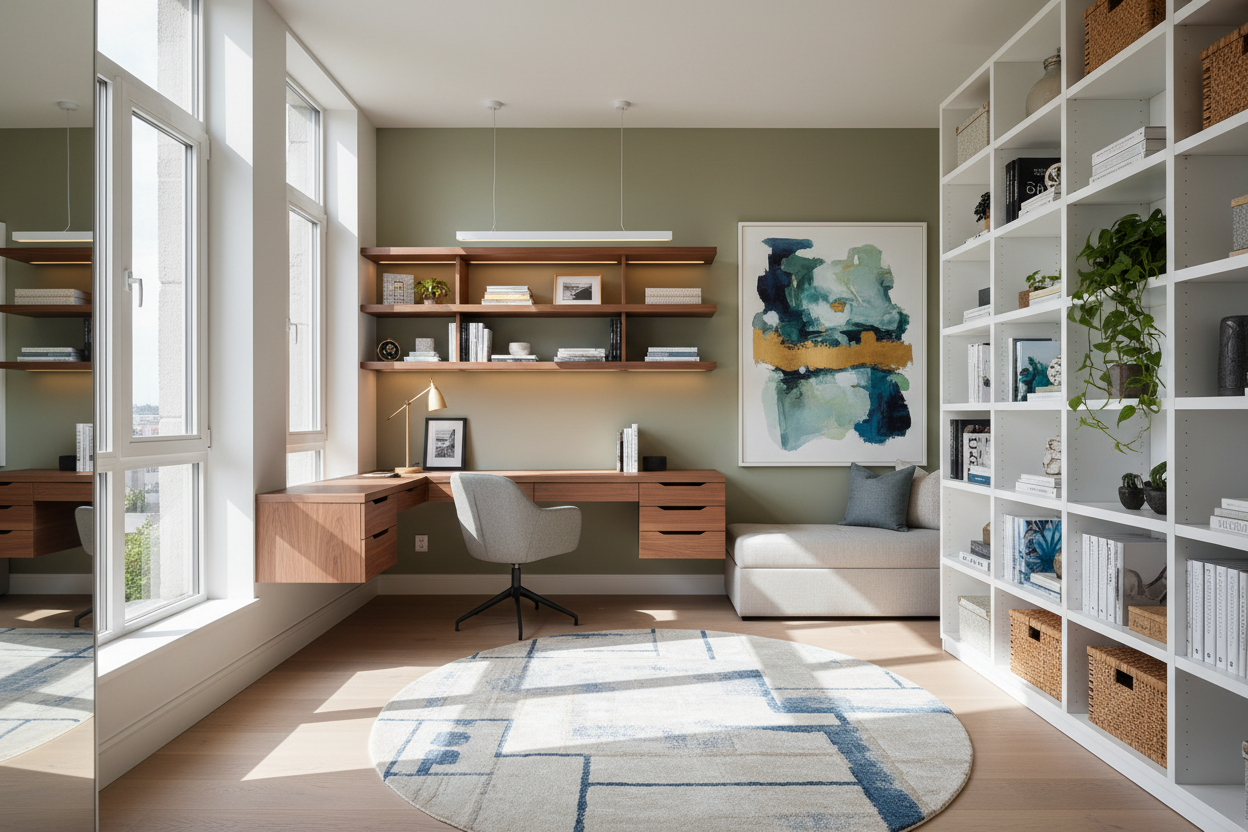
Whenever possible, avoid pushing your desk flush against a wall. Floating the desk so you face the door makes the room feel larger. If you are tight on square footage, vertical home office additions like wall-mounted floating shelves draw the eye upward, utilizing negative space without eating into your floor plan. Simple home office improvements, such as routing cables through a hidden tray along the back of the desk, instantly reduce visual clutter and lower your daily stress levels.
Style and Coordination: Blending Work and Life
A common home office improvement mistake is buying commercial-grade furniture that looks like it belongs in a corporate cubicle, completely clashing with the rest of your house. You want the space to feel cohesive with your existing decor, whether that is transitional, farmhouse, or minimalist.
Layering Textures for Warmth
Incorporate office upgrade ideas that soften the room. A vintage-inspired area rug under the desk anchors the space and adds texture. Swap harsh fluorescent bulbs for a warm, brass task lamp. These home office enhancements bridge the gap between a sterile workspace and a comfortable, inviting residential room.
Designer's Honest Take
Early in my career, I bought a stunning, authentic mid-century modern wooden chair for my own workspace. It had incredible lines, beautiful walnut grain, and looked amazing in photos. I thought it was the ultimate way to upgrade home office aesthetics.
I learned the hard way that 'looks good' does not equal 'works well.' After two weeks of eight-hour days, my lower back was screaming. The rigid wood offered zero lumbar support, and the seat depth was entirely wrong for my frame. I ended up swapping it for a highly adjustable mesh ergonomic chair. It is not nearly as photogenic, but it saved my posture. The lesson? Never compromise on your primary seating, even if it means sacrificing a bit of style. Save the sculptural, firm pieces for your guest seating.
Frequently Asked Questions
What are the best office upgrades for small spaces?
In compact rooms, the best office upgrades focus on vertical storage and lighting. Monitor arms that clamp to the back of your desk free up valuable surface area, while wall-mounted sconces provide excellent task lighting without taking up floor or desk space.
How do I improve home office acoustics?
Hard surfaces bounce sound around, making video calls echo. To improve home office sound quality, add soft materials. Heavy drapery, an upholstered chair, and a thick area rug will absorb excess noise and make the room feel much more comfortable.
Are standing desks really worth the investment?
Yes, but with a caveat. A standing desk is a fantastic addition if you actually use the changing heights to shift your posture throughout the day. However, if you just leave it at sitting height permanently, you are better off investing that budget into a higher-quality ergonomic chair.

Dejar un comentario
Este sitio está protegido por hCaptcha y se aplican la Política de privacidad de hCaptcha y los Términos del servicio.