










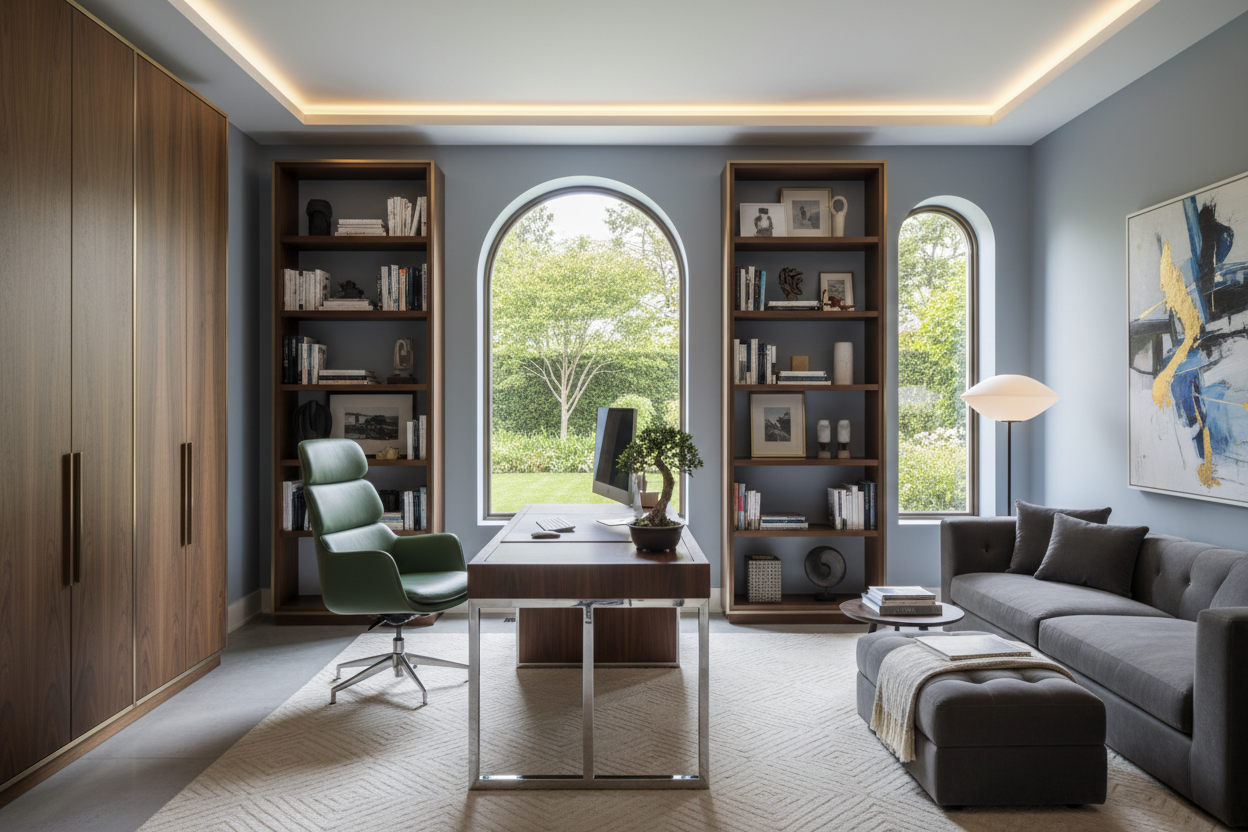
We have all been there: you drag a desk into the spare room, plug in your laptop, and call it an office. But weeks later, the space feels cold, uninspiring, and completely disconnected from the rest of your house. If your workspace feels more like a corporate cubicle than a thoughtful extension of your home, you need home study decor ideas that prioritize both function and form. By the end of this guide, you will know exactly how to arrange, light, and furnish a study that actually makes you want to sit down and work.
Quick Decision Guide
- Position for power: Face the door if possible. Floating a desk in the center of the room creates a stronger focal point than shoving it against a wall.
- Layer your lighting: Relying solely on overhead recessed lights causes eye strain. Add a dedicated task lamp and ambient floor lighting.
- Conceal the clutter: Mix open shelving for beautiful books with closed cabinetry for ugly electronics and paperwork.
- Invest in ergonomics first: Never sacrifice a supportive chair for a trendy silhouette. Your back will thank you.
Space Planning and Layout Strategies
When clients ask me for decorating ideas for study office setups, my first question is never about paint color. It is always about layout. The way you orient your furniture dictates how comfortable you feel in the room.
The Command Position
In interior design, we often talk about the 'command position.' This means placing your desk so you have a clear view of the door without being directly in line with it. If your room dimensions allow it, float your desk in the middle of the room. This instantly gives the space an executive, intentional feel. If you must face a wall, pull the desk out by just three inches to allow cables to drop down cleanly, and use the wall space for a large piece of inspiring art rather than a chaotic corkboard.
Managing Visual Weight
A common mistake in small suburban bedrooms turned offices is heavy, matching furniture sets. A massive wooden executive desk paired with chunky wooden bookcases will swallow a standard 10x10 room. Instead, balance the visual weight. Pair a solid wood desk with metal-framed, open-back shelving. This allows the eye to travel through the furniture, making the room feel significantly larger.
Fusing Function with Residential Style
Your workspace should not feel like a departure from your home architecture. Excellent home study decor bridges the gap between commercial utility and residential warmth.
Layering Textures for Warmth
Corporate offices feel cold because they rely on glass, laminate, and metal. To soften your study office room ideas, introduce organic textures. Anchor the desk with a vintage-inspired wool rug to dampen sound. Add a linen or velvet lumbar pillow to your chair. Hang linen drapery instead of harsh plastic blinds. These soft materials absorb echoes during video calls and make the room feel like a true sanctuary.
Prioritizing Physical Comfort
A room can look worthy of a magazine spread, but if your wrists ache after an hour of typing, the design has failed.
The Truth About Office Chairs
I frequently see homeowners purchase rigid, mid-century dining chairs for their desks because they look fantastic on camera. Do not do this. You need a chair with adjustable seat depth, proper lumbar support, and armrests that clear your desk height. Fortunately, many manufacturers now produce ergonomic chairs wrapped in high-quality residential fabrics like bouclé or performance tweed, so you no longer have to choose between a supportive spine and a beautiful room.
Lessons from My Own Projects
Early in my career, I designed a spectacular home office for a client using a stunning architectural glass-top desk. It looked incredibly sleek in the showroom. I learned the hard way that a glass desk in a sunlit room is a nightmare. Not only did it show every single fingerprint and speck of dust, but it also offered zero cable concealment. Every black power cord and monitor wire was visible through the top, completely ruining the minimalist aesthetic we were aiming for.
We ended up having to swap it for a solid walnut desk with integrated wire management channels. The lesson? Always plan for the ugly reality of technology. If a piece of furniture cannot gracefully hide a power strip and three chargers, it does not belong in a working study.
Frequently Asked Questions
How do I make a small study feel bigger?
Use furniture with exposed legs to create a sense of floor space. Paint the baseboards, walls, and trim the same color (a technique called color drenching) to blur the boundaries of the room, and utilize vertical wall space for shelving instead of wide, floor-hogging cabinets.
What are the best colors for a study?
It depends on how you work. Deep, moody colors like navy or forest green create a cozy, library-like atmosphere ideal for deep focus and reading. Soft, warm neutrals or muted sage greens are better if you need a bright, energized space for creative brainstorming.
How do I hide messy cords?
Use adhesive cable clips along the back edge of your desk to route wires down the legs. Mount a wire management tray or a simple gutter under the desk surface to hold power strips. For floor outlets, a strategically placed rug or a woven basket can hide the main power hub.

Dejar un comentario
Este sitio está protegido por hCaptcha y se aplican la Política de privacidad de hCaptcha y los Términos del servicio.