










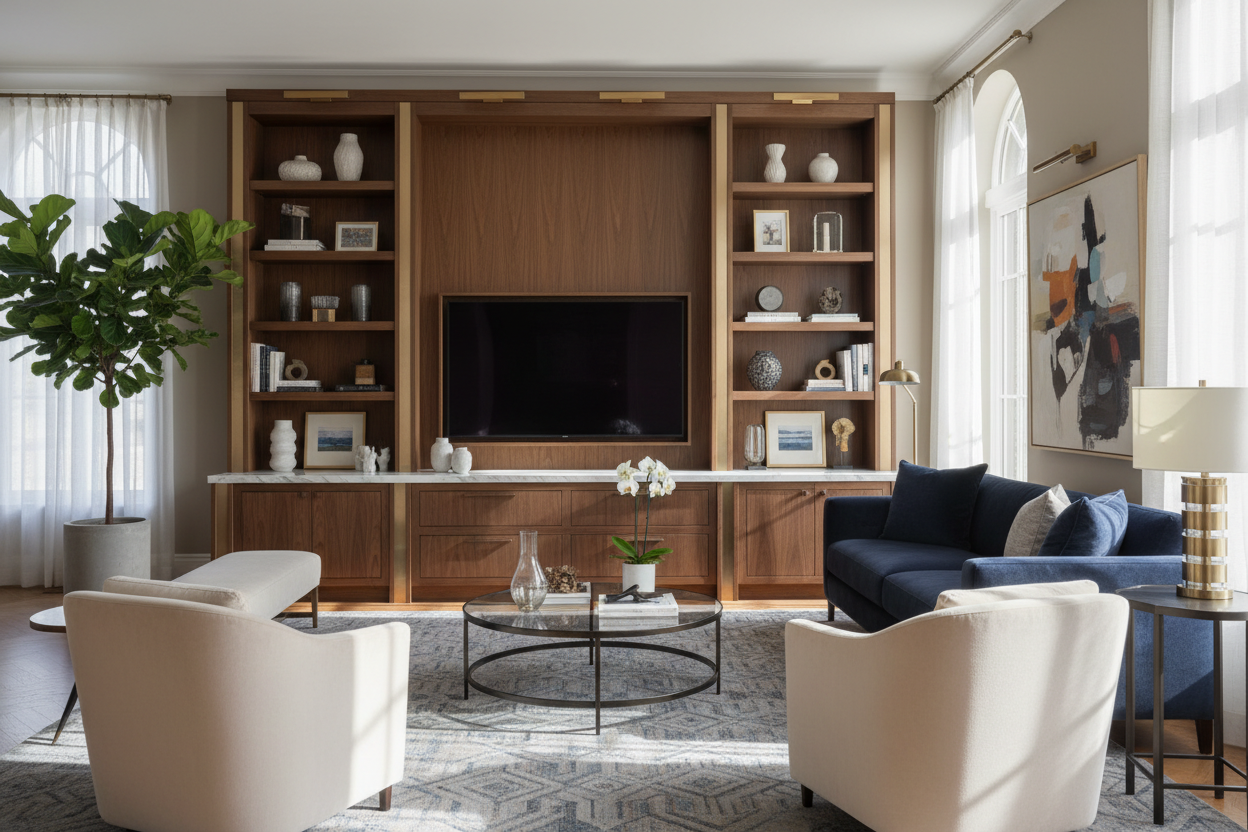
I spent three months avoiding my own drawing room. Every time I walked in with a guest, my eyes went straight to the 65-inch black void on the wall and the dangling HDMI cord that looked like a stray hair on a silk dress. It was a classic clash between my love for velvet armchairs and my need to binge-watch period dramas on a screen that is, frankly, too big for the room.
Finding a tv cabinet for drawing room use isn't just about finding a place to park your tech. It is about damage control. You want a piece that says 'I host salon-style gatherings' while secretly housing a PlayStation 5 and a tangle of dusty power strips.
- Choose a unit at least 10 inches wider than your screen to avoid a top-heavy look.
- Opt for closed storage to hide the glowing red lights of routers and cable boxes.
- Look for solid wood or high-density veneer; cheap particle board will sag under a heavy OLED within a year.
- Prioritize 'cord ports' or integrated management so you never see a wire.
The 'Formal Room vs. Giant Screen' Dilemma
The drawing room is supposed to be the 'adult' space. It is where you serve the expensive gin and pretend you don't spend Saturday mornings in your pajamas. But a giant, lifeless black plastic rectangle ruins that vibe instantly. Most standard furniture design for tv unit options are built for dens or 'man caves,' featuring glass shelves and blue LED lights that feel more like a suburban strip mall than a sophisticated parlor.
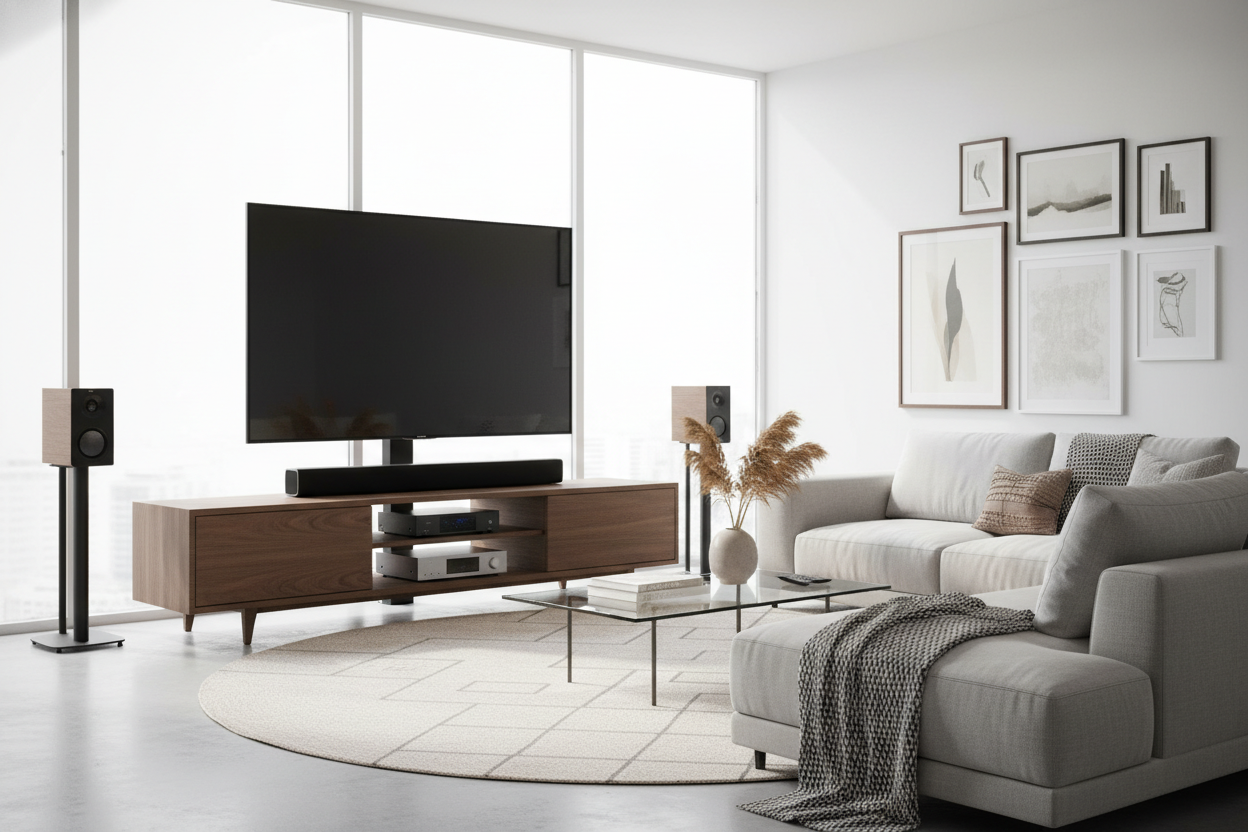
I tried a minimalist metal stand first. Huge mistake. It looked like a hospital monitor stand. In a formal setting, you need weight and texture to balance the sleekness of the screen. If the piece doesn't have the visual 'heft' of a sideboard or a credenza, the TV will always look like an intruder in the room.
What Makes a Console Actually Worthy of a Drawing Room?
If you want your media setup to actually look like real furniture, you have to stop shopping in the electronics aisle. A drawing room requires materials that have a soul—think walnut, oak, or even a high-quality lacquered finish. Avoid anything with visible silver plastic handles or those flimsy cardboard backings that you have to nail on yourself.
I look for pieces with 'finished' backs or at least very sturdy ones. If you can see the back of the unit from a hallway or an open-concept dining area, it needs to look as good as the front. Elevated hardware, like brushed brass or matte black pulls, can make a $500 cabinet look like a $2,000 heirloom piece. It is the jewelry of the room.
Symmetry, Fluting, and Solid Construction
Architecture matters here. When I was hunting for the right tv unit furniture design, I realized that flat, boring doors make the unit look like a giant box. Fluted door details or subtle molding add shadows and depth. These textures catch the light from your lamps and help the cabinet blend in with your crown molding and architectural trim rather than standing out as a 'tech station.'
Hiding the Tech (Because Wires Aren't Elegant)
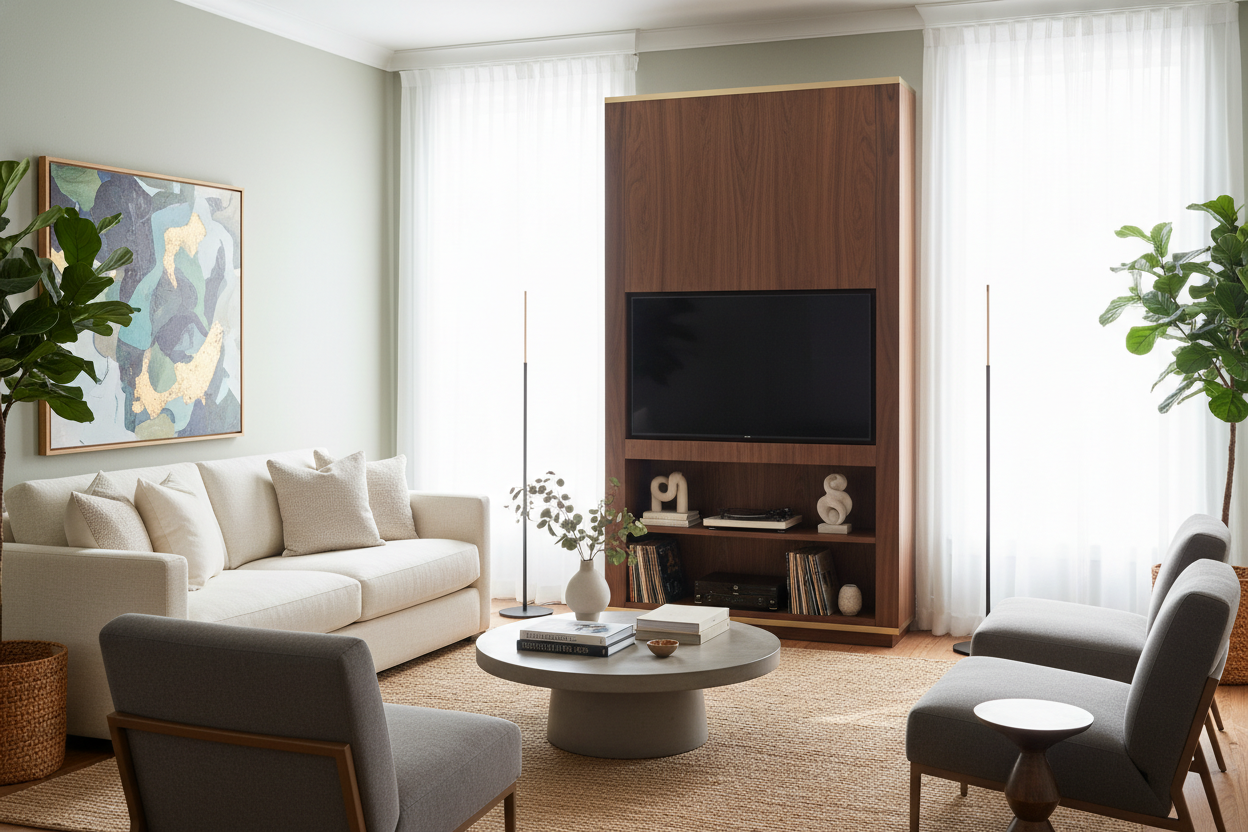
No one wants to sip a martini while staring at a glowing router. The secret to a formal drawing room is total concealment. I specifically went looking for a modern TV cabinet with storage that featured adjustable shelving. This allowed me to hide my oversized receiver and the mess of wires that comes with a high-end soundbar.
Pro tip: check for ventilation. If you're stuffing a game console or a powerful receiver behind closed doors, it will overheat. I ended up DIY-ing a few extra holes in the back of my cabinet with a hole saw bit just to get the airflow right. It’s a small price to pay for a clean, wire-free view. If you can see even one inch of a black cord hanging down, the whole 'formal' illusion is shattered.
The Final Reveal: Entertaining Without Apologies
Once I finally swapped that flimsy metal stand for a substantial, dark wood cabinet, the room clicked into place. The TV no longer feels like a giant mistake; it feels like part of a curated wall. When I have people over, the screen stays off, and the cabinet serves as a surface for a tray of drinks or a stack of oversized art books. It’s functional, but it’s also beautiful.
If you are struggling with a room that feels half-finished or 'too casual,' the TV stand is usually the culprit. I suggest you browse various TV stands with a critical eye for scale and material. Don't settle for the first thing that fits the screen—find the thing that fits the room.
FAQ
How high should a TV cabinet be in a drawing room?
For a formal room, aim for 24 to 30 inches. You want the TV at eye level when you're seated in your armchairs, but high enough that the cabinet itself has some presence.
Should the TV cabinet match my coffee table?
It doesn't have to be a perfect 'set,' but the wood tones should be in the same family. If your coffee table is cool-toned oak, don't buy a cherry red TV stand. It will clash every time the sun hits it.
Can I put a TV cabinet in front of a window?
I wouldn't recommend it. Not only does the backlight make the screen hard to see, but it also blocks the natural light that makes a drawing room feel airy. If you must, choose a low-profile unit that doesn't obstruct the glass.

Dejar un comentario
Este sitio está protegido por hCaptcha y se aplican la Política de privacidad de hCaptcha y los Términos del servicio.