










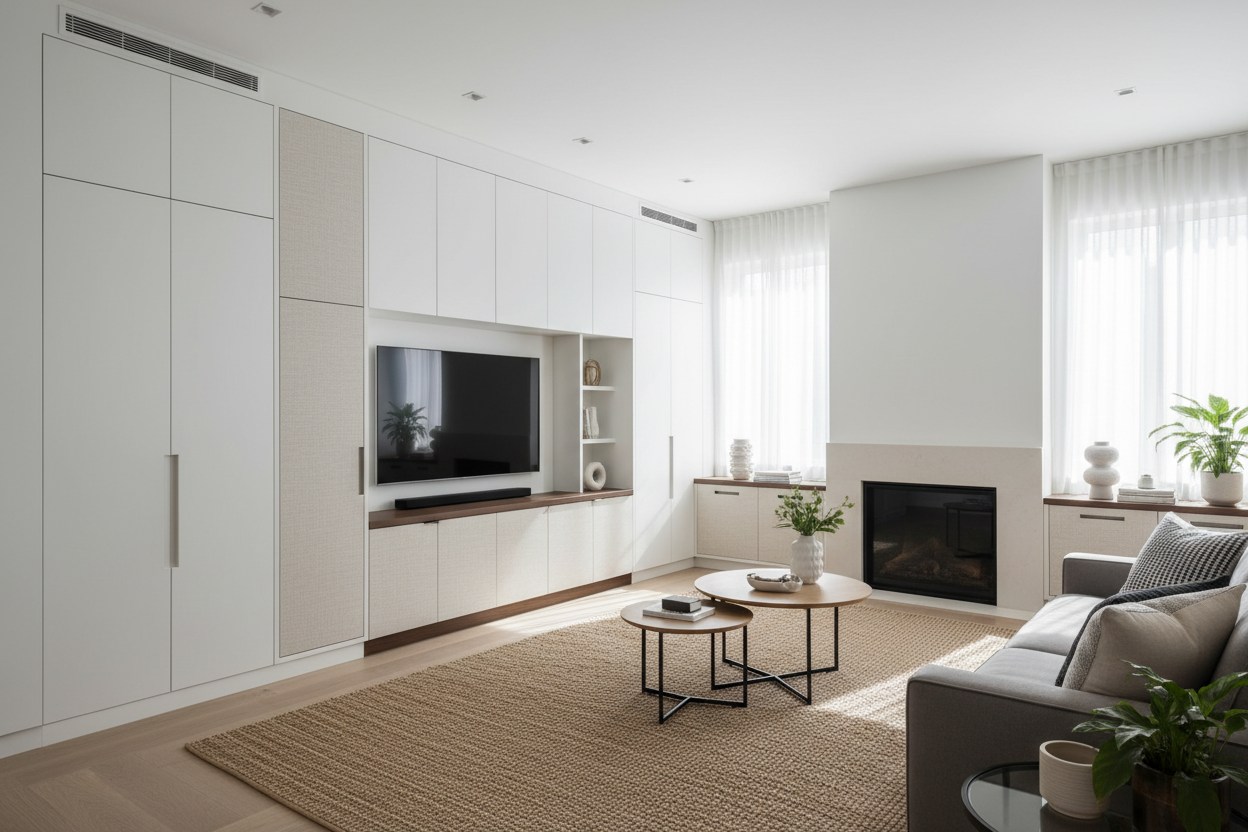
I spent three years trying to make my living room look like a curated boutique. I had the open industrial shelves, the meticulously stacked art books, and the 'intentional' ceramic bowls. But every time I sat on my sofa at 9 PM, I didn't feel relaxed. I felt like I was staring at a giant, high-contrast to-do list. The truth is, my life isn't curated; it's full of tangled HDMI cables, half-finished knitting projects, and dog toys that definitely don't match my aesthetic. Switching to enclosed storage wasn't just a design choice—it was a mental health intervention.
- Closed doors hide the 80% of your life that isn't 'aesthetic.'
- Visual noise is reduced, leading to a calmer nervous system.
- Dusting becomes an occasional chore rather than a daily requirement.
- Solid doors allow you to organize by 'toss it in' rather than 'perfectly aligned.'
The Exhausting Reality of 'Curated' Open Shelves
The open shelving trend is a lie sold to us by people who don't actually own things like plastic router boxes or neon-colored board game sets. I tried to make it work. I bought matching wicker baskets to hide the small stuff, but even then, the baskets themselves created a repetitive, heavy texture that made my 12x15 living room feel cramped. Relying on baskets instead of closed cabinets for storage is a trap; you're still managing the 'look' of the storage rather than just storing things.
When everything is visible, everything is a distraction. I found myself constantly adjusting the spine of a book or shifting a candle three inches to the left. It was visual anxiety disguised as interior design. Real closed cabinets allow your eyes to rest on flat, clean surfaces instead of a thousand small objects competing for your attention. If you have kids or pets, the battle for 'shelf styling' is one you will lose every single day.
The Immediate Relief of a Closed Storage Unit
The day I swapped my open rack for a proper closed storage unit, the room's volume felt like it was turned down from a ten to a three. I moved my entire messy library, my collection of mismatched vases, and my unsightly tech gear into an enclosed storage cabinet and shut the doors. The relief was instantaneous. Suddenly, the architecture of the room stood out more than the clutter on the shelves.
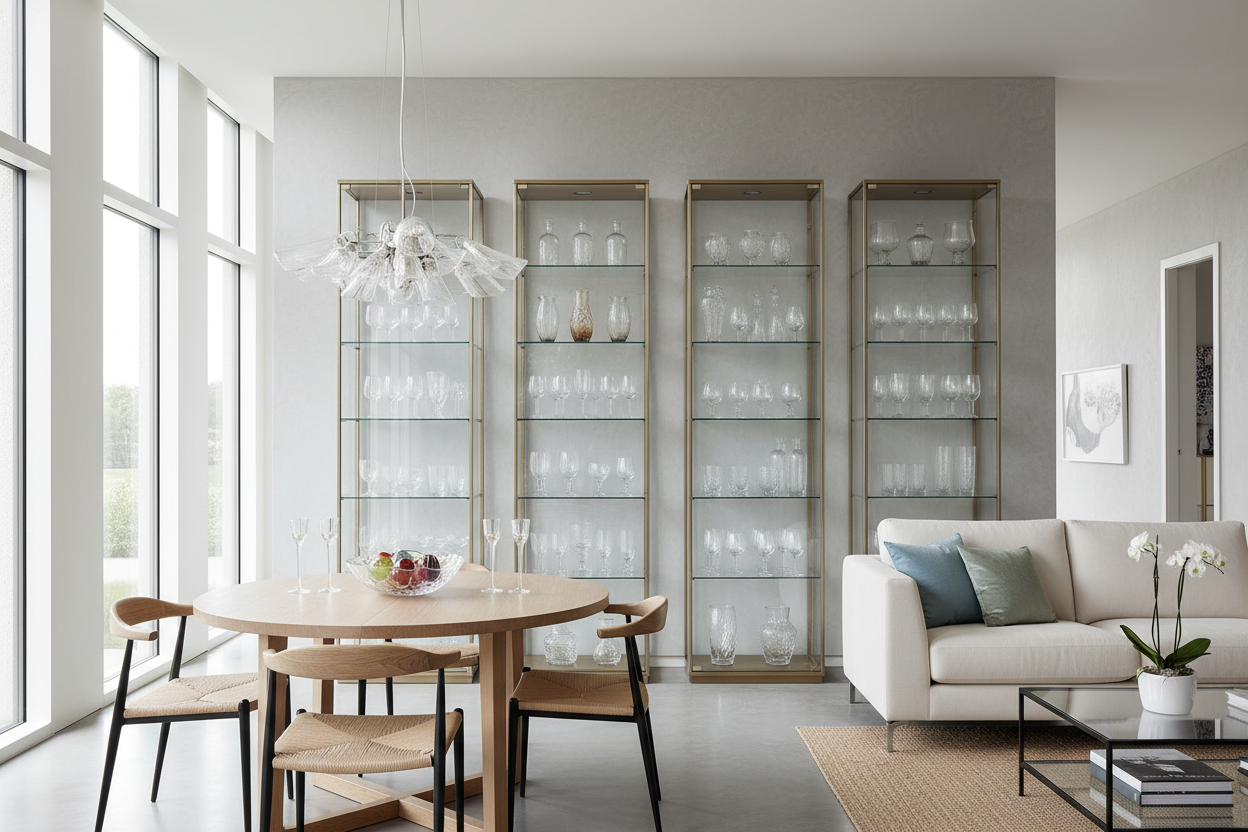
For anyone dealing with a small apartment, the instinct is often to go for 'airy' open pieces, but that actually backfires by creating a messy silhouette. A tall closed storage cabinet is the real secret to reclaiming floor space. By going vertical and hiding the contents, you create a singular, bold focal point that anchors the room. I opted for a piece with a 72-inch height, which gave me five massive shelves of hidden real estate without the visual chaos of an enclosed cabinet with five glass doors.
The 80/20 Rule for Hiding Your Stuff
My new design philosophy is simple: 80 percent of your belongings should live inside a closed door cabinet, and only 20 percent should be out on display. That 20 percent should be the stuff that actually brings you joy—the hand-thrown vase from your trip to Mexico, or the one coffee table book you actually look at. Everything else—the extra coasters, the remote controls, the chargers—goes behind solid wood or metal doors.
In my own home, I used a contemporary sideboard cabinet to ground the main wall. At 59 inches wide, it’s long enough to hold my 55-inch TV while providing deep, enclosed shelf cabinet space underneath. It’s made of high-density engineered wood with a matte finish that doesn't show fingerprints, which is a massive upgrade from the flimsy 0.5-inch particle board units that bow the second you put a stack of plates inside them.
The Compromise: Enclosed Cabinets With Shelves
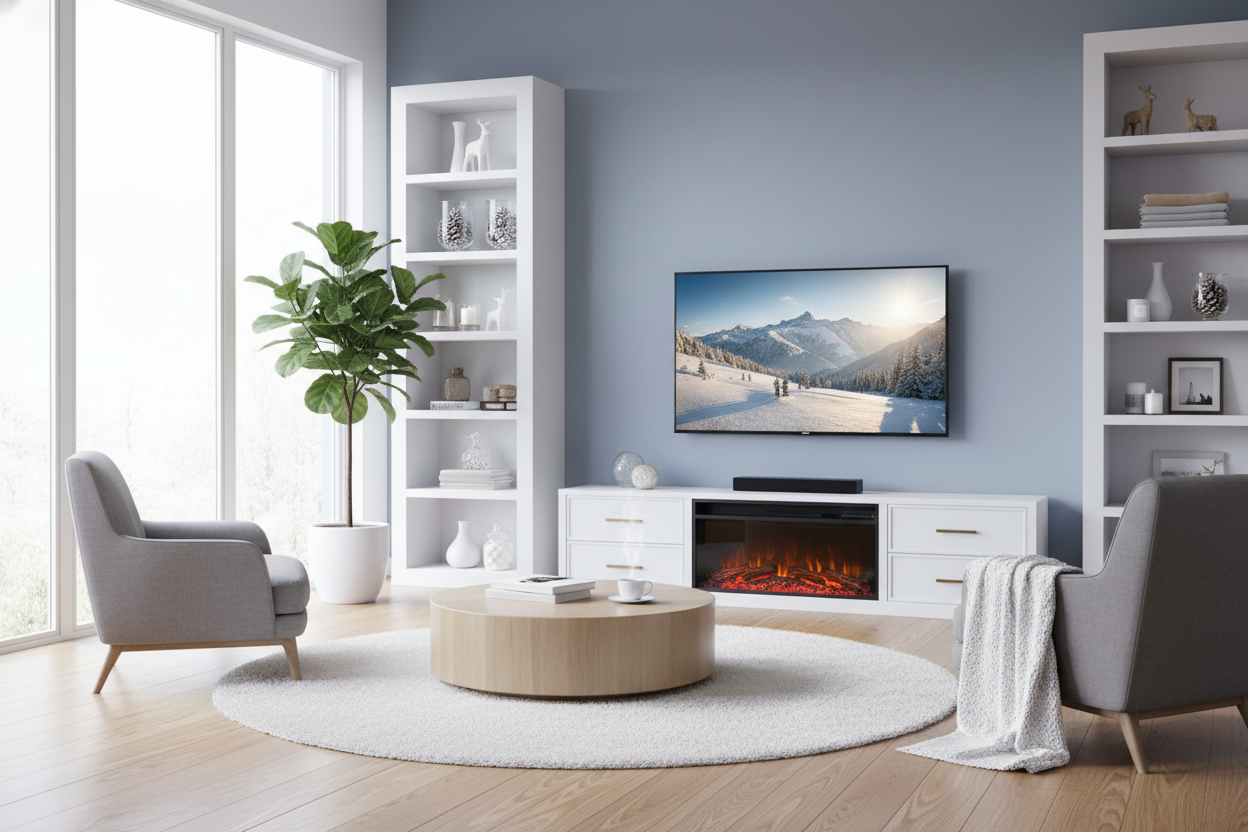
If the idea of hiding everything feels too clinical, you don't have to go full minimalist. Hybrid furniture is the middle ground for people who still want a bit of personality. Using a cabinet with open shelf sections allows you to keep your record player or a few plants accessible while the bottom two-thirds of the unit remains a closed storage cabinet with shelves for the 'ugly' stuff.
This hybrid approach works particularly well in entryways. I use a small closed cabinet near my front door for shoes and mail, with one open cubby at the top for my keys and sunglasses. It keeps the 'drop zone' from looking like a disaster area while still being functional for my morning exit. It's about being honest with yourself: if you aren't a tidy person by nature, your furniture needs to do the tidying for you.
How to Keep Enclosed Cabinets from Looking Heavy
The biggest fear people have with enclosed cabinets is that they will look like heavy, monolithic blocks that eat up the room. To avoid this, look for pieces with 'breathing room' at the bottom. A closed door storage cabinet with 6-inch tapered legs feels much lighter than one that sits flush on the floor. It allows the line of the floor to continue under the furniture, tricking your brain into seeing more space.
Texture is another way to break up the bulk. Instead of a flat white box, I look for fluted doors or wood grain that runs horizontally. This adds visual interest without adding clutter. I once made the mistake of buying a cheap, glossy black cabinet that looked like a giant refrigerator in my living room. I eventually sanded it down and painted it a soft sage green with a matte finish, which helped it recede into the wall. Details like solid brass hardware or a stone top can make a basic enclosed storage cabinet feel like a custom built-in.
FAQ
Does enclosed storage make a small room feel smaller?
Actually, the opposite is usually true. While the furniture piece itself is solid, it eliminates the hundreds of tiny shadows created by open clutter. This creates a more unified, expansive feel in tight quarters.
What should I look for in terms of durability?
Avoid anything with plastic hinges. Look for steel European-style concealed hinges that are adjustable. If the doors are large, make sure the back panel is at least 1/4-inch thick to prevent the cabinet from racking or leaning over time.
How do I handle electronics inside a closed cabinet?
Heat is the enemy. If you're putting a gaming console or a router inside, ensure the back panel has pre-drilled cable holes or use a 2-inch hole saw to add your own for airflow. You can also find cabinets with perforated metal or cane webbing doors that allow for ventilation and remote signal passthrough.

Dejar un comentario
Este sitio está protegido por hCaptcha y se aplican la Política de privacidad de hCaptcha y los Términos del servicio.