










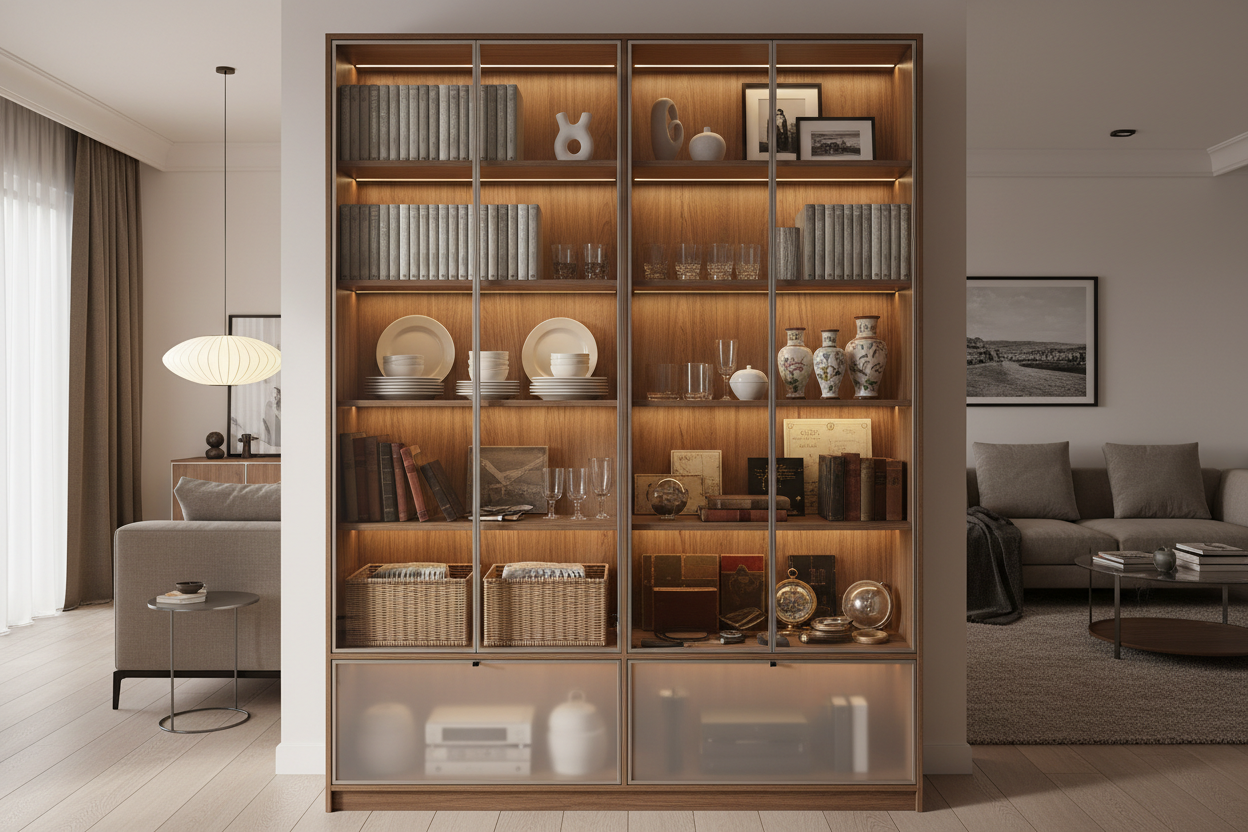
Display cabinets with storage solve one of the most frustrating furniture problems: where to put the things you love while hiding the clutter you don't want anyone to see. Unlike traditional shelving that leaves everything exposed or closed cabinets that hide everything away, these versatile pieces let you showcase your collections while keeping practical storage tucked out of sight.
The magic of a good storage and display cabinet lies in its dual personality. The glass-fronted upper sections become mini galleries for your grandmother's teacups, vintage cameras, or book collections, while the lower compartments swallow up board games, extra linens, or that random pile of cables we all pretend doesn't exist. This combination makes them particularly valuable in smaller homes where every piece of furniture needs to earn its keep.
Understanding Different Display Cabinet Configurations
Walk into any furniture store and you'll find dozens of variations on the display storage cabinet theme. Some feature glass shelves throughout with a single drawer at the base. Others reverse the ratio, offering mostly enclosed storage with just a few display shelves up top. The cabinet display shelf arrangement you choose depends entirely on what you own and how much of it you want visible.
I learned this the hard way when I bought a beautiful display chest for my dining room without measuring my actual dishware. The shelves were too shallow for my dinner plates, and the enclosed bottom section was too tall for the table linens I wanted to store there. That cabinet ended up in the guest room holding books instead—still useful, but not what I'd planned.
Materials Matter More Than You Think
The construction of display cabinets and shelving determines both longevity and appearance. Solid wood frames with tempered glass doors offer the most durability and a classic look that works in traditional spaces. Metal and glass combinations bring an industrial edge that suits modern interiors. Engineered wood with veneer finishes provides budget-friendly options that still look sophisticated when well-made.
Glass quality deserves special attention. Tempered glass costs more but won't shatter into dangerous shards if something goes wrong. The thickness affects both safety and the premium feel of the piece. Thin glass panels can bow slightly under weight and create distortion when viewing your displayed items. Look for at least 5mm thickness in the doors and 6-8mm for shelves that will hold heavier objects.
The Storage Side of the Equation
The hidden storage portion of a display storage cabinet typically comes in three forms: drawers, cabinets with solid doors, or a combination of both. Drawers work beautifully for smaller items you access frequently—silverware, serving utensils, napkins, or craft supplies. Cabinets with doors handle bulkier items and create cleaner lines when you want a more streamlined appearance.
A display drawer cabinet offers particular advantages in spaces like kitchens or craft rooms where you need quick access to supplies while still wanting to showcase finished projects or special pieces. The drawer configuration lets you organize small items in a way that solid shelves simply can't match.
Placement Strategy for Maximum Impact
Where you put your storage and display furniture changes how it functions. In dining rooms, these pieces traditionally hold china and serving pieces, with table linens stored below. Living rooms see them displaying books, photos, and collectibles while hiding electronics, remotes, and all those charging cables. Home offices use them to showcase awards or special books while storing less attractive office supplies.
Lighting transforms a simple display shelving cabinet into a focal point. Built-in LED strips or puck lights illuminate your displayed items and create ambiance in the evening. Even without built-in lighting, positioning the cabinet near a window or adding a nearby lamp dramatically improves visibility and visual appeal.
Styling Your Display Space Without Overcrowding
The display sections work best when you resist the urge to fill every inch. Group items in odd numbers—three vases instead of four, five books instead of six. Vary heights and create visual triangles by placing taller items at the back or sides with shorter pieces in front. Leave some shelves partially empty to give the eye places to rest.
Color coordination creates cohesion without making everything look too matchy. If you're displaying a mix of items, find a common color thread that ties them together. This might be all white ceramics with one shelf of blue glass, or wood frames mixed with brass accents. The storage display approach works because the hidden sections don't need to follow any aesthetic rules—they're purely functional.
Practical Considerations Before Buying
Measure three times, buy once. Know your ceiling height, especially if you're considering tall display case with storage options. Account for baseboards that might prevent a cabinet from sitting flush against the wall. Measure doorways and stairwells if you're ordering something large—I've seen too many people discover their beautiful new cabinet won't fit through the bedroom door.
Weight capacity matters, particularly for the display shelves. Glass shelves typically hold 15-30 pounds depending on thickness and support structure. If you're planning to display heavy items like large books, pottery, or glassware collections, verify the weight ratings before loading everything up. Adjustable shelving provides flexibility as your needs change over time.
Maintenance and Long-Term Care
Glass-fronted display chest pieces require more cleaning than solid cabinets, but the effort is worthwhile for the visual impact. Microfiber cloths and glass cleaner keep the doors sparkling without scratching. The interiors need occasional dusting, though glass doors do reduce how quickly dust accumulates compared to open shelving.
Wood components benefit from occasional conditioning with appropriate products for the finish type. Avoid placing these cabinets in direct sunlight, which can fade both the wood finish and any items you're displaying. Humidity control matters too—excessive moisture can warp wood and damage displayed items, while too-dry air can cause wood to crack.
Making the Investment Worthwhile
Quality display cabinets and shelving represent a significant furniture investment, but they're pieces you'll use for decades if chosen well. The combination of storage display functionality means they adapt as your life changes. Today's china cabinet becomes tomorrow's bookshelf or craft supply organizer. The versatility justifies the cost in ways that single-purpose furniture can't match.
Consider your actual lifestyle rather than aspirational decorating. If you rarely entertain formally, maybe you don't need space for fine china. If you work from home, perhaps a display drawer cabinet in your office makes more sense than one in the dining room. The best furniture serves your real life, not some imaginary version of it.

Dejar un comentario
Este sitio está protegido por hCaptcha y se aplican la Política de privacidad de hCaptcha y los Términos del servicio.