











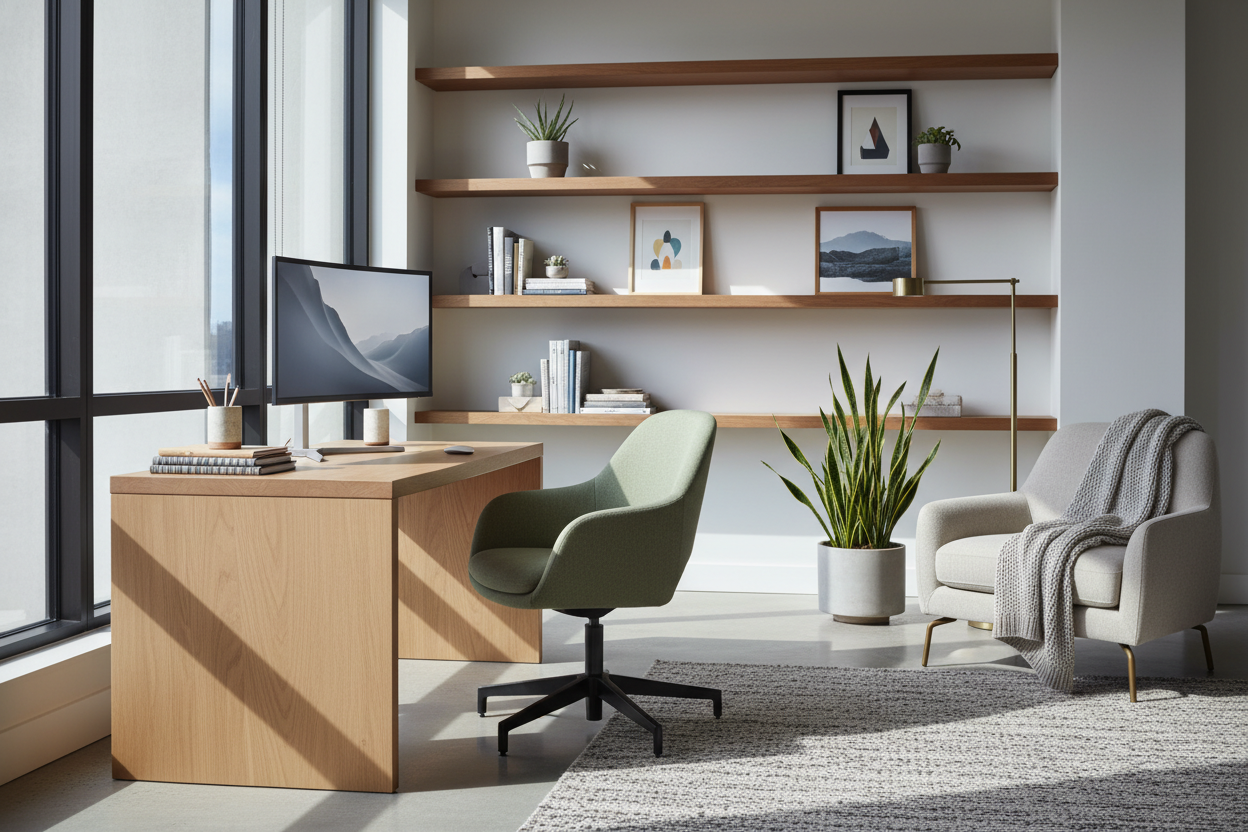
We have all scrolled through social media feeds filled with pristine, sterile workspaces that look beautiful but feel impossible to inhabit. A real home office isn't just about aesthetics; it is about the intersection of your daily workflow and your personal style. It is where coffee cups leave rings if the finish isn't right, and where ergonomic support matters more than a trendy silhouette. As a designer, my goal is to help you bridge the gap between a showroom look and a functional, lived-in workspace.
Key Features to Look For
- Ergonomics First: Prioritize a chair with lumbar support over purely decorative accent chairs for long-term health.
- Surface Durability: Choose materials like high-pressure laminate or sealed solid wood if you are hard on surfaces; glass offers style but requires constant cleaning.
- Lighting Layers: Combine ambient overhead lighting with focused task lighting to reduce eye strain.
- Spatial Flow: Ensure a minimum of 36 inches behind your desk for chair clearance and movement.
Defining the Casual Aesthetic
Gone are the days when a home workspace had to mimic a corporate cubicle. Modern casual home office ideas lean heavily into residential comfort. We are seeing a shift toward softer textures and organic shapes. Instead of stark black and chrome, consider at home desk ideas that utilize warm walnuts, matte oaks, or painted finishes that complement your existing living room furniture. The goal is visual integration, especially if your workspace is part of an open floor plan.
Materiality: The Glass vs. Wood Debate
Choosing the right desk surface is critical for both home desk design and longevity. Solid wood provides a tactile warmth and gains character with age, but it can be visually heavy in tighter quarters.
Styling the Transparent Look
For smaller rooms, a glass desk is a brilliant spatial hack because it takes up zero visual weight. However, glass desk decorating ideas require discipline. Because the structure is transparent, your cable management must be impeccable. I often recommend using a desk with a frosted modesty panel or pairing the glass top with a textured rug underneath to ground the space and prevent it from feeling too clinical.
Layouts for Multipurpose Spaces
Not everyone has a dedicated room, which makes work from home room ideas challenging. The key is zoning. If you are working with a master bedroom or a large landing, you need to define the perimeter.
Incorporating Lounge Zones
One of the most requested features in luxury residential projects recently is home office sitting area ideas. Even in compact spaces, small office ideas with couch configurations are possible. A loveseat or a pair of club chairs placed perpendicular to the desk creates a "break zone" for reading or taking calls away from the screen. This separation of tasks within the same room is vital for mental clarity.
Curating Your Desk Scape
When looking for work at home desk ideas, focus on the "triangle of reach." Your monitor, keyboard, and immediate storage (like a pen tray or notepad) should be within arm's length. Desk space inspiration often shows clutter-free surfaces, but in reality, you need accessible storage. Utilize vertical space with floating shelves above the desk to keep the primary work surface clear for active projects. This is essential for work at home office ideas where square footage is at a premium.
Lessons from My Own Projects
I want to share a specific realization from a project I worked on last year, which changed how I view work from home desk inspo. I specified a stunning, high-gloss lacquered writing desk for a client. It looked incredible in the photos. However, two weeks later, the client called me. The issue wasn't the look; it was the friction. The high-gloss finish was "sticky" against their forearms during humid summer days, making typing uncomfortable.
I learned that tactile experience trumps visual impact every time. We ended up having a custom leather blotter made to cover the working area. Now, when I design a space, I always check the thermal conductivity and texture of the desk edge. If you are buying a desk, sit at it and rest your arms exactly how you would when typing. If the edge is sharp or the material feels cold and clammy, walk away, no matter how good it looks.
Conclusion
Designing a workspace is about honesty. It requires admitting how you actually work, not how you wish you worked. By selecting durable materials, planning for "break zones," and prioritizing ergonomics, you can build a space that supports your career without sacrificing the comfort of home.
Frequently Asked Questions
How do I maintain a glass desk in a busy home office?
Glass shows everything. Keep a microfiber cloth and a gentle glass cleaner in a nearby drawer. To minimize maintenance, avoid placing the desk in direct sunlight, which highlights dust and fingerprints instantly.
What is the best desk depth for a computer setup?
For a standard laptop setup, 24 inches is sufficient. However, if you use multiple monitors, aim for a depth of 30 inches so the screens aren't too close to your eyes.
Can I fit a sitting area in a 10x10 office?
Yes, but scale is everything. Instead of a full sofa, opt for a settee or a single oversized armchair with an ottoman. Place it in the corner diagonally opposite the desk to maximize floor space.

Dejar un comentario
Este sitio está protegido por hCaptcha y se aplican la Política de privacidad de hCaptcha y los Términos del servicio.