










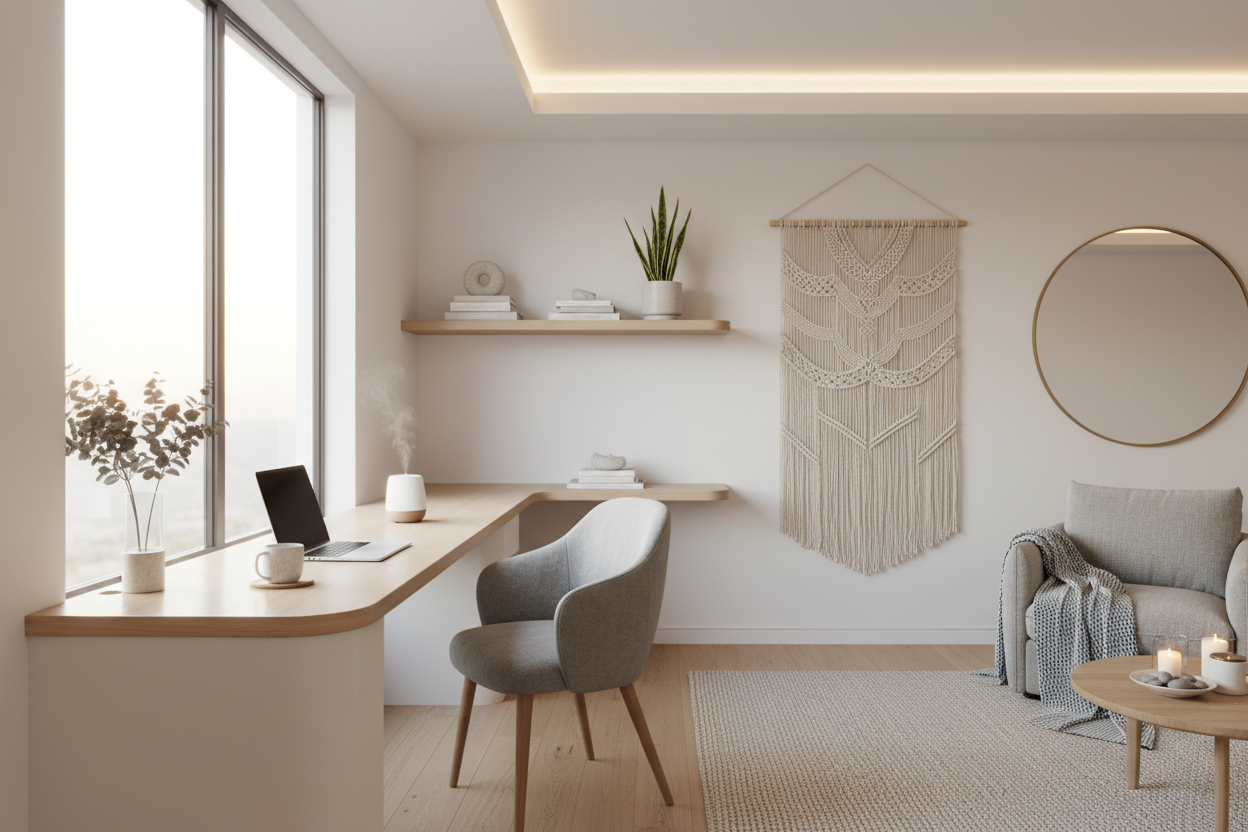
Working from home often blurs the line between professional stress and personal relaxation, leading to burnout in spaces that should feel safe. The standard corporate approach—sterile white desks and stiff mesh chairs—does little to soothe the nervous system. As a designer, I believe the antidote lies in borrowing principles from high-end wellness centers. Implementing spa-like office design ideas isn't just about aesthetics; it is about creating a sensory environment that lowers cortisol while maintaining focus.
Key Elements for a Serene Workspace
- Color Psychology: Prioritize monochromatic palettes using warm neutrals (greige, taupe, soft sage) to reduce visual noise.
- Lighting Temperature: Aim for 2700K to 3000K LED bulbs to mimic warm, natural light rather than harsh daylight cool tones.
- Tactile Materials: Incorporate natural textures like raw wood, boucle fabric, or honed stone to engage the sense of touch.
- Biophilic Elements: Introduce air-purifying plants or water features to improve air quality and acoustics.
- Olfactory Design: Plan for scent diffusion (eucalyptus or sandalwood) without damaging furniture finishes.
Establishing the Foundation: Palette and Materials
The core of a spa atmosphere is visual silence. In an office, this means reducing contrast. High-contrast spaces (like black and white) are stimulating, whereas low-contrast spaces are calming. I recommend wrapping the room—walls, trim, and ceiling—in a single, chalky hue. This technique, known as color drenching, eliminates jarring transitions and makes the room feel like a cocoon.
When selecting furniture, the material quality dictates the "feel" of the room quite literally. Avoid cold laminates. Instead, opt for solid wood or high-quality veneers with a matte, open-pore finish. When you rest your arms on your desk, the surface should feel warm and organic, not synthetic. For seating, move away from purely utilitarian aesthetics; look for ergonomic chairs upholstered in performance linens or soft leathers that offer support without looking like they belong in a cubicle.
Lighting: The Circadian Approach
Most offices suffer from over-illumination. In a spa setting, lighting is always layered and diffused. To replicate this:
- Ambient Light: Avoid a single central ceiling fixture. If you must use overhead lighting, install a dimmer immediately.
- Task Lighting: Use a desk lamp with a linen shade rather than a metal directional cone. The fabric softens the glow, reducing eye strain.
- Accent Light: Consider installing LED strip lighting behind shelving or under a floating desk to create a soft, floating glow that adds depth without brightness.
Spatial Flow and Decluttering
Clutter is the enemy of calm. However, a spa office shouldn't look barren. It requires "curated emptiness." This involves smart storage solutions that hide technology. Printers, shredders, and cables destroy the zen aesthetic instantly. Invest in cabinetry with cane webbing or fluted glass doors; these materials obscure the messy outline of tech devices while keeping the furniture feeling light and airy.
The Acoustic Experience
Sound is often overlooked in home offices. Hard surfaces bounce sound, creating a subtle echo that increases fatigue. Soften the room with a high-pile wool rug or heavy velvet drapery. These elements act as acoustic dampeners, giving the room that hushed, library-like quality found in luxury treatment rooms.
My Personal Take on Spa-Like Office Design Ideas
I learned a specific lesson about "spa vibes" the hard way during a project for a client in Connecticut. We went all-in on the sensory experience, installing a beautiful, unsealed walnut desk and a high-end ultrasonic essential oil diffuser to circulate a custom bergamot scent.
Two weeks later, the client called in a panic. The mist from the diffuser, which settled invisibly on the desk, had reacted with the natural tannins in the walnut, leaving thousands of tiny, dark speckles on the surface. It was a disaster that required refinishing the entire top. Now, I always advise clients: if you want the scent, use a reed diffuser on a ceramic tray, or keep the ultrasonic mister on a non-porous side table, at least three feet away from fine joinery. Furthermore, while boucle chairs look stunningly soft, I've found they trap denim dye transfer incredibly fast. If you wear jeans to work, stick to a darker textured weave or a high-grade leather—it preserves the luxury look without the maintenance headache.
Conclusion
Transforming your workspace isn't about sacrificing functionality for fluff. It is about acknowledging that your environment dictates your energy output. By softening the lighting, investing in tactile materials, and managing the acoustics, you create a space that supports deep work and mental wellness simultaneously.
Frequently Asked Questions
How can I make a small office feel like a spa?
In small spaces, verticality is key. Use floor-to-ceiling drapery to soften the acoustics and hide uneven walls. Keep the color palette light and monochromatic to blur the boundaries of the room, preventing it from feeling claustrophobic.
What are the best low-maintenance plants for a relaxing office?
Snake plants (Sansevieria) and ZZ plants are ideal. They require minimal watering, thrive in indirect light, and have architectural silhouettes that look sculptural rather than messy. Avoid ferns, which shed leaves and require high humidity.
Is it expensive to create a spa-like office?
Not necessarily. The "spa" feel comes more from lighting and decluttering than expensive furniture. Simply changing your lightbulbs to warm LEDs, removing visual clutter, and adding a soft rug can achieve 80% of the effect without a renovation budget.

Dejar un comentario
Este sitio está protegido por hCaptcha y se aplican la Política de privacidad de hCaptcha y los Términos del servicio.