










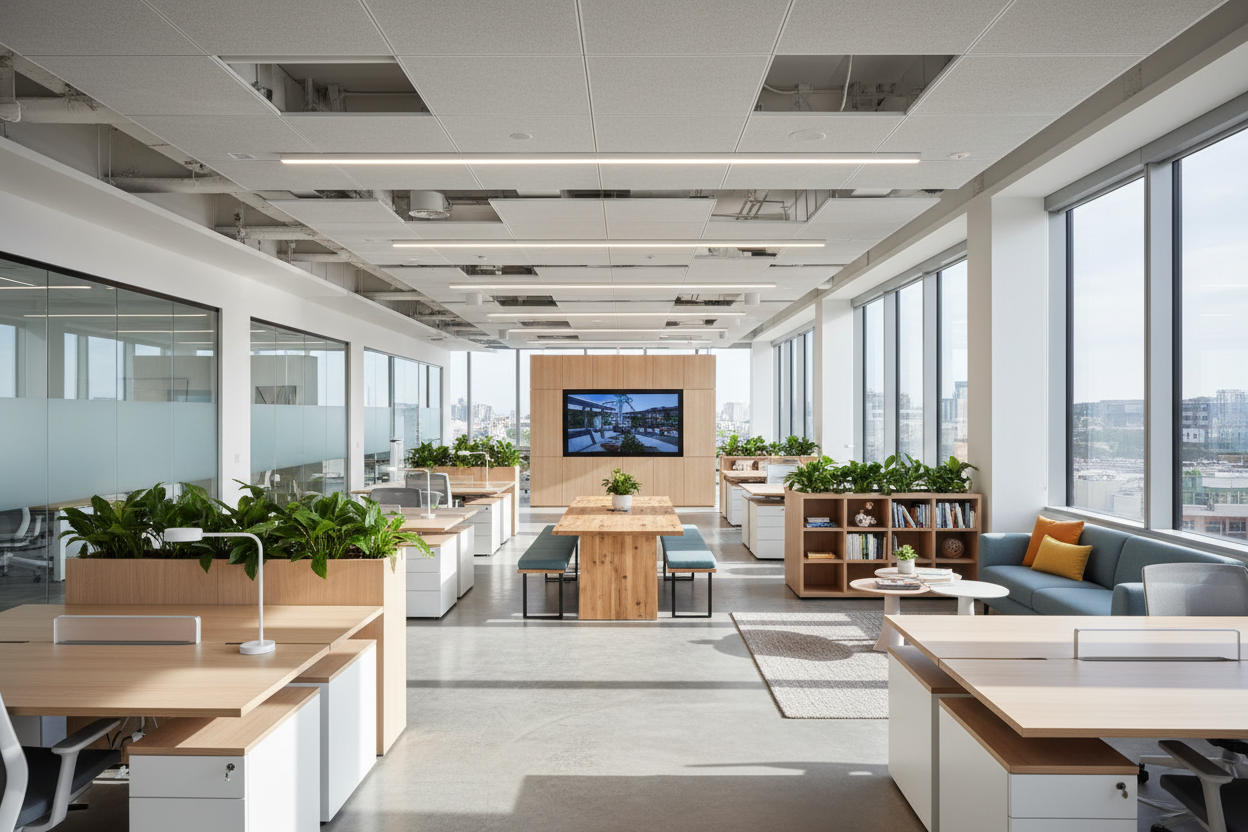
Walking into a workspace that feels sterile or chaotic immediately dampens morale. The challenge most businesses face isn't a lack of budget, but a lack of cohesion. You want a space that screams professionalism without sacrificing the comfort your team needs to perform. When exploring company office design ideas, the goal is to bridge the gap between corporate identity and human-centric functionality. This guide will walk you through the strategic layers of designing a workspace that works as hard as you do.
Key Features to Consider
- Ergonomic Integrity: Prioritize chairs and desks that support 8+ hours of use; look for adjustable lumbar support and sit-stand capabilities.
- Acoustic Control: Essential for open plans. Incorporate baffles, acoustic panels, or soft furnishings to dampen noise.
- Lighting Layers: Combine ambient overhead lighting with task lighting to reduce eye strain and set the mood.
- Traffic Flow: Ensure walkways are at least 36-48 inches wide to prevent congestion in high-traffic zones.
- Brand Materiality: Choose finishes (wood, glass, metal) that reflect your company's ethos—sleek and modern vs. warm and traditional.
Structuring Your Corporate Office Setup
The backbone of any successful corporate office design is the layout. It is not enough to simply place desks in rows; you must consider the spatial flow. We are moving away from rigid cubicles toward "neighborhoods"—distinct zones dedicated to specific tasks.
The Zoning Approach
Effective corporate office ideas often revolve around zoning. Create 'focus zones' with high partitions or sound-proof pods for deep work, and 'collision zones' (like coffee bars or lounge areas) where cross-departmental collaboration happens naturally. This variety prevents the fatigue associated with sitting in one spot all day.
Material Selection and Visual Weight
When curating corporate office inspiration, pay close attention to the visual weight of your furniture. In smaller footprints, heavy, dark oak desks can make the room feel claustrophobic. Instead, opt for floating legs or glass tops to maintain an airy aesthetic.
Durability Meets Style
Commercial-grade fabrics are non-negotiable. For high-touch areas like the reception or breakroom, look for fabrics with a high double-rub count (50,000+). However, durability doesn't mean sacrificing style. A wool-blend felt on acoustic panels adds texture and warmth, softening the often cold feel of a corporate office setup.
Lighting: The Unsung Hero of Corporate Office Design
Bad lighting kills productivity. Avoid the 'interrogation room' vibe caused by cheap fluorescent tubes. Instead, aim for a color temperature between 3500K and 4000K, which mimics natural daylight and keeps the brain alert. Layering is key here—architectural lighting for general illumination, accent lighting to highlight brand elements, and task lighting for individual workstations.
My Personal Take on Company Office Design Ideas
In my years of sourcing for commercial clients, I have learned that what looks good in a render often fails in reality if you ignore the "human factor." I once designed a stunning boardroom featuring a high-gloss, jet-black conference table. It looked incredible in the photos—sleek, powerful, and modern.
However, two weeks after installation, the client called me. The table was a nightmare. Every single fingerprint showed up, and the glare from the overhead pendant lights bounced off the surface, blinding people during presentations. We had to swap it for a matte, nanotech finish that resisted fingerprints and absorbed light. The lesson? When looking for corporate office inspo, always prioritize the tactile experience and maintenance reality over the initial "wow" factor of a glossy finish.
Conclusion
Refining your workspace requires balancing aesthetic appeal with rigorous functionality. By focusing on zoning, appropriate lighting, and durable materials, you can create an environment that elevates your brand and supports your team. Don't settle for generic; design for impact.
Frequently Asked Questions
How do I make a small corporate office feel larger?
Use vertical space for storage to keep floor plans clear. Opt for furniture with exposed legs and glass elements, and utilize mirrors or reflective surfaces to bounce light around the room.
What is the biggest mistake in corporate office design?
Ignoring acoustics. Open-plan offices look great but can be incredibly noisy. Failing to budget for sound-absorbing materials like carpet tiles, acoustic ceiling clouds, or upholstered dividers often leads to a distracted workforce.
How often should we update our office furniture?
While good commercial furniture can last 10-15 years, you should evaluate your layout every 5 years. As technology and working styles change (e.g., more video conferencing), your corporate office ideas and furniture needs will evolve.

Dejar un comentario
Este sitio está protegido por hCaptcha y se aplican la Política de privacidad de hCaptcha y los Términos del servicio.