










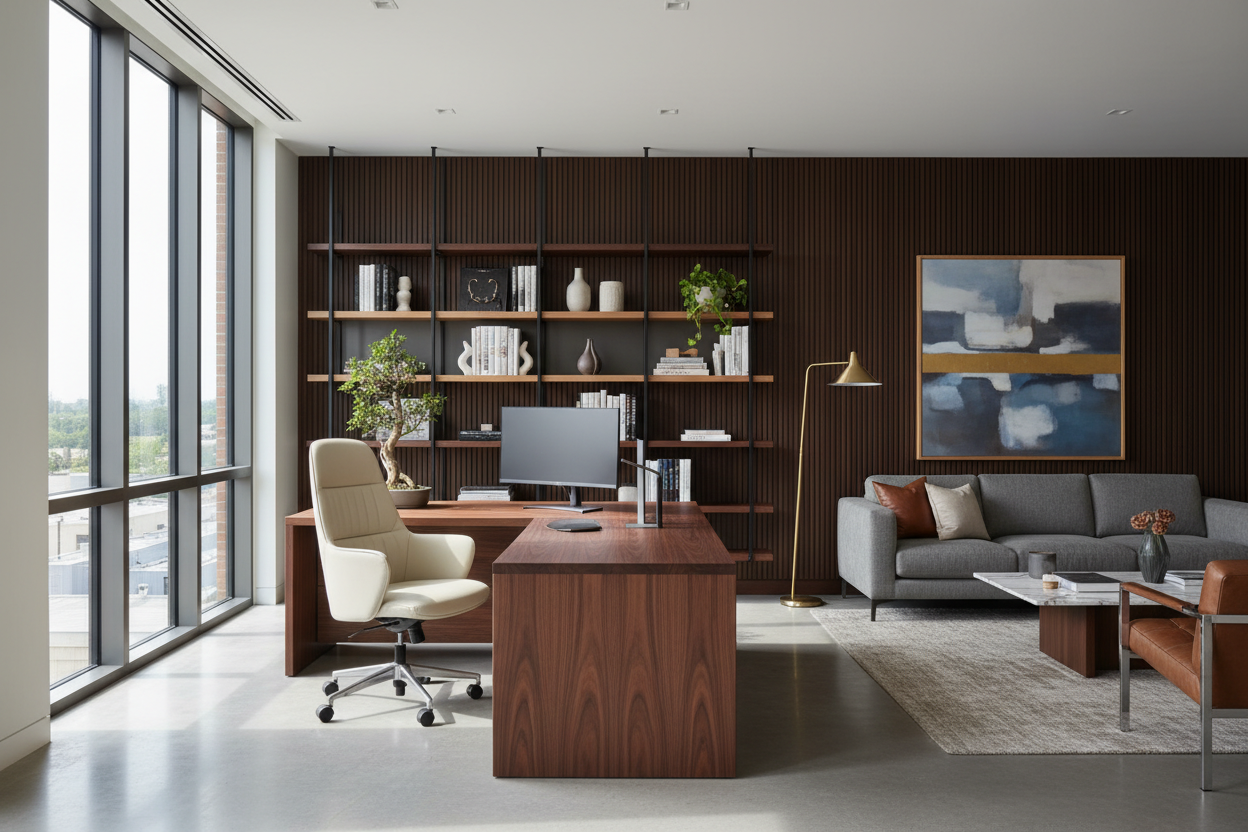
Nothing stifles productivity quite like a sterile, uninspired box. Whether you are carving out a corner in a master bedroom or redesigning a dedicated corporate suite, the environment dictates the output. When clients ask me how to decorate the office, they often worry that aesthetic appeal must be sacrificed for strict utility. That is a misconception. The most effective workspaces are those that blend rigorous ergonomics with a curated, residential atmosphere.
Key Features to Consider
- Visual Weight: Balance heavy furniture (like solid wood desks) with lighter elements (glass shelving or open legs) to avoid a cluttered feel.
- Lighting Layers: Never rely solely on overhead cans; incorporate task lighting and ambient floor lamps to reduce eye strain.
- Acoustics: Hard surfaces echo. Use area rugs, drapery, or upholstered panels to soften sound.
- Ergonomics First: Style should never compromise spinal health; invest in adjustable seating before decorative accessories.
Establishing the Layout and Flow
Before buying a single piece of decor, we must address the floor plan. In interior design, we look for the "command position." Ideally, your desk should face the door, but not be directly in line with it. This provides a psychological sense of security and authority.
When considering tips for decorating an office, traffic flow is paramount. Ensure there is at least 36 to 48 inches of clearance behind your desk for chair movement. If you are incorporating guest seating, allow for a conversational distance—usually about 4 to 8 feet from your desk—to maintain professional intimacy without invading personal space.
Selecting Furniture with Substance
The Desk as a Focal Point
The desk anchors the room. For a sophisticated look, move away from particle board laminates. I often steer clients toward solid hardwoods like walnut or white oak. Note that solid wood expands and contracts with humidity, so ensure the joinery allows for movement. If you prefer a modern aesthetic, a writing table with a metal base offers a cleaner silhouette than a bulky executive desk, though you will need to solve for storage elsewhere.
The Seating Equation
While a vintage Eames chair looks stunning, it may not offer the lumbar support required for an eight-hour day. Look for task chairs that disguise their mechanisms. Many high-end manufacturers now offer performance velvets or leathers that cover the industrial-looking plastic components, blending the chair seamlessly into the room's decor.
Lighting and Color Psychology
Lighting is often the most undervalued element when reviewing tips for decorating office spaces. Standard office lighting is usually cool (4000K-5000K), which is alert but sterile. For a designer look that feels welcoming, aim for 3000K bulbs. This temperature is crisp enough for reading but warm enough to feel comfortable.
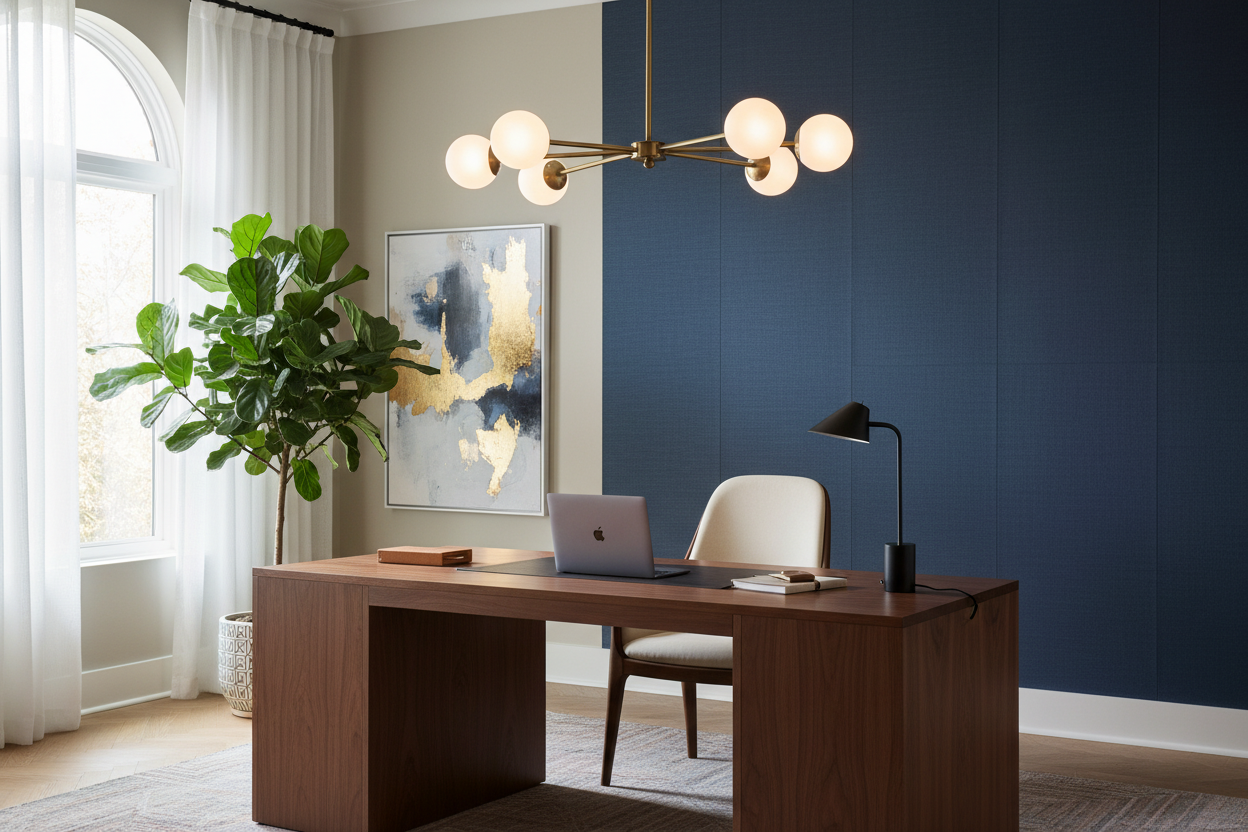
Regarding color, dark, moody walls (think charcoal or navy) can actually aid focus by reducing visual noise, provided your lighting is adequate. Conversely, if the room is small, off-whites with warm undertones keep the space airy without feeling clinical.
My Personal Take on how to decorate the office
I learned a hard lesson early in my career regarding materials. I once specified a stunning, architectural glass-top desk for a client who wanted a "floating" look. It photographed beautifully. However, three months later, the client called me with two specific complaints I hadn't anticipated.
First, glass is cold. Resting your forearms on a glass surface for hours creates a surprising amount of thermal discomfort. Second, the wire management was a nightmare. With no modesty panel or solid backing, every single HDMI and power cable was visible, ruining the sleek aesthetic we aimed for. Now, when I advise on how to decorate the office, I always insist on a desk with integrated cable management and a tactile, warm surface material like leather inlays or wood, regardless of how sleek the glass looks in the showroom.
Conclusion
Designing your workspace is about creating an environment that respects your workflow while elevating your mood. By focusing on quality materials, proper lighting temperature, and a layout that breathes, you transform a place of work into a place of inspiration. The goal is to walk in on a Monday morning and feel a sense of clarity, not clutter.
Frequently Asked Questions
How do I decorate a small office without making it feel cramped?
Focus on verticality. Use floor-to-ceiling shelving to draw the eye up. Choose furniture with exposed legs rather than solid bases (skirts), as seeing the floor underneath furniture makes the room perceive larger.
What is the best rug size for a home office?
A common mistake is buying a rug that is too small. Your rug should be large enough that when you pull your chair back, the casters do not catch on the edge of the rug. Typically, this means the rug should extend at least 24 inches behind the desk.
How can I make my office look better on video calls?
Curate your background. Avoid having a window directly behind you, as it silhouettes your face. Place a bookshelf or artwork behind you, and ensure your camera is at eye level. Add a soft table lamp slightly to the side of your monitor to fill in facial shadows.

Dejar un comentario
Este sitio está protegido por hCaptcha y se aplican la Política de privacidad de hCaptcha y los Términos del servicio.