










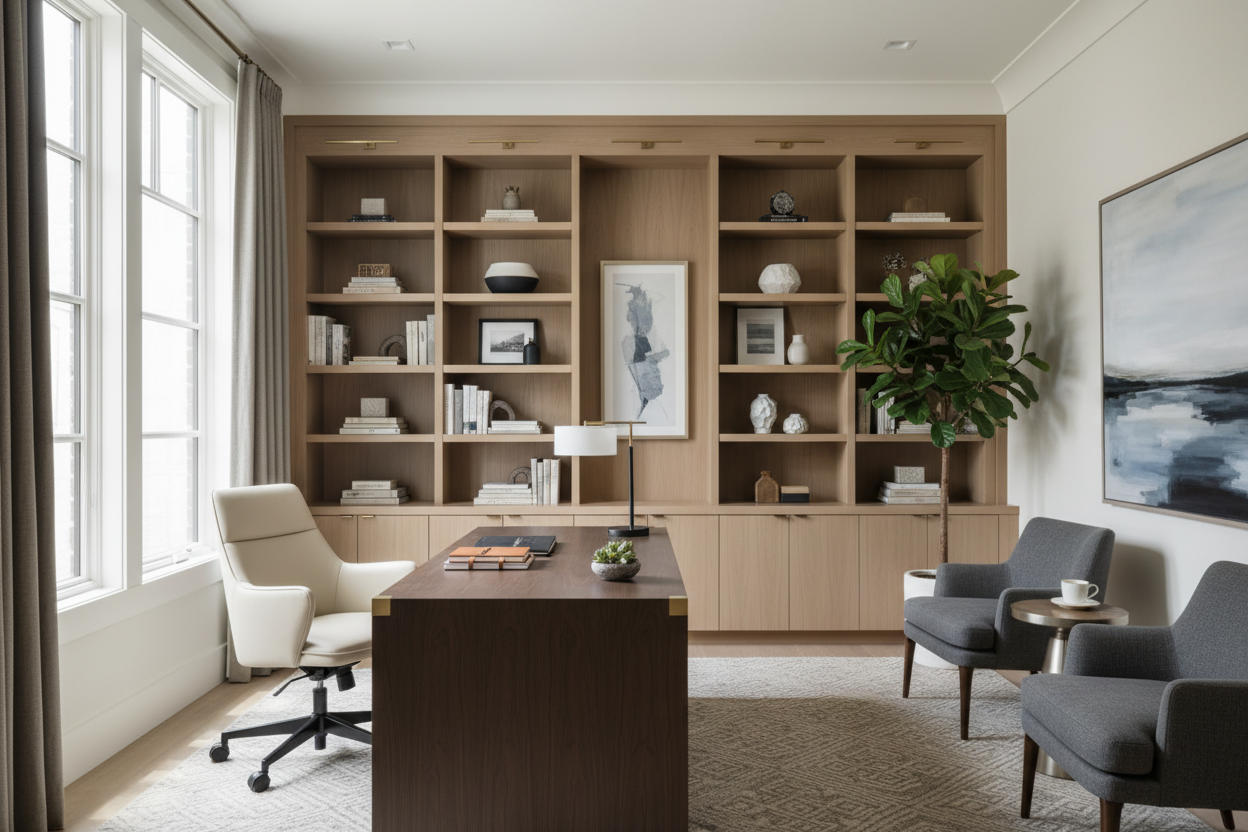
We have all been there: trying to conduct a serious video conference while the kitchen chaos unfolds in the background, or ending the workday with a stiff neck because the dining chair just doesn't cut it. The transition from a temporary setup to a permanent workspace requires a shift in mindset. Learning how to design an office at home isn't just about buying a desk; it is about curating an environment that supports deep work while respecting the existing aesthetic of your residence.
Key Features to Look For
- Ergonomic Integrity: Prioritize chairs with adjustable lumbar support and seat depth over purely decorative options.
- Lighting Layers: Combine ambient overhead lighting with focused task lighting to reduce eye strain.
- Material Durability: Choose work surfaces (solid wood or high-pressure laminate) that resist heat, scratches, and liquid rings.
- Acoustic Control: Incorporate soft furnishings like rugs or drapery to dampen echo during calls.
- Spatial Flow: Position furniture to maximize natural light without creating screen glare.
Mastering the Layout and Flow
Before you purchase a single piece of furniture, you must assess the architecture of the room. A common home office redesign mistake is instinctively pushing the desk against the wall. While this saves space, it is visually uninspiring and puts your back to the door.
Instead, consider the "command position." Float the desk in the center of the room or perpendicular to a wall. This allows you to face the entrance, creating a sense of authority and openness. If you are planning a new home office in a smaller footprint, ensure you have at least 36 to 48 inches of clearance behind your chair to move freely without scouring the floorboards.
The Anchor Piece: Selecting the Desk
The desk is the focal point of the room. For formal home office ideas, a double-pedestal executive desk in walnut or mahogany adds immediate gravity and weight to the space. However, be wary of veneers if you are a heavy user; solid wood develops a patina, whereas cheap veneers will chip.
Visual Balance and Scale
If your room is airy with high ceilings, a heavy, blocky desk will ground the space. Conversely, in a tighter room, look for a writing desk with legs rather than solid sides (a parsons style) to maintain visual permeability. The goal is to avoid the "furniture showroom" look where pieces feel too large for the container.
Ergonomics Meets Aesthetics
One of the most vital office design tips I give clients is this: never sacrifice your spine for style. We often see mid-century modern bucket chairs that look incredible but offer zero support for an eight-hour day.
If you need a redo home office strategy that blends comfort with looks, invest in a high-performance task chair but customize the finish. Many high-end manufacturers now offer performance fabrics or leathers that move away from the standard corporate black mesh, allowing the chair to feel like a piece of residential furniture.
Lighting: The Invisible Design Element
Poor lighting causes fatigue faster than any other element. Avoid relying solely on overhead recessed cans, which cast unflattering shadows on your face during video calls. Layer your lighting scheme:
- Ambient: A central pendant or dimmable recessed lights.
- Task: An articulating desk lamp with a 3000K to 4000K bulb (neutral white) for reading.
- Accent: A floor lamp in the corner to soften the room's edges.
My Personal Take on how to design an office at home
I learned a hard lesson about surface materials early in my career. I once designed a sleek, modern office for a client and specified a stunning, high-gloss black lacquer desk. It looked incredible in the photos. Two weeks later, the client called me. Every fingerprint, every speck of dust, and the condensation ring from his iced coffee was visible instantly. He spent more time wiping the desk than working at it.
Since then, I always steer clients toward matte or satin finishes, or textured wood grains. I also insist on "modesty panels" or deep aprons on desks if they are floating in the room. There is nothing that ruins a high-end design faster than a nest of black power cables dangling visibly beneath a beautiful desk. Now, I personally test the wire management channels of a desk with my own laptop charger before recommending it. If I can't hide the brick, I won't buy the desk.
Conclusion
Creating a workspace is an investment in your own output. By balancing the technical requirements of ergonomics with the warmth of residential textures, you can build a space that draws you in rather than pushes you away. Whether you are doing a full renovation or looking for home office tips design updates, focus on quality materials and logical flow.
Frequently Asked Questions
How do I design a home office in a small bedroom?
Focus on verticality. Use wall-mounted shelving units that include a drop-down desk surface. This clears the floor area and keeps the room from feeling cramped. Keep the color palette monochromatic to reduce visual clutter.
Is a custom built-in desk worth the investment?
If you have an awkward alcove or non-standard wall angles, custom millwork is invaluable. It maximizes every inch of storage. However, for standard square rooms, freestanding furniture offers more flexibility if you decide to repurpose the room later.
What is the best way to hide computer cords?
Look for desks with integrated grommets and cable trays. If you have an open-leg desk, run the cables down the back of a leg using color-matched zip ties or adhesive clips. A rug under the desk can also help conceal cords running to a floor outlet.


Dejar un comentario
Este sitio está protegido por hCaptcha y se aplican la Política de privacidad de hCaptcha y los Términos del servicio.