










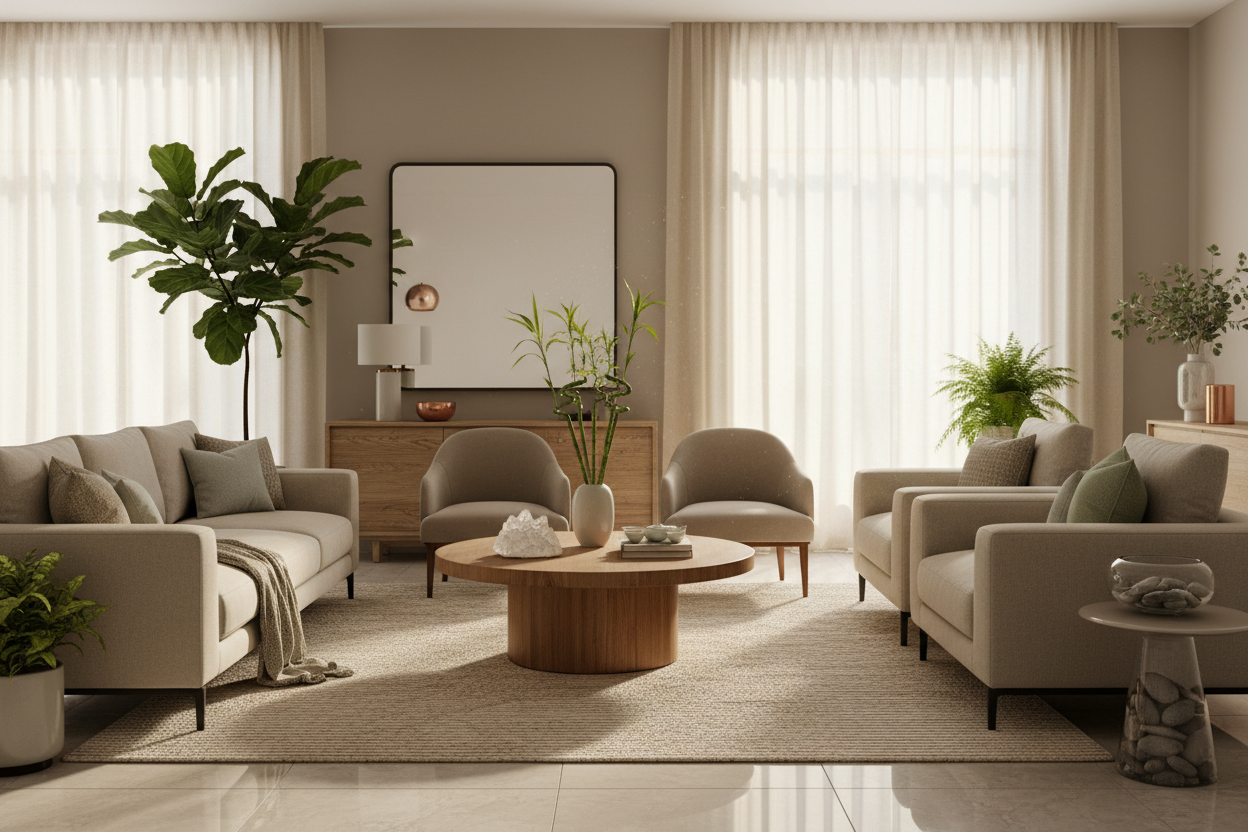
Your living room is the heart of your home's social energy—the space where family gathers, friends connect, and daily life unfolds. Unlike the bedroom's private, yin energy, the living room thrives on balanced, welcoming chi that encourages interaction, relaxation, and positive connection. When properly arranged according to feng shui principles, your living room becomes more than just a collection of furniture—it transforms into a harmonious space that naturally draws people together and supports joyful, meaningful experiences.
This comprehensive guide will walk you through every aspect of feng shui living room design, from fundamental furniture placement to subtle energy enhancements. Whether you're starting fresh with a new space or optimizing your current living room, these principles will help you create an environment where energy flows smoothly, conversations happen naturally, and everyone who enters feels genuinely welcome.
Understanding Living Room Energy
Before diving into specific arrangements, it's important to understand what makes living room energy unique and how feng shui principles apply to this multifunctional social hub.
The Balance of Activity and Rest
Living rooms require a careful balance between yang (active) and yin (passive) energy. Unlike bedrooms that should lean heavily toward yin, or home offices that need strong yang energy, living rooms function best with equilibrium. You want enough active energy to support conversation, entertainment, and engagement, balanced with enough calm energy to allow for relaxation, reading, and quiet family time.
This balance is achieved through thoughtful furniture arrangement, strategic use of colors and textures, appropriate lighting levels, and the inclusion of both stimulating and calming elements. A well-balanced living room feels energizing without being overstimulating, and comfortable without being sleep-inducing.
The Social Heart of the Home
In feng shui philosophy, the living room represents your social life, family harmony, and connection to community. The energy quality here affects not just how you interact with household members, but also how welcoming your home feels to guests and how your family relates to the wider world. A living room with good chi flow supports healthy relationships, pleasant social experiences, and a sense of belonging.
The living room also often serves as the first room guests see when entering your home, making it crucial for establishing the overall energetic tone. First impressions matter energetically as well as aesthetically—the moment someone enters your living room, they unconsciously read the space's energy and form judgments about the entire home and its occupants.
Multiple Functions, One Space
Modern living rooms often serve multiple purposes—entertainment, conversation, reading, children's play, homework space, and more. Each function carries its own energetic signature, and successful feng shui accommodates all uses while maintaining overall harmony. The key is creating flexible arrangements that can adapt to different activities while maintaining good chi flow regardless of the room's current use.
The Commanding Position for Seating
Just as bed placement is crucial in bedrooms, seating placement forms the foundation of living room feng shui. The commanding position principle applies here too, though adapted for social rather than sleeping purposes.
Primary Seating Placement
Your main sofa should be positioned against a solid wall, never floating in the middle of the room without backing (unless the room is extremely large and you're deliberately creating separate zones). This solid backing provides psychological security for anyone seated there—you're literally and figuratively "supported" by the wall behind you.
The sofa should face the main entrance to the living room, allowing occupants to see who enters without turning around. This creates the commanding position's sense of awareness and control. However, the sofa shouldn't be placed directly in line with the door, as this would put it in the direct path of entering chi, which can feel uncomfortable and overstimulating.
If your living room has multiple entrances, prioritize positioning the sofa to view the most-used entrance—typically the one from the main hallway. Secondary entrances from kitchens or other rooms are less critical, though you should still be aware of their locations when seated.
The Problem with Floating Sofas
While interior design trends sometimes favor sofas floating in the room's center, feng shui generally advises against this arrangement. Floating sofas lack the supportive backing that creates feelings of security and grounding. People seated on floating sofas often unconsciously feel vulnerable or uneasy, even if they can't articulate why.
If your room layout absolutely requires a floating sofa due to size or architectural features, place a substantial console table immediately behind it to create symbolic backing. This table should be sturdy and significant enough to provide visual and energetic weight—a flimsy table won't create the needed support. You might also position tall plants on either end of the console to further strengthen the backing.
Secondary Seating Arrangement
Arrange additional chairs to create a conversational grouping that encourages interaction without forcing it. The ideal arrangement forms a partial circle or U-shape that allows everyone to see each other comfortably without straining or turning awkwardly. This inclusive shape naturally draws people into conversation and creates a sense of togetherness.
Avoid placing all seating in a straight line against walls, as this creates a waiting room atmosphere that discourages interaction. People need to see each other's faces easily to feel connected and engaged. Similarly, avoid arrangements where some seats face away from others or where people must crane their necks to maintain eye contact.
Individual Chair Placement
Individual chairs should also have wall backing when possible, or at least be positioned so they don't face large windows or openings that create a sense of exposure. If chairs must be positioned without wall support, angle them slightly or place them near substantial furniture pieces that provide symbolic backing.
Ensure all primary seating positions can view the main entrance, at least peripherally. No one should have their back completely to the door in a way that prevents them from seeing who enters. This creates subconscious vigilance that prevents full relaxation.
Seating Capacity and Social Energy
Provide enough seating for your household plus a few guests, but avoid over-furnishing the room with excessive chairs that crowd the space. Too much furniture creates blocked chi flow and visual clutter, while too little seating can make the room feel incomplete or unwelcoming. The right amount of seating makes your living room feel prepared for company without being overwhelmed by furniture.
Coffee Tables and the Center of Activity
The coffee table occupies your living room's literal and energetic center, serving as the focal point around which social interaction orbits. Its selection and placement significantly impact chi flow and room functionality.
Size and Proportion
Your coffee table should be proportional to your seating arrangement—not so large that it dominates the space or blocks movement, yet substantial enough to serve its practical purpose. A good rule is that the coffee table should be roughly two-thirds the length of your sofa, though this can vary based on room size and overall furniture scale.
Height matters too. Coffee tables should be the same height as your sofa seat cushions or slightly lower—never higher. Tables that are too tall create an energetic barrier between people seated across from each other, impeding conversation and visual connection. Tables that are too low feel awkward to use and throw off the room's visual balance.
Shape Considerations
In feng shui, table shapes carry different energetic signatures. Round and oval coffee tables are considered most auspicious because they promote equality and smooth chi circulation. Their curved edges also eliminate sharp corners that create "poison arrows" or attacking energy directed at seated people.
Rectangular coffee tables are the most common and work well, especially in traditional room layouts, but their corners should be rounded if possible or at least not pointed directly at seating areas. Square tables can feel too stationary and solid, potentially creating stuck energy, though they work in very balanced, symmetrical room arrangements.
Avoid coffee tables with extremely sharp corners, particularly glass tables with pointed metal corners that create concentrated attacking energy. If you have such a table, position it so corners point toward walls or unused spaces rather than at seating.
Clearance and Chi Flow
Leave adequate space—ideally 14 to 18 inches—between the coffee table and surrounding seating. This allows comfortable access to the table without leaning awkwardly, and more importantly, provides enough space for chi to flow freely around the room's center. Tables pushed too close to sofas create congestion and restrict movement, while tables too far away feel disconnected and impractical.
Ensure you can walk comfortably around all sides of the coffee table without squeezing or navigating obstacles. Chi follows the same pathways people use, so if movement feels restricted, chi flow is restricted too. The space around your coffee table should feel open and accessible from all directions.
Surface Organization
Keep your coffee table surface relatively clear and organized. A few meaningful objects—perhaps a decorative bowl, a small plant, attractive coasters, or one beautiful coffee table book—enhance the space without creating clutter. Avoid piling the table with remote controls, mail, newspapers, and miscellaneous items that create visual chaos and stagnant chi.
Use trays or decorative boxes to corral small necessary items, creating visual order even when storing practical objects. The coffee table should feel like an intentional, beautiful focal point, not a catch-all for household clutter.
Entertainment Centers and Technology Placement
Modern living rooms typically include televisions and entertainment systems, but these technology elements require thoughtful placement to avoid dominating the room's energy.
Television Placement Principles
While televisions are practical necessities, they shouldn't be the room's primary focal point from a feng shui perspective. Ideally, the television should be positioned where it's accessible for viewing but doesn't dominate the space or immediately draw the eye when entering the room. This allows the living room to maintain its identity as a social, conversational space rather than becoming merely a TV watching room.
If possible, place the television in a cabinet with doors that close when not in use, or conceal it behind artwork that slides or swings open. These solutions allow the television to disappear when not actively being used, reducing its energetic presence and the temptation to default to screen time instead of conversation.
When television placement is being determined, ensure that primary seating can view the screen without uncomfortable angles that require turning or straining. However, avoid positioning all furniture solely to optimize TV viewing—this arrangement prioritizes screens over human connection.
The Problem with Oversized Screens
Extremely large televisions can overwhelm living room energy, particularly in smaller spaces. The screen becomes a massive dark rectangle that creates a visual and energetic black hole, especially when turned off. If you have a very large television, balance its visual weight with substantial furniture, large artwork elsewhere in the room, or architectural elements that prevent the TV from dominating.
Entertainment System Organization
Keep entertainment centers, gaming systems, and associated technology organized with concealed storage for games, controllers, cables, and accessories. Tangled cords, stacked devices, and visible clutter around entertainment systems create chaotic chi that affects the entire room's energy.
Cable management is particularly important—exposed cords snaking across floors or dangling visibly create visual disruption and safety hazards that interfere with smooth chi flow. Use cord concealment systems, cable boxes, or furniture specifically designed to hide technology infrastructure.
Sound System Considerations
If you have a sound system or speakers, position them thoughtfully to provide good acoustics without overwhelming the space or creating obstacles. Large speakers placed in the middle of walkways or dominating corners create blocked energy. Consider wall-mounted or built-in sound systems that provide excellent audio without competing for floor or surface space.
Balancing Technology and Nature
Counterbalance the strong yang energy of electronics with natural elements—plants, natural materials, and earth tones—that soften technology's angular, artificial qualities. Position a living plant near your television or entertainment center to introduce vital life force energy that balances the artificial, electromagnetic energy of electronic devices.
Creating Conversational Zones
The way you arrange seating and define spaces within your living room directly affects how people interact and whether the room feels cohesive or fragmented.
The Conversational Circle
Arrange seating to form what feng shui practitioners call a "conversational circle"—not necessarily a literal circle, but an arrangement where everyone can see everyone else without barriers or awkward angles. This usually takes the form of a U-shape, L-shape, or three-sided square arrangement with the fourth side open.
The conversational circle should feel inclusive without being claustrophobic. Seats shouldn't be so far apart that people must raise their voices, but not so close that personal space feels invaded. A distance of 4 to 10 feet between seating pieces typically creates comfortable conversation distance.
Avoiding Lineup Seating
Never arrange all seating in a single line against a wall, as this creates a waiting room or auditorium effect that discourages interaction. People need to see each other's faces, not just profile views, to feel truly connected. Even if your room is narrow, angle chairs slightly toward each other or use an L-shaped arrangement to break the linear pattern.
Multiple Seating Zones
In larger living rooms, consider creating multiple distinct seating areas that serve different purposes. You might have one conversational grouping near the fireplace and another reading nook by a window. These zones should be visually and energetically separated—perhaps by a rug defining each area, a bookshelf acting as a subtle divider, or simply sufficient distance between groupings.
Multiple zones allow the room to accommodate different activities simultaneously without conflict. One family member can read quietly in one zone while others converse in another, with good furniture placement preventing these activities from interfering with each other.
Including Everyone
Ensure your seating arrangement doesn't create implicit hierarchy or exclusion. Every seat should feel equally valued—avoid arrangements where some positions are clearly "better" than others. The most common mistake is making one seating position (often a recliner or specific chair) so comfortable or advantageously positioned that it becomes "dad's chair" or one person's permanent seat, making guests or other family members feel they're intruding if they sit there.
Pathways and Chi Circulation
Clear, graceful pathways are essential for good living room feng shui, allowing both people and chi to move smoothly through the space without obstacles or awkward navigation.
Primary Traffic Patterns
Identify the main pathways people use when moving through your living room—typically from the entrance to seating areas, from the living room to other rooms, and between different functional zones within the space. These pathways should be obvious, direct, and unobstructed, allowing movement without squeezing between furniture or navigating around obstacles.
Pathways should be at least 30 inches wide, and preferably 36 inches or more, to allow comfortable passage. Narrower pathways create a sense of constriction and frustration that manifests as blocked or aggressive chi. People should be able to walk through the room with ease, not feeling like they're navigating an obstacle course.
Curved Versus Straight Pathways
Feng shui favors gently curved or meandering pathways over perfectly straight lines. Chi moving in straight lines gains speed and becomes aggressive, while chi following curved paths maintains a gentle, nourishing quality. While you can't literally curve your pathways unless you have an extremely large room, you can create the effect by angling furniture slightly and avoiding arrangements where all furniture edges form parallel lines.
If your living room has long, straight sightlines—such as from the entrance directly to a far window—place something interesting along the pathway to slow and capture chi's attention. This might be a plant, a sculpture, or a strategically placed chair that causes the eye (and chi) to pause and meander rather than rush straight through.
Avoiding Blocked Corners
Chi tends to stagnate in corners, particularly corners blocked by large furniture or left empty and neglected. Every corner in your living room should have something that activates and circulates energy—a plant, a floor lamp, a decorative object, or a piece of furniture that's actively used rather than just stored there.
Never push large furniture into corners where it completely blocks access, as this creates dead zones where chi stagnates. If you must place substantial furniture in corners, leave enough space to reach behind it for cleaning, and consider placing a light source or plant nearby to keep energy activated.
Under and Around Furniture
Chi doesn't just flow around furniture—it also needs to flow beneath it. Furniture raised on legs allows chi to circulate underneath, while solid furniture that sits directly on the floor can block flow and create heaviness. When possible, choose sofas, chairs, and tables with visible legs rather than pieces that touch the floor along their entire length.
The space around furniture matters too. Avoid pushing all furniture directly against walls, as this can make rooms feel rigid and unwelcoming. Pulling furniture slightly away from walls—even just a few inches—creates breathing room that allows chi to circulate around all sides of pieces rather than becoming trapped.
Windows, Doors, and Energy Entry Points
Windows and doors are your living room's portals for chi entry and exit, and their treatment significantly affects the quality and quantity of energy circulating through the space.
Maximizing Natural Light
Natural light carries some of the most beneficial chi available, so maximizing its entry should be a priority. Keep windows clean, unobstructed, and dressed with treatments that can be fully opened during daylight hours. Avoid placing tall furniture directly in front of windows where it blocks light and creates a barrier to incoming chi.
Heavy, dark curtains that remain permanently closed create stagnant, depressing energy. If you need privacy or light control, choose layered treatments—sheer panels that allow light through while providing daytime privacy, paired with heavier curtains or shades you can close only when necessary.
Window Treatment Choices
Window treatments should enhance rather than obstruct. Light, flowing fabrics in natural materials like linen or cotton allow chi to enter easily. Avoid heavy, dusty drapes that haven't been cleaned in years—these accumulate stagnant chi and block fresh energy from entering.
Blinds and shades should function properly and be kept in good repair. Broken slats, stuck mechanisms, or damaged cords all create blocked energy and suggest neglect. In feng shui, broken items anywhere in your home drain chi, and broken window treatments specifically limit your ability to control chi entry and exit.
Door Positioning and Function
Living room doors should open fully and smoothly without scraping on carpets or bumping into furniture. A door that only opens halfway due to furniture placement restricts the amount of chi that can enter the room. If necessary, rearrange furniture to allow doors to open completely.
Keep the area immediately inside your living room entrance clear and inviting. Avoid positioning furniture where people must immediately navigate around it upon entering. The entry zone should feel welcoming and spacious, allowing chi (and people) to enter and disperse comfortably into the room.
Multiple Windows and Cross-Ventilation
If your living room has windows on multiple walls, you have the advantage of creating cross-ventilation that keeps chi fresh and moving. Open opposite windows periodically to allow air to flow through the space, carrying stagnant chi out and bringing fresh chi in. This physical air circulation directly correlates with energetic renewal.
Addressing Problematic Views
If your windows face unappealing views—perhaps a neighbor's wall, a parking lot, or a dumpster area—these negative visual elements send negative chi into your living room. Address this by using sheer curtains or window films that allow light through while obscuring the view, or by positioning plants on windowsills that draw the eye to living beauty instead of the exterior ugliness.
Conversely, if you have beautiful natural views, celebrate and showcase them. Position seating to take advantage of pleasant vistas, and keep window treatments minimal so the view becomes a living artwork that enhances your space.
Fireplace Feng Shui
Fireplaces naturally attract and concentrate chi, making them powerful focal points that require thoughtful treatment in feng shui living room design.
The Fireplace as the Room's Heart
In traditional feng shui, fire represents warmth, passion, transformation, and the heart of family life. A fireplace—whether functional or decorative—often serves as the living room's natural focal point and gathering point. This is energetically appropriate, as the fire element's active energy supports the living room's social purpose.
Arrange seating to relate to the fireplace without making it so dominant that nothing else matters. The fireplace should be an anchor point, not a demanding tyrant that dictates all furniture placement to the exclusion of other considerations. Create a conversational arrangement that relates to the fireplace while still prioritizing human connection.
Active Versus Inactive Fireplaces
If you have a functional fireplace that you actually use, it generates strong, active yang energy when lit. This is beneficial in living rooms, creating a natural gathering point and enhancing social warmth. Keep the fireplace clean and well-maintained—soot, ash buildup, and neglected fireplaces create stagnant, dirty energy.
Non-functioning or decorative fireplaces need energetic activation to prevent them from becoming dead spaces that drain rather than contribute chi. Place candles, plants, or decorative objects in unused fireplaces to keep them energetically alive. You might also use the space to display seasonal decorations that change throughout the year, maintaining freshness and preventing stagnation.
Mantel Styling
The fireplace mantel is a high-visibility display area that significantly affects living room chi. Keep mantels relatively uncluttered, displaying a few meaningful, beautiful objects rather than crowding the space with miscellaneous items. Follow the feng shui principle of odd numbers for decorative arrangements—groups of three or five objects create more visual interest and balance than even numbers.
Ensure mantel decorations are dust-free and in good condition. Broken, damaged, or neglected items on your mantel broadcast negative energy throughout the room. Every object displayed should be something you genuinely love and that contributes positively to the space's energy.
Mirror Above the Fireplace
Hanging a mirror above the fireplace is a common design choice, but feng shui offers specific guidance here. Mirrors above fireplaces can work well by reflecting light and expanding the space, but they should not directly reflect the main seating area or create visual confusion with multiple reflections. The mirror should reflect something pleasant—perhaps a window with a nice view or an attractive part of the room.
Avoid mirrors that reflect clutter, unattractive views, or the room's entrance, as mirrors duplicate and amplify whatever they reflect. If your mirror would reflect chaos or negative elements, either reposition it or replace it with artwork.
Balancing Fire Energy
The fire element's strong yang energy should be balanced with other elements to prevent the living room from becoming too activating. Include water element representations (actual water features, images of water, or dark blue/black colors), earth elements (ceramics, stones, earth tones), metal elements (metal frames, sculptures), and wood elements (plants, wooden furniture) throughout the room to create elemental equilibrium.
Color, Light, and Sensory Elements
While furniture placement creates your living room's structural foundation, colors, lighting, and sensory elements establish its energetic atmosphere and emotional tone.
Living Room Color Psychology
Living rooms can accommodate a wider color range than bedrooms since they need to support both activity and relaxation. Warm, inviting colors create welcoming energy that encourages gathering and conversation. Earth tones like warm beiges, soft browns, terracotta, and sage green provide grounding, comfortable energy that makes people feel at ease.
Colors from the warmer side of the spectrum—yellows, oranges, warm reds, and peaches—introduce activating, social yang energy appropriate for living spaces. However, extremely bright or saturated versions of these colors can become overstimulating. Choose softened or muted warm tones rather than intense, bright shades.
Cool colors like blues and greens can work in living rooms but should be balanced with warmer accents to prevent the space from feeling too passive or cold. A living room in all cool tones may feel calm but lack the social energy needed for a gathering space. Layer cool wall colors with warm textile accents, wood furniture, and warm lighting.
Accent Colors for Different Goals
If your living room serves as a space for creativity and inspiration, introduce purple or blue accents that stimulate imagination. For living rooms focused on family connection and nurturing, add soft pinks, warm oranges, or earthy terra cottas. To enhance prosperity and abundance energy, incorporate touches of green (wood element) or gold/bronze (metal element).
Avoid using too much red in living rooms unless you specifically want to activate passionate, intense energy. While red in moderation adds warmth and excitement, excessive red becomes agitating and can actually increase conflict rather than harmonious interaction. Use red as an accent—pillows, artwork, a throw—rather than as a dominant color.
Layered Lighting
Living rooms require sophisticated lighting that adapts to different times of day and activities. Layer multiple lighting types rather than relying on a single overhead fixture:
Ambient lighting provides overall illumination—typically overhead fixtures, recessed lights, or semi-flush ceiling lights. This should be on dimmers so you can adjust intensity based on time of day and activity.
Task lighting serves specific functions—reading lamps beside chairs, picture lights highlighting artwork, or accent lights in bookcases. Task lighting creates pools of focused illumination that add visual interest and support specific activities.
Accent lighting creates mood and atmosphere—uplighting to wash walls with soft light, LED strips behind television units, or candles for ambiance. Accent lighting is what transforms a room from purely functional to emotionally engaging.
Natural light should be maximized during daylight hours. The quality of natural sunlight can't be fully replicated by artificial sources, and exposure to natural light cycles supports healthy circadian rhythms and overall well-being.
Light Bulb Choices
Use warm white bulbs (2700K-3000K color temperature) rather than cool white or daylight bulbs in living rooms. Warm light creates cozy, inviting atmosphere while cool light feels institutional and harsh. LED bulbs now offer warm color temperatures at various brightness levels, allowing you to create the perfect ambiance while remaining energy efficient.
Avoid fluorescent lighting in living rooms whenever possible. Fluorescent lights produce harsh, flickering illumination that creates uncomfortable energy and can even contribute to headaches and eye strain. If you must use fluorescent fixtures, cover them with fabric shades that diffuse and warm the light.
Textures and Materials
Vary textures throughout your living room to create sensory richness and visual interest. Smooth leather or microfiber upholstery, soft wool or cotton throws, nubby textured pillows, sleek wood surfaces, and rough-hewn baskets all contribute different tactile experiences that make the space more engaging.
In feng shui terms, different textures correspond to different elements and energies. Smooth, flowing fabrics represent water element; rough, organic textures connect to wood element; hard, smooth surfaces relate to metal element; soft, matte textures embody earth element; and angular, shiny materials express fire element. Including variety creates elemental balance.
Natural Materials Priority
Prioritize natural materials over synthetic ones whenever possible. Wood, stone, metal, glass, cotton, wool, linen, and leather all carry more vital chi than plastic, polyester, or synthetic materials. Natural materials connect us to the earth and natural world, bringing more authentic, living energy into the space.
This doesn't mean you must eliminate all synthetic materials, but aim for a balance that favors natural over artificial. The couch might have some synthetic fibers for durability, but pair it with cotton throw pillows, a wool rug, and wooden side tables to create overall natural material dominance.
Sound Environment
Consider your living room's acoustic qualities. Hard surfaces—tile, hardwood, bare walls—create echoing, harsh acoustics that make the space feel cold and unwelcoming. Soft surfaces—upholstered furniture, curtains, rugs, wall hangings—absorb sound and create warm, intimate acoustics.
If your living room feels echoey, add sound-absorbing elements. A substantial rug makes an immediate difference, as do floor-length curtains and upholstered furniture. Wall hangings like tapestries, fabric art, or acoustic panels disguised as decorative elements can also improve acoustics while adding visual interest.
Pleasant background sounds like quiet music, a water fountain, or nature sounds can mask less pleasant noises and create positive auditory chi. However, avoid constant television noise or other harsh sounds that become grating over time. Peaceful silence is also valuable—not every moment requires sound filling.
Plants and Living Energy
Living plants are among the most powerful feng shui tools for enhancing chi quality in living rooms, bringing vitality, fresh oxygen, and natural beauty into the space.
Strategic Plant Placement
Position plants in corners where chi tends to stagnate, near electronics to balance their artificial energy, and in areas that feel dull or lacking in vitality. Plants near windows receive the light they need while enhancing the natural energy entering through these portals.
Tall plants in corners create upward energy flow that activates otherwise stagnant spaces. Medium-sized plants on side tables or shelves add life to eye-level zones. Hanging plants introduce chi flow from above while saving floor space in smaller rooms.
Plant Selection for Living Rooms
Choose plants that thrive in your living room's light conditions—setting plants up for success is itself a feng shui principle, as struggling plants emanate struggling energy. Healthy, vibrant plants broadcast vitality throughout the space, while sick or dying plants do the opposite.
For low-light living rooms, consider pothos, snake plants, ZZ plants, or philodendrons. Moderate light supports peace lilies, spider plants, or Chinese evergreens. Bright living rooms can accommodate fiddle leaf figs, rubber plants, or palms.
In feng shui, plants with rounded leaves are generally preferred over spiky plants, as rounded shapes create gentler, more welcoming energy. However, this isn't absolute—if you love a particular plant, its positive association for you matters more than strict shape rules.
Avoiding Artificial Plants
Feng shui purists discourage artificial plants because they lack the living chi that makes real plants so beneficial. However, high-quality artificial plants that genuinely resemble living plants and are kept clean and dust-free are preferable to dead or dying real plants.
If you choose artificial plants, select the most realistic versions available and maintain them carefully. Dusty, faded, or obviously fake plants contribute negative rather than positive energy. Silk or high-quality plastic plants work better than cheap plastic versions.
Never use dried flowers or dead plant materials as decoration. These broadcast the energy of death and decay, exactly the opposite of what you want in your living room. The one exception might be tastefully displayed dried botanicals that are deliberately decorative and well-maintained, though fresh or living plants are always preferable.
Plant Care and Maintenance
Care for living room plants attentively—water appropriately, fertilize as needed, prune dead leaves, and repot when plants become root-bound. Plant care is energetic care; the attention you give your plants is reflected back into the room's overall energy.
If a plant begins dying despite your best efforts, remove and replace it rather than allowing it to continue declining in your living room. A dying plant broadcasts distressed energy that affects the entire space. It's not a failure to acknowledge when a plant isn't suited to your conditions and find something more appropriate.
Art, Decor, and Personal Items
The artwork and decorative objects you display in your living room significantly influence its energy and communicate volumes about your values, relationships, and aspirations.
Choosing Meaningful Art
Display artwork that genuinely resonates with you and evokes positive feelings. Art should inspire, uplift, calm, or otherwise enhance your emotional state, not just fill wall space. If a piece makes you feel sad, anxious, or uncomfortable, it doesn't belong in your living room regardless of its artistic merit or monetary value.
In feng shui, imagery matters. Scenes of nature, happy gatherings, peaceful landscapes, or abstract art in harmonious colors all contribute positive energy. Avoid violent scenes, sad or lonely imagery, or artwork depicting disasters, tragedies, or decay. What you look at daily influences your subconscious mind and emotional state.
Family Photos and Personal Items
Living rooms are appropriate spaces for family photos, but display them thoughtfully rather than covering every surface with frames. Choose images that show happy moments and genuine connection. Remove photos that include former partners after breakups, deceased family members if they evoke sadness rather than happy memories, or any images associated with difficult periods.
Arrange photo displays in odd-numbered groupings (groups of three, five, or seven) for visual balance. Keep frames clean and in good repair—crooked pictures, dusty frames, or photos behind cracked glass all create negative energetic impressions.
Collections and Display Items
If you collect objects—ceramics, sculptures, books, or any meaningful items—display them in organized, intentional arrangements rather than scattered randomly. Collections should look curated and loved, not cluttered and overwhelming.
Rotate displayed items seasonally if you have more collection pieces than display space. This keeps the energy fresh and prevents visual stagnation. Items that remain on display for years become invisible; changing displays maintains visual interest and energetic vitality.
Books and Bookshelves
Bookshelves full of books you love and have actually read contribute wonderful knowledge and cultural energy to living rooms. However, overstuffed, disorganized bookshelves crammed with books you'll never read create stagnant, oppressive energy.
Organize books attractively—by color, by subject, or by size—and leave some breathing room on shelves rather than cramming every inch of space. Mix books with decorative objects, plants, or meaningful items to create visual interest and energetic balance.
Donate or sell books you've finished with and no longer need. Keeping books solely as displays of intellectualism when you don't actually value them creates false energy. Your bookshelf should reflect your genuine interests and knowledge, not perform an image.
Clutter-Free Surfaces
Keep coffee tables, side tables, shelves, and other surfaces relatively clear and organized. A few carefully chosen objects create focal points, while too many items create visual noise and energetic congestion. As a general rule, surfaces should be at least 50% clear space.
Avoid using living room surfaces as catch-alls for mail, keys, remote controls, and daily detritus. Designate specific storage for these necessary items—perhaps a decorative box or basket that contains them visually while keeping them accessible.
Special Considerations for Different Living Room Challenges
Real-world living rooms often present challenges that require creative feng shui solutions.
Small Living Rooms
In compact living rooms where space is limited, prioritize the commanding position for primary seating even if it means sacrificing other ideals. Use furniture with visible legs to create visual lightness and allow chi to flow underneath. Choose lighter colors to expand the space visually, and use mirrors strategically (without reflecting clutter or creating confusion) to enhance the sense of spaciousness.
Multi-functional furniture becomes essential in small spaces—ottomans with internal storage, console tables that double as desks, or sofas with built-in storage underneath. However, avoid over-furnishing. Better to have fewer, well-chosen pieces with clear pathways than cramming in too much furniture that blocks chi flow.
Long, Narrow Living Rooms
Long, narrow living rooms risk creating bowling-alley energy where chi rushes straight through without dispersing. Break up the length by creating distinct zones—perhaps a seating area at one end and a reading nook at the other. Position area rugs to define each zone visually and energetically.
Arrange furniture to create width rather than emphasizing length. Float a sofa perpendicular to the long walls rather than pushed against them, or create an angled arrangement that draws the eye across the room's width. Use horizontal elements—low bookcases, horizontal artwork—to counter the vertical emphasis.
Living-Dining Combinations
Open-plan spaces combining living and dining areas need clear energetic separation between zones while maintaining flow between them. Use area rugs to define each space—a rug under the seating grouping and a different rug under the dining table. Furniture arrangement can create subtle boundaries without physical barriers—perhaps positioning the sofa's back toward the dining area to create psychological separation.
Lighting helps distinguish zones too. Different lighting styles for living versus dining areas reinforce their distinct functions while allowing them to coexist harmoniously. Pendant lights over the dining table create vertical definition, while table and floor lamps in the living area provide horizontal illumination.
Living Rooms with Multiple Functions
If your living room must accommodate multiple functions—conversation, TV watching, children's play, homework, crafts—create flexible arrangements that can adapt. Modular furniture, movable ottomans, and multi-purpose pieces allow the space to transform based on current needs.
Store items related to different functions in designated containers that can be brought out when needed and put away when not in use. This prevents the living room from looking like it serves too many masters and maintains clear chi flow regardless of current activity.
Living Rooms in Open Floor Plans
Open floor plans create chi highways where energy can rush through large spaces without dispersing. Define your living room area using furniture arrangement, area rugs, and lighting even without physical walls. The living room should feel like a distinct space despite architectural openness.
Position furniture to create subtle boundaries—perhaps a console table behind the sofa acts as a buffer between living and kitchen areas, or a bookshelf defines the edge of the living room zone. Use color and decor consistency within the living room area to reinforce its identity as a unified space.
Seasonal Adjustments and Ongoing Maintenance
Living room feng shui isn't static—it requires regular attention and seasonal adjustments to maintain optimal chi flow.
Seasonal Energy Shifts
Adapt your living room to honor seasonal changes. In winter, add warmer colors, heavier textiles, and increased lighting to counter dark, cold months. Arrange furniture slightly closer together to create cozier, more intimate groupings. Light your fireplace if you have one, or add candles to introduce warming fire energy.
Spring calls for lighter colors, opening windows frequently, adding fresh flowers, and pulling furniture arrangements slightly more open. Remove heavy winter textiles and lighten up decorative elements. Clean thoroughly to remove winter's accumulated stagnation.
Summer benefits from cooling colors, lighter fabrics, increased air circulation, and opening the room to outdoor spaces if you have adjacent patios or decks. Remove unnecessary layers and create the most open, airy feeling possible.
Fall invites warmer colors returning, richer textures, and transitional decorating that acknowledges the shift toward introspection and gathering. Add throws and extra pillows back to seating, and introduce harvest or autumn-themed natural decorations.
Regular Energetic Clearing
Every few months, perform thorough energetic clearing beyond regular cleaning. Open all windows for complete air exchange, even briefly in winter. Move furniture to clean behind and underneath, refreshing chi in areas that rarely get attention. Consider burning sage, palo santo, or incense to clear accumulated stagnant energy.
Sound clearing also works powerfully—ring bells, play singing bowls, or clap loudly in corners to break up stagnant chi. These practices refresh your living room's energy and create a sense of renewal that's immediately perceptible.
Responding to Life Changes
Adjust your living room when life circumstances shift. A new relationship might call for making space for another person's belongings and preferences. Growing children need the room to evolve with their changing needs. Empty nesting might mean reconfiguring to focus more on adult entertaining.
Career changes, health shifts, or new interests all may require living room adjustments. Your space should evolve with you, supporting your current life rather than reflecting who you were years ago. Regularly assess whether your living room still serves your actual needs.
Conclusion
Creating a feng shui living room is ultimately about designing a space that supports connection, conversation, and the joy of shared experiences. While specific placement rules and principles provide guidance, the true measure of success is whether your living room feels welcoming, comfortable, and naturally draws people together.
Start with the fundamental principles—place primary seating in the commanding position against solid walls, create clear pathways for chi circulation, arrange furniture to encourage conversation, and maintain balance between activity and rest. These core practices establish the foundation for good living room feng shui regardless of your space's specific characteristics.
Then refine through thoughtful attention to details—lighting that adapts to different needs, colors that create the desired atmosphere, living plants that bring vitality, and meaningful decor that reflects your values. Each conscious choice you make compounds, transforming your living room from a collection of furniture into a harmonious environment that nurtures social connection and family wellbeing.
Pay attention to how adjustments affect the space's energy and your experience within it. Does conversation flow more naturally? Do guests comment that your home feels welcoming? Does your family gather more readily? These experiential indicators matter more than perfect adherence to any set of rules.
Remember that feng shui is practical wisdom about creating harmonious environments that support human flourishing. Your living room doesn't need to be perfect—it needs to be genuinely functional, beautiful to you, and energetically supportive of the connections and experiences you want to cultivate. Trust your intuition, make adjustments gradually, and observe what works in your specific space with your specific needs.
The living room you create becomes the stage where much of your life's most meaningful moments unfold—celebrations, deep conversations, quiet family evenings, and laughter with friends. Investing intention and attention in optimizing this crucial space through feng shui principles pays dividends in the quality of these experiences and the strength of the relationships they nurture.


Dejar un comentario
Este sitio está protegido por hCaptcha y se aplican la Política de privacidad de hCaptcha y los Términos del servicio.