










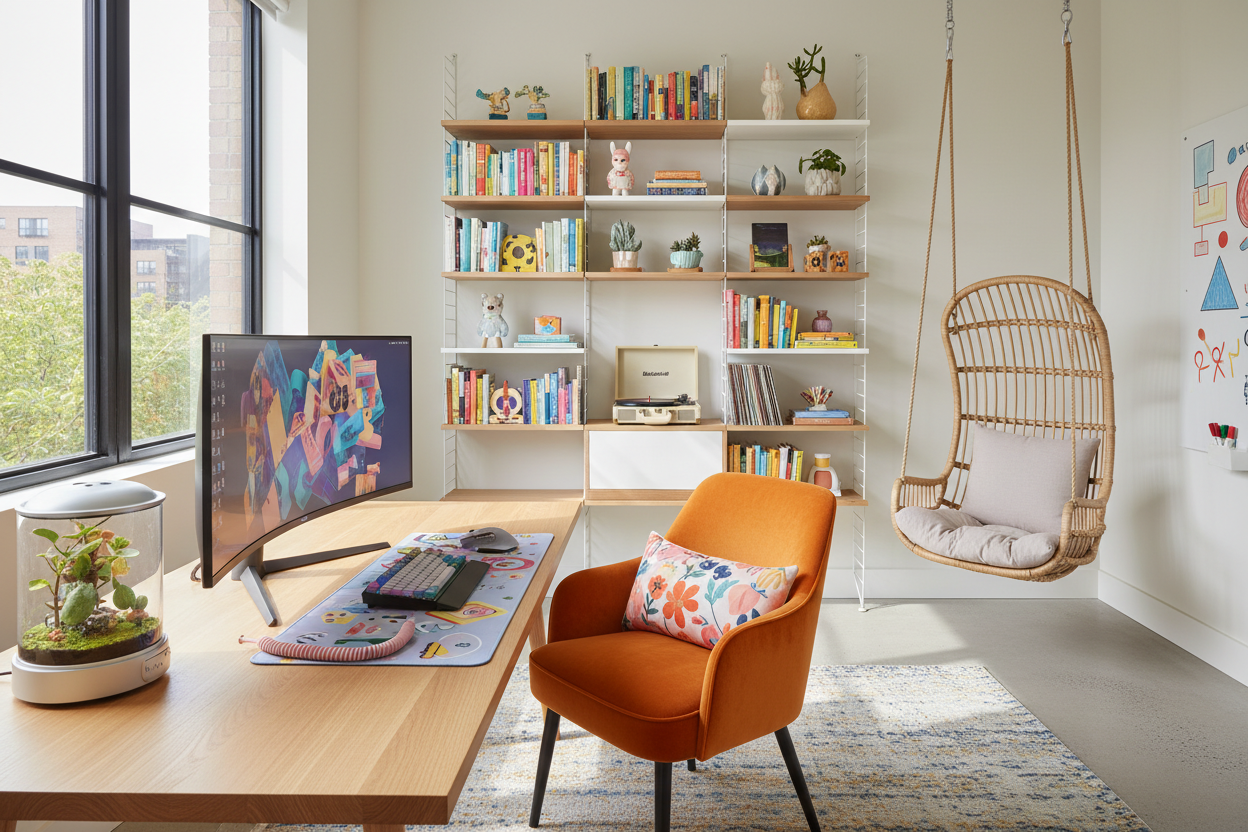
We have all been there. You set up a laptop on the dining table or dedicate a spare bedroom to your career, expecting a burst of productivity. Fast forward six months, and the space feels stagnant, uninspiring, and frankly, a bit depressing. If you are wondering how to make working from home fun, the answer rarely lies in buying another desk organizer or a novelty mug. It starts with treating your workspace as a legitimate, highly personal design project.
When a room lacks visual interest and physical comfort, your mood naturally drops. By adjusting proportion, lighting, and texture, you can build a room you actually want to spend eight hours a day in. You will walk away from this guide knowing how to rethink your layout, layer materials, and choose furniture that supports both your posture and your creativity.
Quick Decision Guide
- Command your space: Float your desk to face the door rather than staring blankly at a wall.
- Layer tactile materials: Bring in soft rugs and upholstered seating to break up harsh tech surfaces.
- Zone your room: Create a secondary seating area, even just a single armchair, for reading or taking calls.
- Invest in ergonomics: A supportive chair is non-negotiable for long-term comfort and focus.
Rethinking the Layout for Energy
Ditching the Desk Against the Wall
In North American homes, the default move is to shove the desk against the longest wall to maximize floor space. While this makes sense in a tiny apartment, it often creates a penalty-box feeling. Whenever possible, I recommend the 'command position.' Float your desk in the middle of the room so you face the door, with a solid wall behind you. This layout reduces visual fatigue because your eyes have a longer sightline, and it instantly makes you feel more authoritative and settled in your space.
Creating Micro-Zones
If your square footage allows, do not let the desk be the only functional piece in the room. A home office feels much more dynamic when it has micro-zones. Adding a small, comfortable armchair in a corner with a floor lamp gives you a dedicated spot to review physical documents, take a casual phone call, or simply step away from the glare of your monitors for ten minutes.
Injecting Personality Without Clutter
Layering Textures and Art
Corporate offices are famously sterile, relying on metal, glass, and laminate. To make working from home enjoyable, lean into the residential nature of your space. If you have a heavy walnut or oak desk, balance that visual weight with a lighter, upholstered chair or a heavily textured wool rug. Hang art that actually inspires you. A large, singular piece of artwork behind your desk provides a beautiful backdrop for video calls and anchors the room far better than a scattered gallery wall of tiny frames.
The Physical Reality of WFH
When Style Meets Posture
A beautiful room is quickly ruined by a backache. The physical details of your furniture separate a room that looks good in photos from one that is actually comfortable to live with. Pay attention to seat depth and cushion density. A dining chair might look incredibly chic pulled up to a writing desk, but it lacks the lumbar support and adjustability required for a full workday. Pair a highly ergonomic task chair with a warmer, wood-toned desk to strike a balance between aesthetics and utility.
Designer's Honest Take
When I first designed my own home office, I fell in love with a vintage, rust-colored velvet armchair. It had an incredible mid-century silhouette and looked stunning next to my matte black desk. I convinced myself it would be fine for daily use. I learned the hard way that a rigid, non-adjustable vintage chair is a nightmare for an eight-hour workday. Within a month, my back was aching, and the velvet on the seat was permanently crushed.
I ended up swallowing my pride, buying a high-end, highly adjustable ergonomic chair for my desk, and moving that beautiful velvet piece to a corner of the room to serve as my reading chair. The lesson? Never sacrifice your physical health for a specific aesthetic. You can always bring style into the room through lighting, rugs, and secondary seating.
Frequently Asked Questions
How can I brighten a dark home office?
Maximize whatever natural light you have by keeping window treatments sheer. Then, layer your lighting. Rely on a mix of ambient overhead lighting, a focused desk lamp for tasks, and a warm floor lamp in the corner to eliminate harsh shadows.
Does office color really affect my mood?
Absolutely. Color psychology plays a massive role in interior design. Cool tones like muted blues and greens lower stress and promote deep focus, while warmer tones like terracotta or mustard can boost energy and creativity. Choose a palette that supports the type of work you do.
What is the best desk placement for a small room?
If you cannot float the desk due to tight square footage, try placing it perpendicular to the window. This gives you a view outside to rest your eyes, provides excellent natural light for video calls, and avoids the glare of having the window directly behind your screens.

Dejar un comentario
Este sitio está protegido por hCaptcha y se aplican la Política de privacidad de hCaptcha y los Términos del servicio.