










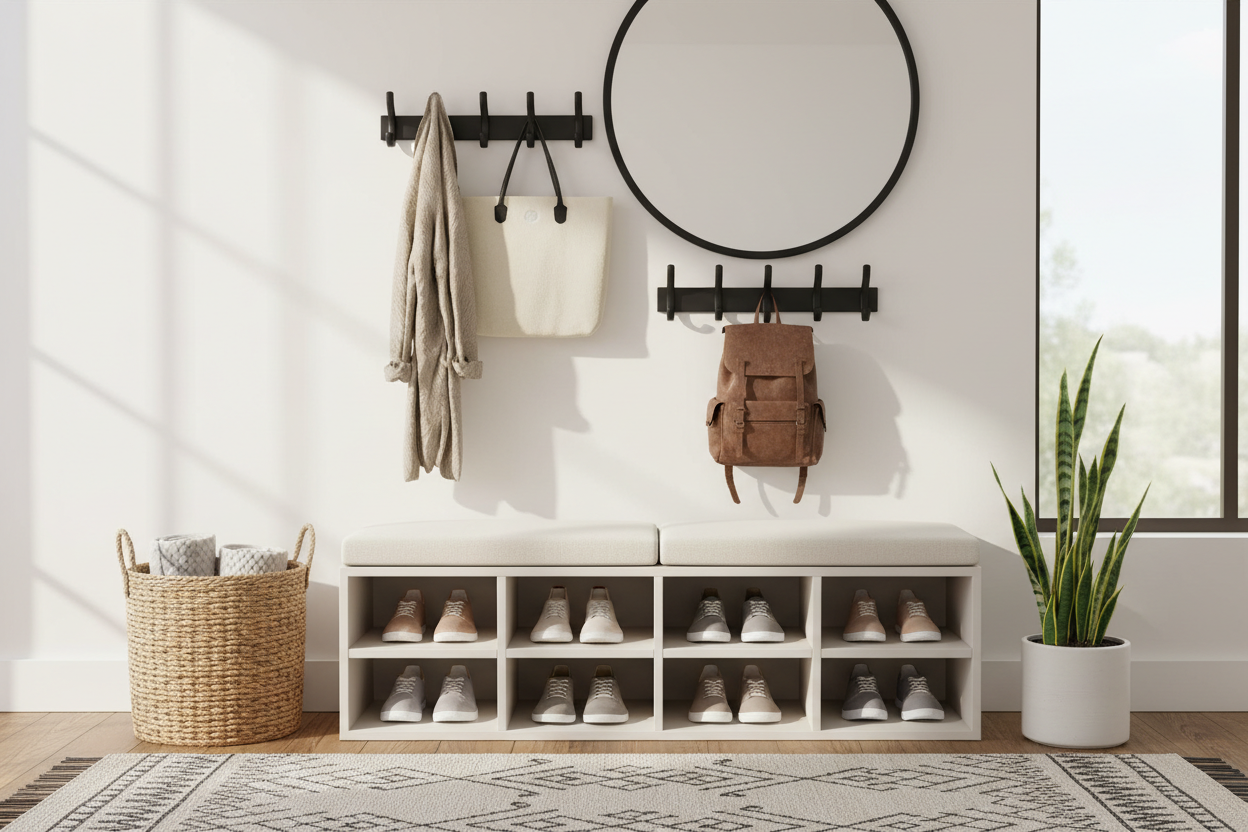
The foyer is the handshake of the home; it sets the tone before a guest even steps fully inside. Yet, it is often the most neglected zone, falling victim to the inevitable pile-up of footwear. As a designer, I see this constantly: a beautiful console table overshadowed by a mountain of sneakers. The solution is not just storage, but purposeful furniture. A well-chosen bench with shoe storage for entryway applications bridges the gap between high-end aesthetics and raw functionality.
Key Features to Look For
Before committing to a purchase, review this checklist to ensure the piece meets both your spatial and functional needs. These are the criteria I use when sourcing for clients:
- Depth & Clearance: Ensure a minimum of 36 inches of clearance in front of the bench for traffic flow. Standard depth is 15-18 inches.
- Ventilation: For closed cabinetry (like an entryway shoe cabinet bench), look for rear cutouts or slat doors to prevent odor buildup.
- Weight Capacity: A sturdy entrance bench shoe storage unit should support at least 250-300 lbs to safely seat an adult putting on boots.
- Shelf Height Adjustability: Essential if you need an entryway bench with boot storage alongside standard shoes.
- Material Durability: Prioritize hardwoods or performance fabrics for the seat; avoid delicate weaves in high-traffic zones.
Mastering the Layout: Hallway and Foyer Dynamics
The placement of your seating is dictated by the architectural "bones" of your entry. For a narrow corridor, a hallway bench with shoe storage needs to be slim—typically under 14 inches deep—to prevent the "tunnel effect." In these tight spaces, I often recommend a shoe rack hallway bench with open shelving rather than doors, as the swing radius of cabinet doors can block the path.
Conversely, in a spacious foyer, a wide shoe bench or a substantial front door bench with shoe storage can act as an anchor. Here, you can afford deeper dimensions and integrated features like tall cabinets. The goal is to balance visual weight; a heavy, solid wood hall bench with shoe storage grounds the space, while a metal frame offers a lighter, industrial silhouette.
Material Matters: Selecting for Longevity
Solid Wood vs. Veneer
For a shoe storage bench for hallway use, material integrity is paramount. Solid wood (oak, maple, walnut) withstands the dings of vacuum cleaners and kicked-off heels. Veneers can chip, revealing the particle board underneath, which is fatal for a piece of entryway furniture with shoe storage that sees daily abuse. If budget constrains you to veneer, ensure it is a high-pressure laminate finish.
Upholstery Considerations
An upholstered entryway bench with shoe storage adds softness and absorbs sound in echoey tiled foyers. However, fabric choice is critical. I steer clients toward Crypton fabrics or top-grain leather for an entrance shoe rack with seat. Avoid velvet or loose linens; they trap dust and are unforgiving when subjected to wet raincoats or muddy paws.
Storage Configurations: Cubbies vs. Cabinets
The internal configuration defines the utility. An entryway shoe cubby bench is excellent for children or quick-access needs, as it visualizes the "put-away" spot. However, for a cleaner, minimalist look, an entryway shoe cabinet bench with doors hides the visual clutter. If you own tall footwear, ensure the unit is specifically designed as an entryway bench with boot storage, or verify that the internal shelves are removable.
My Personal Take on Bench with Shoe Storage for Entryway
I learned a hard lesson early in my career regarding the shoe rack bench for entryway designs. I specified a gorgeous, custom-built white oak bench with open slats for a client in the Pacific Northwest. It looked stunning in the photos.
Six months later, the client called. The issue wasn't the wood—it was the "open" concept. Because the bottom shelf was mere inches from the floor, the shoes on the rack were constantly getting covered in dust bunnies and dog hair that migrated from the floor. Furthermore, without a solid barrier underneath the bottom tier, dirt from the soles of the shoes on the top shelf would sift down into the insides of the shoes on the bottom shelf.
Since then, I always advise clients: if you choose an open shoe shelf bench entryway design, ensure it has solid shelves, not slats, or be prepared for the "dust drift." For high-traffic homes, a hall seat with shoe storage that has a closed base (plinth) is infinitely easier to keep clean than one on legs.
Conclusion
Investing in a high-quality shoe storage hall bench is about reclaiming your entryway. It transforms a dumping ground into a curated vignette. Whether you opt for a sleek modern entryway shoe organizer bench or a rustic hall bench with shoe rack, prioritize the ergonomics of sitting and the reality of your shoe inventory. When form meets function, your home breathes easier.
Frequently Asked Questions
How much weight can a standard entryway bench hold?
Most standard entryway benches with shoe storage are rated for 200 to 300 lbs. However, heavy-duty solid wood or metal shoe rack benches for entryway can often support up to 400 lbs. Always check the manufacturer's "static weight capacity" before purchasing.
What is the best depth for a narrow hallway bench?
For a tight corridor, look for a narrow shoe rack bench entryway model that is between 12 to 14 inches deep. Anything deeper than 15 inches in a standard 36-inch wide hall will impede traffic and make the space feel claustrophobic.
How do I prevent odors in a closed shoe bench?
If you choose a shoe cabinet entryway bench with doors, ensure the back panel has ventilation holes. Alternatively, place small charcoal bags or cedar blocks inside the shoes storage bench entryway compartments to absorb moisture and neutralize smells naturally.

Dejar un comentario
Este sitio está protegido por hCaptcha y se aplican la Política de privacidad de hCaptcha y los Términos del servicio.