










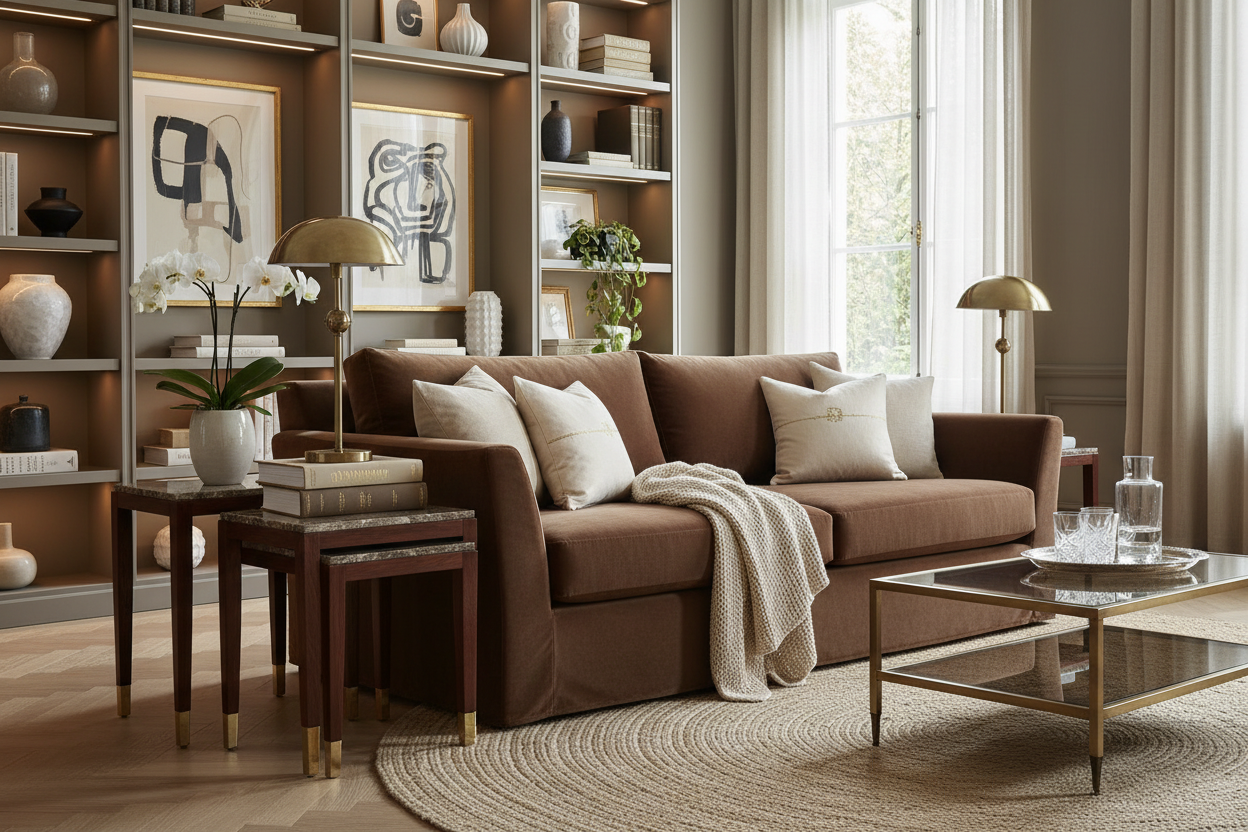
Many homeowners fear that brown furniture will make a room feel heavy, dated, or reminiscent of a murky 1970s den. However, when anchored correctly within a space, an ikea brown couch serves as a sophisticated, earthy neutral that rivals much more expensive bespoke pieces. The secret lies not just in the purchase, but in the curation of the surrounding elements to balance visual weight and warmth.
Quick Decision Guide: What to Look For
- The Undertone: Identify if the brown leans red (cognac/terracotta) or cool (espresso/ash). This dictates your wall color.
- Material Durability: Distinguish between full-grain leather (ages well) and coated fabric (easy clean, but less breathable).
- The Silhouette: Choose low-profile arms (like the Landskrona) for small rooms to maintain sightlines, or wide arms (like the Kivik) for lounging comfort.
- Modularity: Check if the series allows you to add a chaise later; flexibility is key for long-term value.
Choosing the Right Silhouette for Your Space
When selecting a sofa, the silhouette dictates the formality of the room. In my design practice, I often categorize IKEA’s offerings by their architectural lines. If you are aiming for a Mid-Century Modern aesthetic, you want a piece raised on legs to create a sense of airiness. This exposes more floor space, making the room feel larger—a crucial tactic for urban apartments.
Conversely, if your goal is a cozy, "sink-in" media room, look for a blockier profile with deep seating. The visual heaviness of a ground-hugging ikea brown sofa grounds the space, acting as a substantial focal point. Ensure you measure the depth carefully; a deep seat requires adequate clearance for a coffee table (minimum 18 inches) to avoid a cramped layout.
Materiality: Leather vs. Performance Fabric
IKEA often utilizes a combination of materials to keep price points accessible. For their leather lines, you will frequently encounter "contact areas" made of grain leather, while the sides and back are a coated fabric that mimics the texture. From a design perspective, this is acceptable, but you must be aware of how these age differently.
Real leather develops a patina—a soft sheen and character lines—over time. The synthetic matches do not. If your sofa will sit in the center of a room with the back exposed to direct sunlight, the synthetic back may fade at a different rate than the leather front. For fabric options in brown, look for a tight weave. A melange weave (mixing varied brown and grey threads) offers better stain camouflage than a flat, solid color.
Styling for a High-End Aesthetic
The difference between a showroom setup and a curated home is texture. Brown is a dominant color; to prevent it from feeling muddy, you need to introduce contrast.
The Rule of Tactile Contrast
Never pair a brown leather couch with a flat, dark rug. Instead, layer a high-pile wool rug or a natural jute rug underneath. The roughness of the jute contrasts beautifully with the sleekness of the leather. Introduce throw pillows in boucle or velvet in jewel tones—navy blue and emerald green pair exceptionally well with cognac browns, while charcoal and cream suit espresso tones.
Lessons from My Own Projects: The Landskrona Experience
I recently installed a brown Landskrona (now often branded under Morabo) for a client’s downtown loft. We chose it for the sleek lines, but here is something the catalog won't tell you: the "slide" factor.
When brand new, the finish on the leather version is incredibly slick. If you sit down wearing synthetic fabrics, you quite literally slide forward. It took about three months of daily use for the material to gain enough grip to feel truly settled. Also, the legs that come standard are serviceable, but I swapped them out for custom matte black tapered legs from a third-party hardware supplier. That $40 upgrade completely removed the "big box store" vibe and made the piece look like a $3,000 investment. If you buy this couch, budget for the leg swap—it is the single highest ROI design move you can make.
Conclusion
An IKEA brown couch is not just a budget decision; it is a versatile canvas. By paying attention to the undertones, upgrading the hardware, and layering rich textures, you can create a living space that feels curated and luxurious. Trust the process, and let the warm, earthy tones ground your home.
Frequently Asked Questions
How do I maintain the leather on an IKEA brown sofa?
Use a specific leather conditioner and cleaner twice a year. Avoid general-purpose cleaners, as they can strip the protective coating on IKEA’s dyed leather, leading to cracking.
What wall colors work best with a dark brown couch?
Avoid matching the wall to the couch. Opt for warm whites (like Swiss Coffee), soft greys, or muted sage greens. These colors clarify the brown rather than absorbing it.
Can I replace the covers on IKEA leather couches?
Generally, IKEA’s leather (and faux leather) upholstery is fixed and cannot be removed. If you anticipate heavy wear or have pets, a fabric model with removable, washable slipcovers is a safer investment.



Dejar un comentario
Este sitio está protegido por hCaptcha y se aplican la Política de privacidad de hCaptcha y los Términos del servicio.