










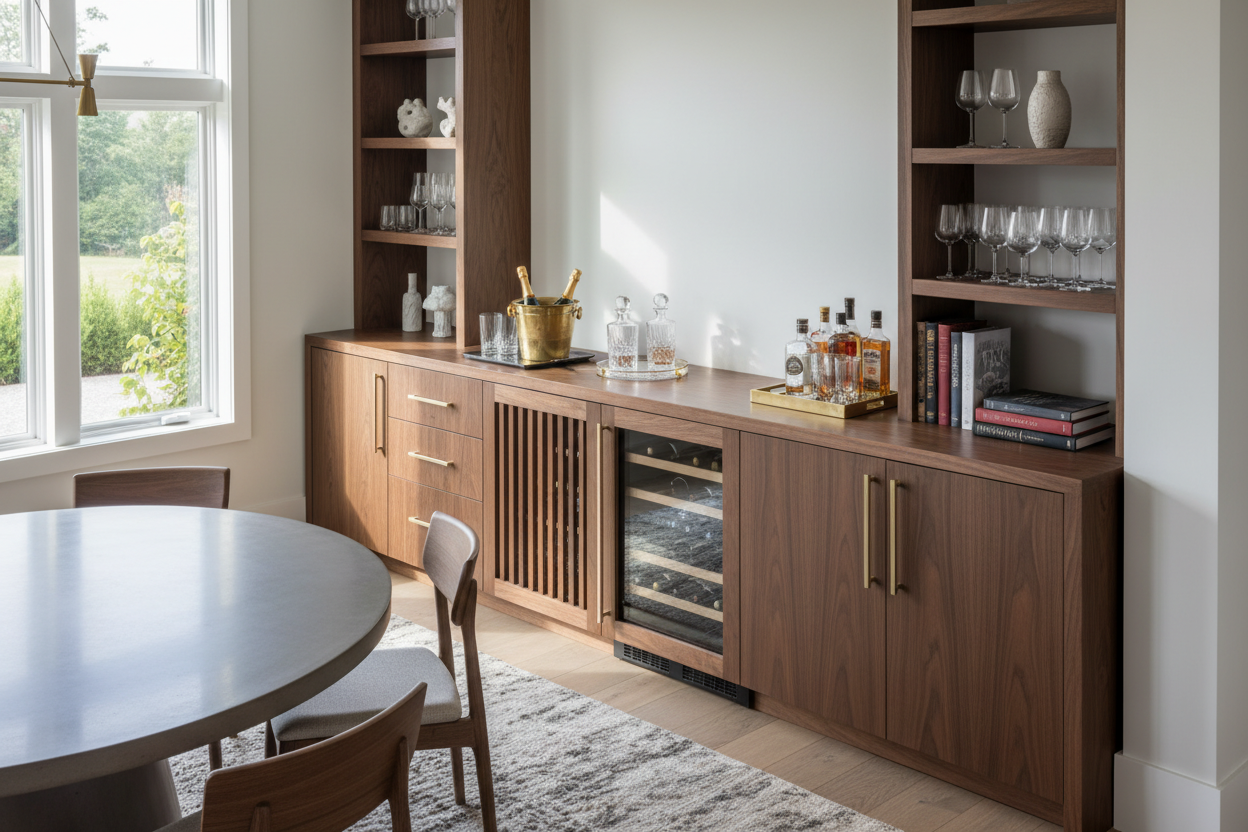
I spent three years curating my dining room—sourcing a vintage teak table, hanging heavy linen curtains, and finally finding the right rug. Then I ruined the entire vibe by plopping a black, industrial-looking metal box in the corner because I needed somewhere to keep my Pinot at 55 degrees. It was an eyesore. I finally caved and invested in a credenza wine cabinet that actually looks like furniture, and honestly, I should have done it the day I moved in.
Quick Takeaways
- Hide that industrial 'dorm fridge' aesthetic behind solid wood or sleek metal doors.
- Ventilation is the number one killer of integrated units; never trap the heat in a sealed box.
- A dedicated wine credenza offers serving space that a standalone appliance simply cannot provide.
- Look for reinforced flooring to handle the 100+ pound weight of a full cooling unit.
The Problem With Naked Wine Fridges
Standalone wine fridges are built for utility, not beauty. They look like they belong in a commercial kitchen or a damp basement, not next to your mid-century sideboard. The blue LED glow and the constant hum of a compressor are total vibe-killers during a candlelit dinner. I realized my collection looked more like a mini-bar in a budget hotel than a curated cellar. A wine credenza fridge solves this by wrapping that necessary tech in actual kiln-dried hardwood.
When you have a refrigerator credenza, you aren't just storing bottles; you're reclaiming your floor plan. Most freestanding units are awkward heights—too tall to be an end table, too short to be a buffet. By switching to a credenza with fridge integration, I gained a 60-inch surface for appetizers and decor while the 'ugly' appliance disappeared behind a soft-close door.
What Makes a Good Credenza Wine Setup?
A standard sideboard isn't a wine credenza. If you try to shove a compressor into a basic cabinet from a big-box store, you'll warp the wood or burn out the motor within six months. A real wine refrigerator credenza has reinforced flooring to handle the massive weight of the cooling unit and dozens of glass bottles. It also features pre-drilled cord management cutouts so you aren't hacking away at a back panel with a dull jigsaw.
We are seeing a sudden popularity of bar cabinets with wine fridge designs because people are tired of their homes looking like appliance showrooms. You want a piece with heavy-duty hinges and adjustable levelers. A wine credenza with cooling storage needs to stay perfectly level, or the fridge door seal will fail, and you'll be left with a puddle of condensation on your hardwood floors.
How I Hid My Bottles Without Losing Access
I went with a piece that featured a dedicated refrigerated wine credenza section on the left and traditional shelving on the right. This let me hide the bulky cooling unit behind a solid door while keeping my stems and decanters tucked away in the drawers. I opted for a modern wine credenza with a dark walnut finish to match my existing chairs, and the result was seamless.
If you’re the type who likes to see your labels, you might prefer a cabinet with glass door wine storage, which keeps things organized but visible. For me, the goal was total stealth. I wanted a bar credenza with wine fridge that looked like a high-end buffet until I pulled out a chilled bottle of Sauvignon Blanc. I even found a model with 'dual zone' cooling, so I could keep my reds and whites at their respective perfect temperatures without two separate appliances cluttering the room.
Measuring for Ventilation (Please Don't Skip This)
This is where most DIY enthusiasts mess up. If you buy a wine credenza with cooler, the unit needs to breathe. Most 'built-in' refrigerators vent from the front, but if you're retrofitting a standard credenza, you need at least two inches of clearance on all sides. I actually cut a custom vent into the back panel of my cabinet and pulled it three inches away from the wall. If the heat can't escape, the compressor will work overtime, your wine will stay warm, and the motor will die before the year is out.
Styling the Top So It Doesn't Look Like a Liquor Store
The biggest mistake is lining up every bottle you own on top of the unit. It looks cluttered and a bit desperate. Instead, approach styling the perfect credenza by treating the surface like a gallery. I use a heavy marble tray to ground a few 'active' bottles, a dimmable table lamp to provide some mood lighting, and a couple of oversized art books to add height.
The beauty of a wine storage credenza is that it functions as a piece of furniture first. By adding a plant or a piece of framed art leaning against the wall, the eye is drawn to the decor rather than the fact that there's a 24-bottle fridge humming underneath. It makes the wine and spirits credenza feel like a deliberate design choice rather than just a storage locker for booze.
FAQ
Can I put a regular mini-fridge in a credenza?
Only if it's front-venting. Most cheap mini-fridges vent from the back or sides, and putting them in a closed cabinet will cause them to overheat and fail almost immediately.
Does the fridge vibrate the whole cabinet?
High-quality wine credenzas use vibration-dampening mounts. If you're DIY-ing, add a thick rubber mat under the fridge to keep the wood from rattling every time the compressor kicks on.
Is a wine credenza with cooling storage worth the price?
If you entertain in your dining room, absolutely. It's the difference between having a 'dorm room' vibe and a sophisticated adult space.

Dejar un comentario
Este sitio está protegido por hCaptcha y se aplican la Política de privacidad de hCaptcha y los Términos del servicio.