










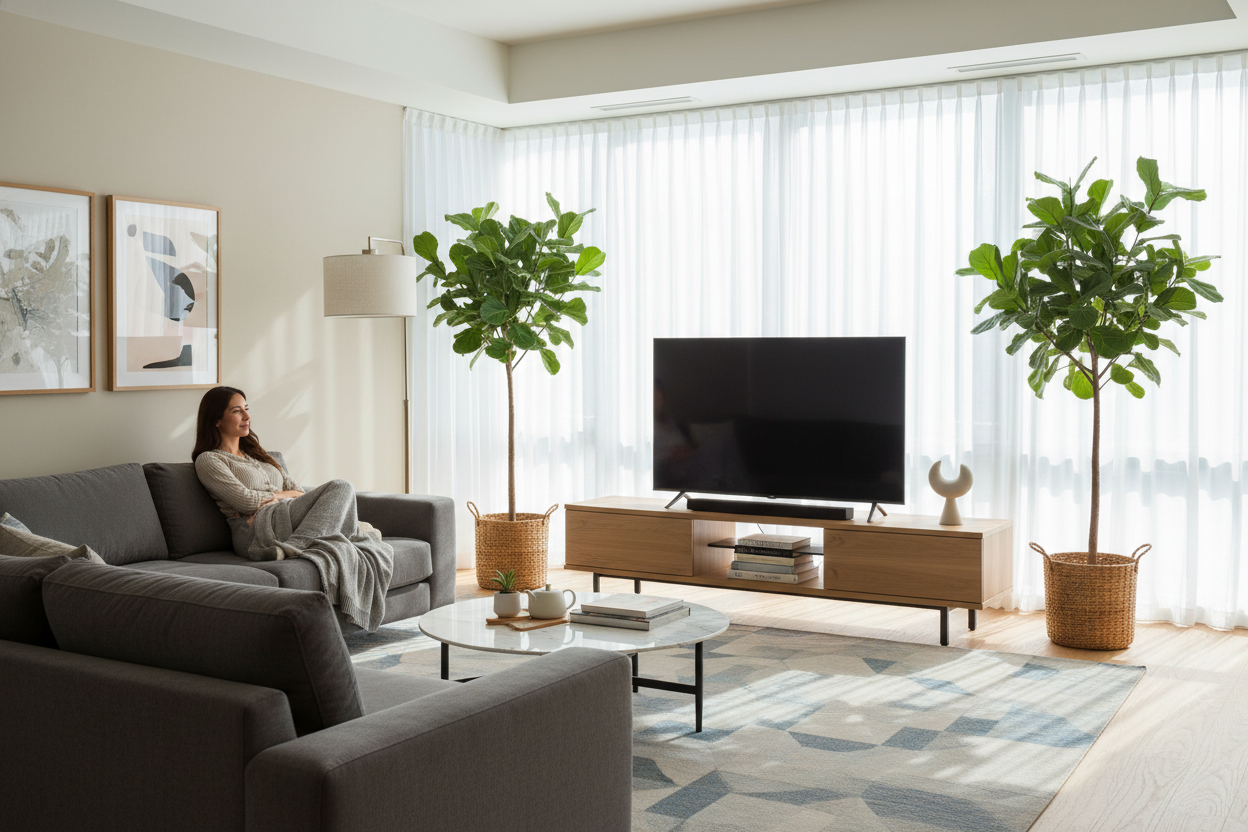
I finally pulled the trigger on one of those deep, cloud-like modular sectionals last year. You know the ones—the kind that makes you feel like you are being swallowed by a giant marshmallow. It was pure bliss until I tried to watch a movie. My neck started screaming within twenty minutes because my screen was still sitting on a unit meant for a 1990s wingback chair. That is when I realized the secret to modern lounging is tv stands 20 inches high.
- Standard consoles are usually too tall for deep, low-slung sofas.
- A 20-inch height aligns your eye level with the center of the screen while reclining.
- Lower units help small rooms feel more spacious by opening up wall real estate.
- Width is the key to making a low-profile stand look expensive rather than like a dorm room leftover.
The Unspoken Problem With Deep, Low-Slung Sofas
The furniture world is currently obsessed with the 'low-profile' look. We are seeing Togo replicas, deep modular sectionals with 15-inch seat heights, and floor cushions everywhere. These pieces are designed for sinking, not sitting. When you drop your butt that close to the floor, your natural eye line drops with it. If you are sitting in a sofa that feels like a hug, you are likely looking at the wall about 36 inches off the ground.
Traditional living room setups were built for upright posture. If you try to pair a trendy, deep-seated couch with a console from five years ago, you are going to spend every movie night craning your neck upward at a 30-degree angle. It is the equivalent of sitting in the front row of a movie theater. It is not just annoying; it ruins the relaxed vibe you bought the sofa for in the first place.
The Brutal Neck Math of Standard Consoles
Most big-box retailers sell 'standard' media units that hover between 24 and 30 inches tall. That works fine if you are sitting in a stiff dining chair, but it is a recipe for physical therapy visits if you are a lounger. I learned this the hard way with a particle board unit that was way too tall and started sagging under the weight of my 65-inch screen. If you are looking for alternatives, you might check out The Only Ikea Tv Stands That Wont Bow Under A 55 Inch Screen, but even then, most of those 'standard' options are just too high for a modern lounge setup.
Physics doesn't lie. For the best ergonomic experience, the middle of your TV screen should be at eye level. If your seat height is only 16 inches, a 20 inch height tv stand is the literal sweet spot. It keeps the screen low enough that your neck remains in a neutral position while you are buried in pillows. Anything higher and you are fighting against your own furniture.
Why Dropping the Height Feels So Much Better
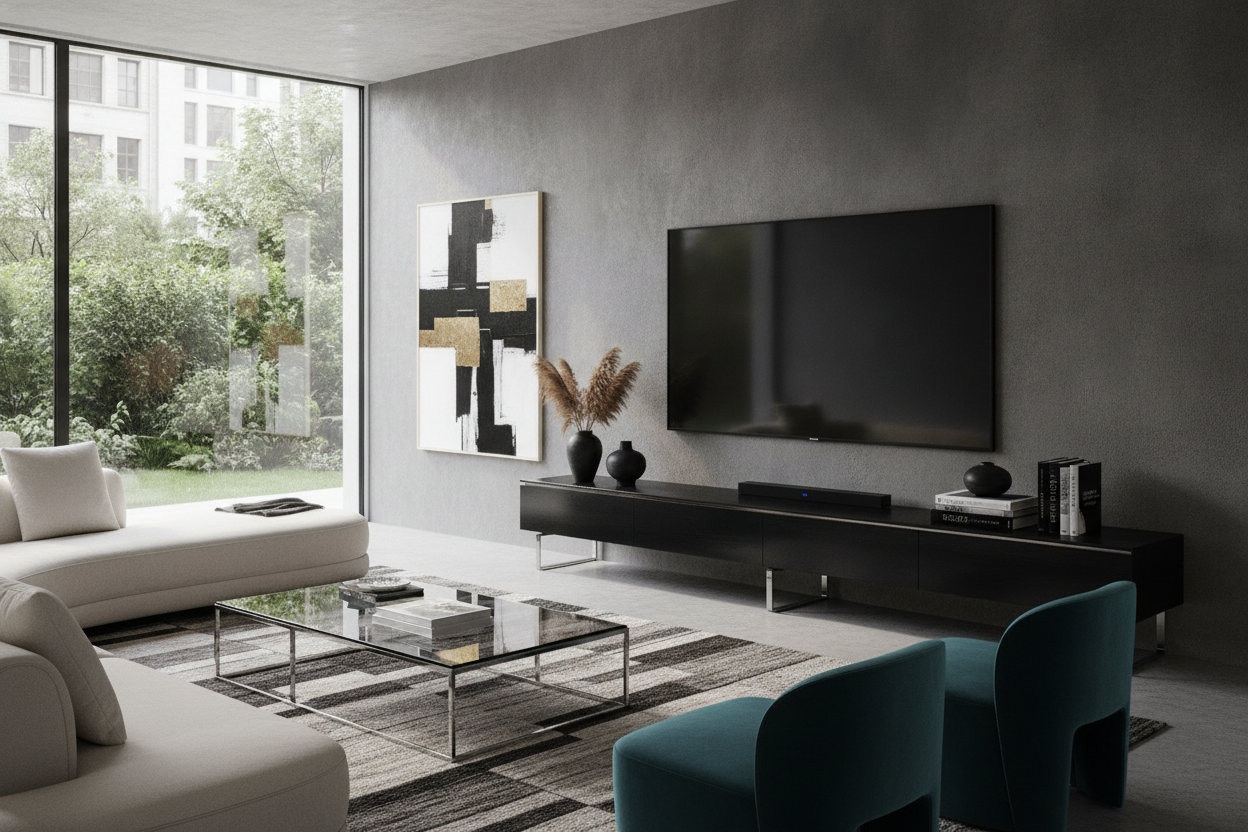
There is a psychological shift that happens when you lower your media center. It stops feeling like a 'TV room' and starts feeling like a curated lounge. By choosing tv stands 20 inches high, you open up the visual space above the television. This is where you can actually hang art or let a minimalist wall breathe. It feels intentional, like a high-end hotel lobby rather than a cluttered family room.
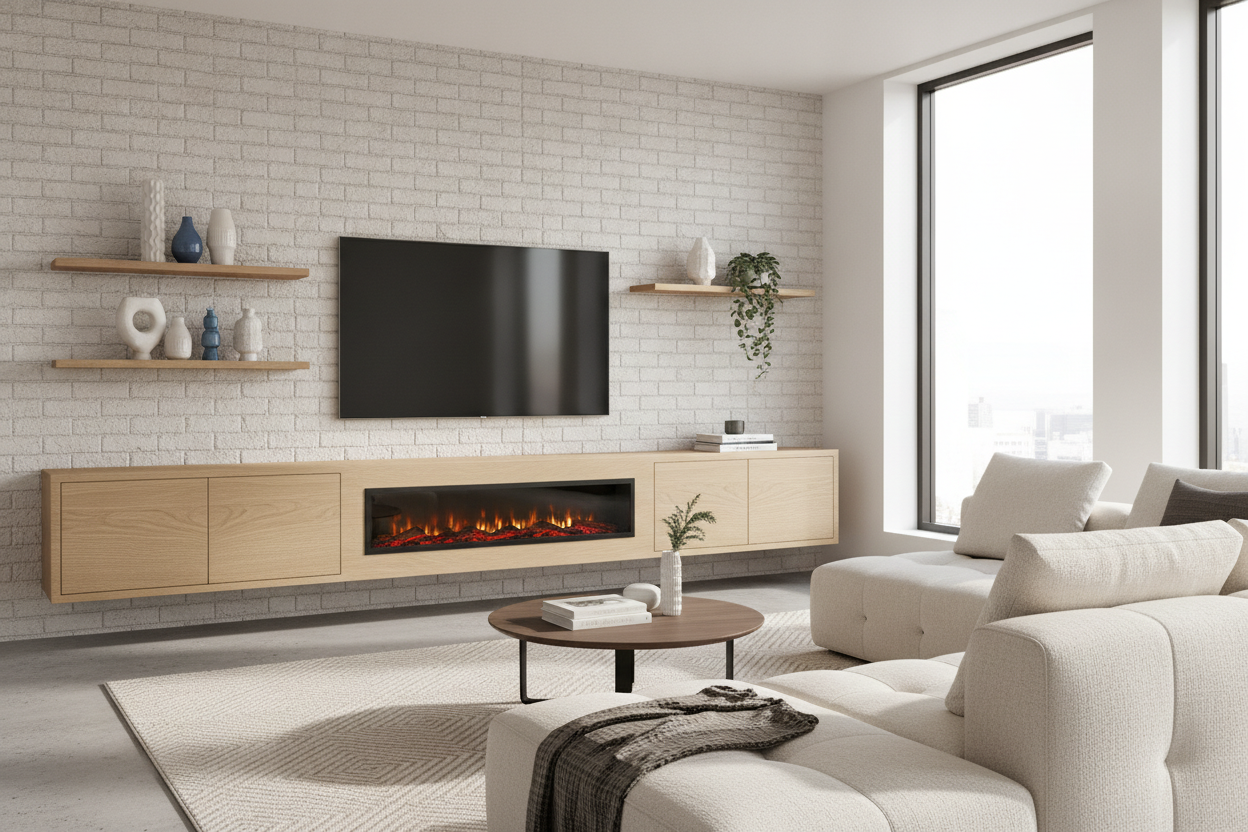
When I swapped my old 28-inch unit for a lower profile, the whole room felt five feet wider. It creates a horizontal line that grounds the space. If you are ready to make the switch, browsing through modern Tv Stands will show you that the industry is finally catching up to this 'low and slow' aesthetic. It is about creating a cinematic atmosphere where the technology doesn't dominate the entire vertical plane of the room.
Balancing the Proportions of a Lower Setup
The biggest risk with 20 inch tv stands is the 'dorm room' effect. If the unit is too short and too narrow, it looks like you are using a coffee table as a TV stand because you couldn't afford real furniture. To avoid this, you have to play with scale. If you are going low, you must go wide. A low-profile stand needs a long horizontal footprint to look sophisticated and expensive.
I always tell people to Forget 70 Inches: Why a 74 Inch TV Stand is the Sweet Spot. When the stand is significantly wider than the TV, it anchors the wall. That extra width compensates for the lost height, making the unit feel like a custom architectural element rather than a squat box. Aim for something at least 10 to 15 inches wider than your screen on both sides.
What to Check Before You Make the Swap
Before you toss your old console, do a quick inventory of your gear. A lower height means less vertical storage. If you have a massive vintage receiver or a vertical gaming console, measure that height twice. Most 20-inch stands only have about 6 to 8 inches of internal shelf clearance. You also need to think about cable management; with less 'body' to the furniture, hiding a mess of wires becomes a lot harder.
Don't forget the robot vacuum test. A 20-inch stand that sits flush to the floor is a dust magnet. I prefer models with 4-inch legs, which keeps the top surface at that magic 20-inch mark while allowing a Roomba to pass underneath. It makes the piece feel lighter and saves you from moving a heavy console every time you want to clean the baseboards.
My Personal Take
I once bought a gorgeous mid-century unit that was 20 inches tall on the dot. I loved it until I realized my center-channel speaker blocked the bottom of the screen. My mistake was not accounting for the TV's own stand height. Now, I use a universal VESA mount stand on top of my 20-inch console to get the height exactly where I want it—precise to the half-inch. It is a bit obsessive, but my neck thanks me every time I binge-watch a series.
FAQ
Is 20 inches too low for a TV stand?
Not if you have a modern, deep sofa. It is actually the ideal height for maintaining a neutral neck position while reclining. If you have a traditional, firm sofa with a high seat, you might prefer something closer to 24 inches.
How wide should a 20-inch tall stand be?
Go as wide as your room allows. To avoid looking like a 'starter' piece of furniture, a low stand should be at least 60 to 70 inches wide to provide enough visual weight to the room.
Can I put a 75-inch TV on a 20-inch stand?
Absolutely. In fact, large TVs often look better on lower stands because they prevent the top of the screen from towering over the room and making the ceiling feel low.

Dejar un comentario
Este sitio está protegido por hCaptcha y se aplican la Política de privacidad de hCaptcha y los Términos del servicio.