










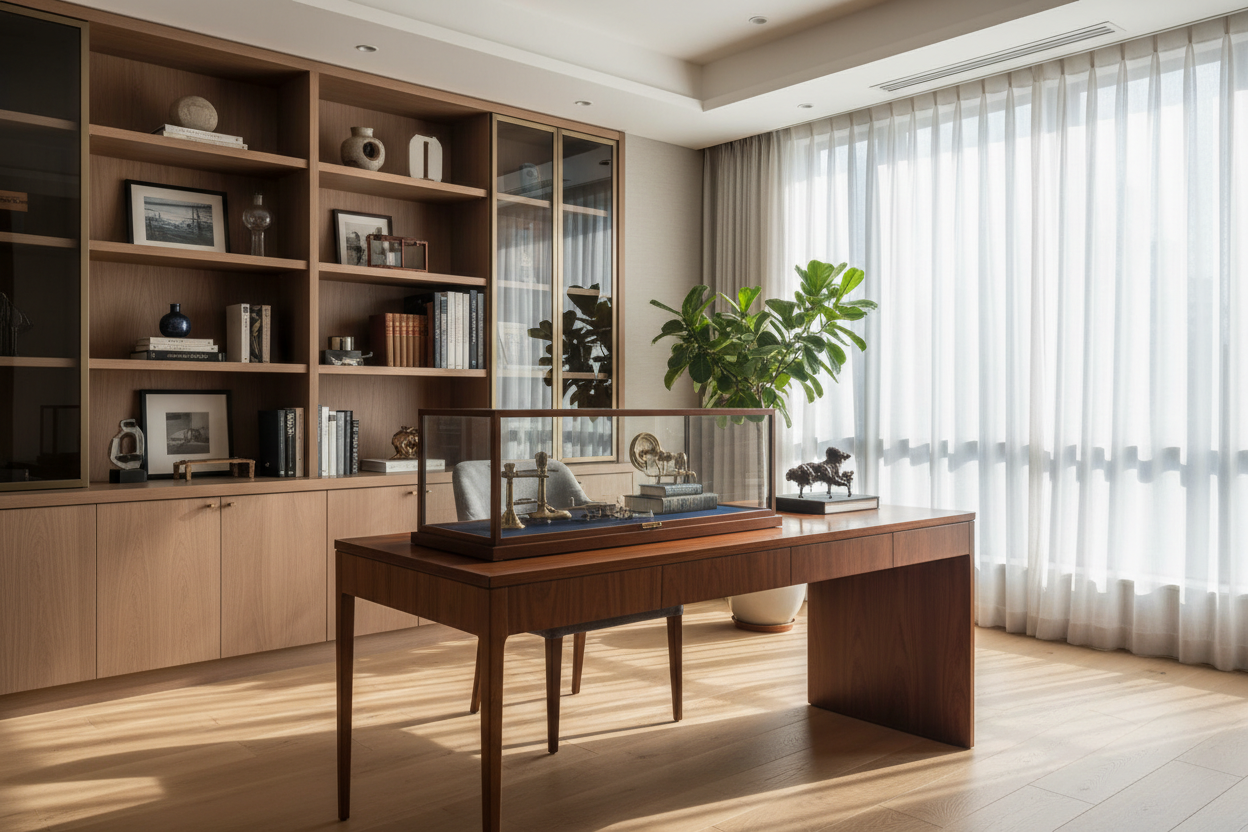
We have all been there: you want to showcase your favorite collectibles, vintage cameras, or curated pottery, but your home office or study area feels like it is shrinking by the minute. Floating shelves require drilling, and full-sized curios eat up valuable floor space. Enter the desktop display cabinet. It promises to organize your treasures right at eye level, but if you choose the wrong scale or material, it can instantly turn a functional workspace into a cramped, chaotic zone.
Understanding how to balance visual weight and practical workspace is the secret to making this piece work. By the end of this guide, you will know exactly how to select, size, and style a miniature cabinet that complements your room without overwhelming your daily workflow.
Quick Decision Guide
- Measure your clearance: Ensure you have at least 18 inches of clearance between the top of the cabinet and the ceiling or overhead shelving to avoid a boxed-in look.
- Check the footprint: A cabinet should occupy no more than 25 percent of your total desk surface area to preserve functional workspace.
- Prioritize glass over acrylic: While heavier, tempered glass resists scratching and will not yellow over time under UV light.
- Consider cord management: If your cabinet includes built-in lighting, look for discreet routing channels so wires do not clutter your desk.
Space Planning & Layout
Adding vertical volume to a desk fundamentally changes how a room feels. A heavy, dark wood cabinet pushed into a corner can make a small home office feel lopsided. When planning your layout, treat the cabinet as an architectural feature rather than just an accessory.
The 25 Percent Rule
In North American homes, standard desks typically range from 48 to 60 inches wide. If you place a bulky unit on top, you risk losing your functional work zone. I always advise clients to keep the cabinet footprint to a quarter of the desk surface. If you are building a dedicated display cabinet desk setup specifically for showcasing items rather than daily computer work, you can push this to 40 percent, provided the piece is centered and visually anchored.
Material & Build Quality
Because this piece sits right in your line of sight, material quality is impossible to hide. Cheap hinges or warped frames become glaringly obvious when you sit next to them every single day.
Glass vs. Acrylic Paneling
Acrylic is tempting because it is lightweight and affordable, making it easy to move around. However, in a sunlit room, acrylic inevitably accumulates micro-scratches from dusting and can develop a cloudy yellow tint over a few years. Tempered glass paired with a solid wood or powder-coated steel frame offers better longevity and a much crisper view of your displayed items.
Designer's Honest Take
I love the concept of a miniature display space, but I learned a hard lesson about lighting and placement a few years ago. I sourced a beautiful, matte black walnut cabinet for a client living in a downtown condo. It looked stunning upon installation. What I did not account for was the glare.
Because we placed it directly opposite a south-facing window, the glass doors acted like mirrors during peak afternoon hours, completely obscuring the vintage watches inside and blinding my client while he tried to work at his monitor. We ended up having to apply a specialized anti-glare film to the glass, which noticeably dulled the aesthetic. If you are putting a glass-front piece on your desk, strictly monitor your room's natural light paths before committing to a spot.
Frequently Asked Questions
What size desktop display cabinet do I need?
Measure your available depth first. The cabinet should be shallow enough (typically 6 to 10 inches deep) to leave room for your keyboard, monitor, and writing space. The height should remain below your seated eye level to avoid feeling oppressive.
How do I clean and maintain it?
Dust is the enemy of any display piece. Use a microfiber cloth lightly dampened with distilled water for glass, and avoid harsh chemical sprays that can degrade wood finishes or acrylic panels. Dust the interior every three months to keep items looking sharp.
Is built-in lighting worth the extra cost?
Yes, especially if the cabinet is placed in a shadowy corner or under overhead cabinets. Opt for integrated, warm-toned LED strips (around 2700K to 3000K) rather than harsh puck lights, which can create aggressive shadows on your items.

Dejar un comentario
Este sitio está protegido por hCaptcha y se aplican la Política de privacidad de hCaptcha y los Términos del servicio.