










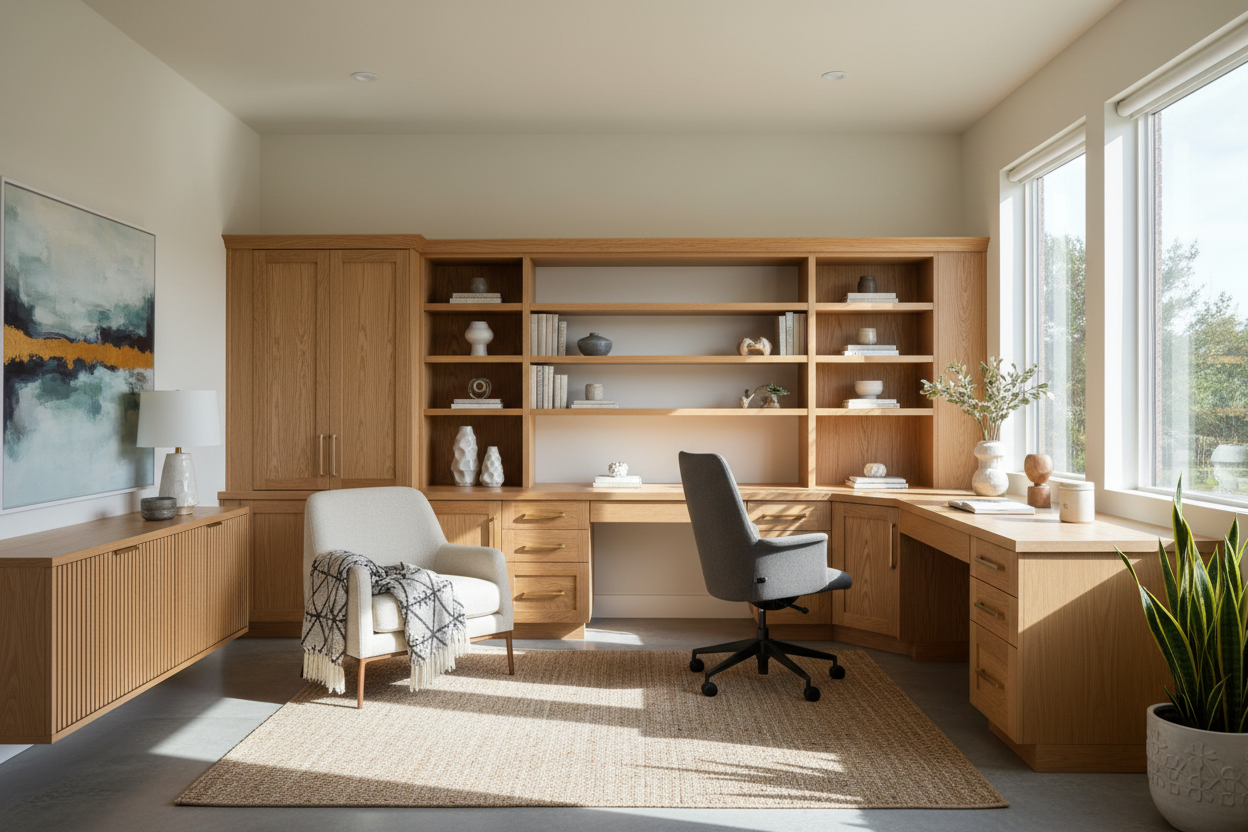
We have all been there—trying to shove a bulky, generic desk into a spare bedroom that also has to function as a guest room and a gym. The result is usually a space that feels cramped, visually chaotic, and awkwardly laid out. If you are tired of dead corners, wasted square footage, and a mess of tangled cords, a fitted desk might be the exact solution you need.
Creating a truly functional workspace requires more than just buying a flat-pack table and hoping for the best. Today, I am walking you through how custom built-ins compare to freestanding pieces, how to plan your layout, and what you need to know before committing to a permanent installation in your home.
Quick Decision Guide
- Maximize awkward layouts: Built-ins are the only true solution for slanted ceilings, narrow alcoves, and tricky bay windows.
- Visual weight matters: Anchoring your desk to the wall creates a seamless look that makes small rooms feel significantly larger.
- Plan for permanence: Unlike freestanding tables, a built-in requires commitment. It will likely stay with the house if you sell.
- Cable management is crucial: Custom designs allow you to hide every single wire behind the millwork for a completely clean aesthetic.
Space Planning & Layout Rules
In typical North American suburban homes, the home office is often a repurposed dining room or a small secondary bedroom. When planning a fitted office, the biggest mistake homeowners make is misjudging depth and clearance.
The Magic Numbers for Desks
If you use a laptop and a single monitor, a desk depth of 20 to 24 inches is perfectly adequate. However, if you are running dual monitors, drafting, or using large external keyboards, you need a minimum depth of 28 to 30 inches. Anything less, and you will feel like your screens are right against your nose. Additionally, always leave at least 36 to 42 inches of clearance behind the desk chair so you can comfortably push back and stand up without hitting a wall or a bookshelf.
Material & Build Quality
When selecting fitted office furniture for home installations, the material dictates both the price tag and the lifespan of the piece. You are essentially building cabinetry, so the rules of kitchen design apply here.
Choosing the Right Core
Solid wood tops are beautiful but can warp over time if placed directly over a heating vent. High-quality plywood with a real wood veneer is often the best compromise—it offers the warmth and grain of solid oak or walnut but provides superior structural stability. For painted finishes, MDF (Medium Density Fiberboard) is actually preferred over solid wood because it takes paint smoothly and will not expand or contract with seasonal humidity changes, which prevents paint cracking at the seams.
Style & Coordination
A built-in should look like it was always meant to be part of the house. If you live in a 1920s Craftsman, a stark, glossy white floating desk will look completely out of place. Instead, match the baseboards, crown molding, and trim profiles of your desk to the existing millwork in the room.
For a transitional look, consider painting the entire desk and surrounding shelving in a single moody, saturated color—like a deep navy or forest green. This technique, known as color drenching, reduces visual clutter and turns the workspace into a striking focal point rather than just a utilitarian corner.
Lessons from My Own Projects
Early in my career, I designed a stunning, wall-to-wall fitted desk for a client in a narrow Toronto condo. We used a gorgeous matte walnut finish and ran it seamlessly across a ten-foot wall. It looked incredible on installation day.
Then the client actually started working there. I had completely forgotten to account for the massive power brick of their specific desktop computer, and we had only drilled standard two-inch grommet holes for cables. We had to hire the carpenter to come back, cut a larger access panel, and retrofit a hidden cable trough underneath the desk. I learned the hard way: always ask clients exactly what equipment they use before finalizing the millwork drawings. And honestly, matte finishes show every single fingerprint—if you have kids or eat at your desk, opt for a satin polyurethane topcoat.
Frequently Asked Questions
How much does a fitted desk cost?
Prices vary wildly based on materials and labor in your area. A simple DIY-hacked setup using pre-made cabinets and a butcher block top might cost $500 to $1,000. A custom, carpenter-built unit with integrated lighting and shelving typically ranges from $2,500 to $6,000.
Can I take it with me when I move?
Generally, no. Built-in furniture is scribed to the walls, caulked, and painted in place. Removing it will damage the drywall and ruin the piece itself. It is best to consider it a permanent upgrade to the home's value.
Is a built-in desk good for small spaces?
Yes, it is arguably the best option for small spaces. Because it utilizes every fraction of an inch and eliminates the awkward gaps left by freestanding furniture, it provides maximum surface area while keeping the floor plan open.


Dejar un comentario
Este sitio está protegido por hCaptcha y se aplican la Política de privacidad de hCaptcha y los Términos del servicio.