










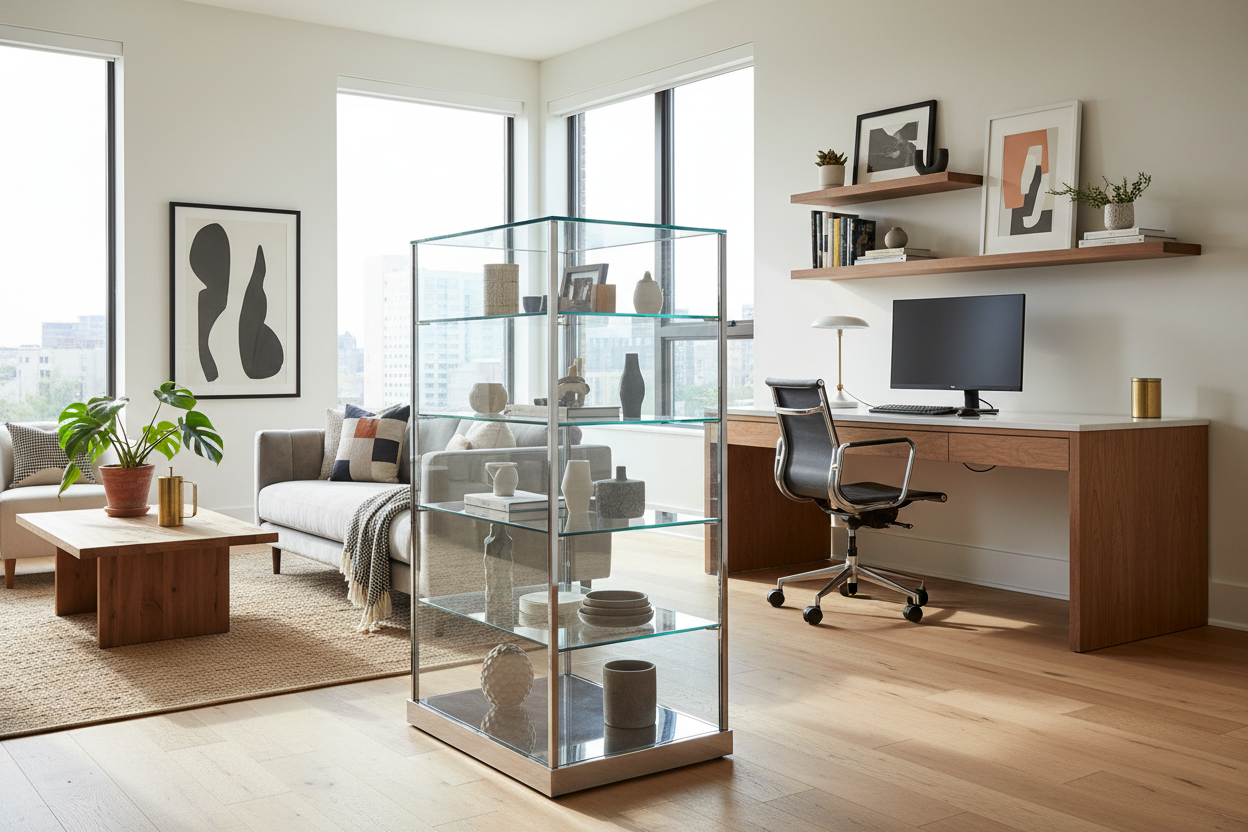
I spent two years selling my handmade jewelry off my dining room table. I’d clear away the coffee mugs and the mail five minutes before a client arrived for a pickup, but it never felt right. It felt like a hobby, not a business. I knew I needed a glass display counter, but I was paralyzed by the fear that my home would start looking like a suburban strip mall or a dusty pawn shop.
- Commercial counters create a professional 'boundary' in a shared home space.
- Lighting and textiles are mandatory to keep the glass from looking clinical.
- Tempered glass is a non-negotiable for safety in a residential setting.
- Measure your doorways twice—commercial furniture is notoriously bulky.
The 'Dining Table as a Storefront' Phase Was Failing Me
There is a specific kind of soul-crushing awkwardness that happens when a customer hands you sixty dollars over a table that still has crumbs on it. I tried using those cheap acrylic showcase counters from Amazon, but they felt flimsy. They slid around, they scratched instantly, and they didn't exactly scream 'high-end artisan.'
The problem with store display counters in a home setting is that they usually lack soul. But when you're growing a side-hustle, you eventually hit a wall where makeshift solutions just don't cut it. I needed a counter with glass that felt permanent and intentional, something that said 'this is a shop' the moment someone walked through the door. It makes the transition from 'friend' to 'business owner' much cleaner.
Why I Finally Invested in a Real Glass Display Counter
The turning point was seeing a friend using a counter display glass in her jewelry studio. It wasn't just about the looks; it was about the protection. My ceramics are fragile, and having a dedicated glass retail counter meant I could display my best pieces without worrying about them getting knocked over by a stray sleeve or a curious pet.
A real glass counter for shop use provides a specific transaction zone. It tells your brain—and your client's—that the business part of the house starts here. It’s a physical barrier that keeps your personal life and your inventory separate, which is vital when your living room doubles as your headquarters. Plus, there is something incredibly satisfying about locking up your inventory at the end of the day.
Sourcing the Right Fixture (Without the Commercial Markup)
I didn't want a brand-new, sterile glass display counter for shop use from a warehouse. I wanted something with a bit of history. I spent weeks hunting for a glass display counter for sale on local marketplaces. You want to look for shop counter glass that is at least 6mm thick and tempered—don't settle for the thin stuff that vibrates when you walk past it.
If you find a store glass counter that’s being retired from an old boutique, grab it. The older ones often have better wood framing that doesn't look like cheap laminate. Just make sure the glass counter showcase isn't so heavy that your floors can't handle the concentrated load—commercial glass is surprisingly heavy, often weighing in at over 150 pounds for a standard four-foot unit.
Softening the Vibe: How to Avoid the 'Strip Mall' Look
This is where most people mess up. If you just plop a glass counter showcase in a room, it looks like a cell phone repair kiosk. You have to master the art of using glass for display without looking like a store. My first rule? Kill the overhead fluorescent lights. I installed warm LED strips inside the counter glass and it changed everything.
I also added a heavy linen runner over one end of the shop glass display counter. It breaks up the hard, cold surface and gives you a soft place to set down items during a sale. Inside the case, I used oak trays and velvet pads. The goal is to mix textures so the glass becomes a window, not a barrier. If you leave it empty and bright white, it will feel like a pharmacy.
Balancing the Rest of Your Studio's Furniture
You can't have a commercial counter standing alone in a room full of IKEA flat-pack. It’ll look like a mistake. I paired my counter with a traditional black cabinet with glass doors against the back wall. The black finish on the cabinet helps bridge the gap between the metal of the counter and the rest of my home decor.
When you mix a shop counter glass unit with residential furniture, like a plush rug or an upholstered chair for the customer, the space feels like a boutique rather than a warehouse. It’s all about the balance of hard and soft surfaces. If the room flows, the counter feels like a luxury feature instead of a piece of equipment. I also added a few large plants nearby to hide the industrial-looking power cords.
FAQ
Is tempered glass really necessary?
Yes. Non-tempered glass breaks into dangerous shards. In a home where people are moving around in socks or kids are playing, you want the glass that crumbles into tiny cubes if the worst happens. Most commercial units are tempered, but always ask.
How do you keep the fingerprints away?
You don't. You just keep a microfiber cloth and a spray bottle of 50/50 water and vinegar hidden on a shelf under the counter. It’s a daily ritual, especially if you have clients who like to point and touch.
Will it make my room feel smaller?
Actually, because it's transparent, a glass counter often makes a room feel more open than a solid wood desk would. It’s a great hack for a home business in a tight space because it doesn't block the visual line of the floor.


Dejar un comentario
Este sitio está protegido por hCaptcha y se aplican la Política de privacidad de hCaptcha y los Términos del servicio.