










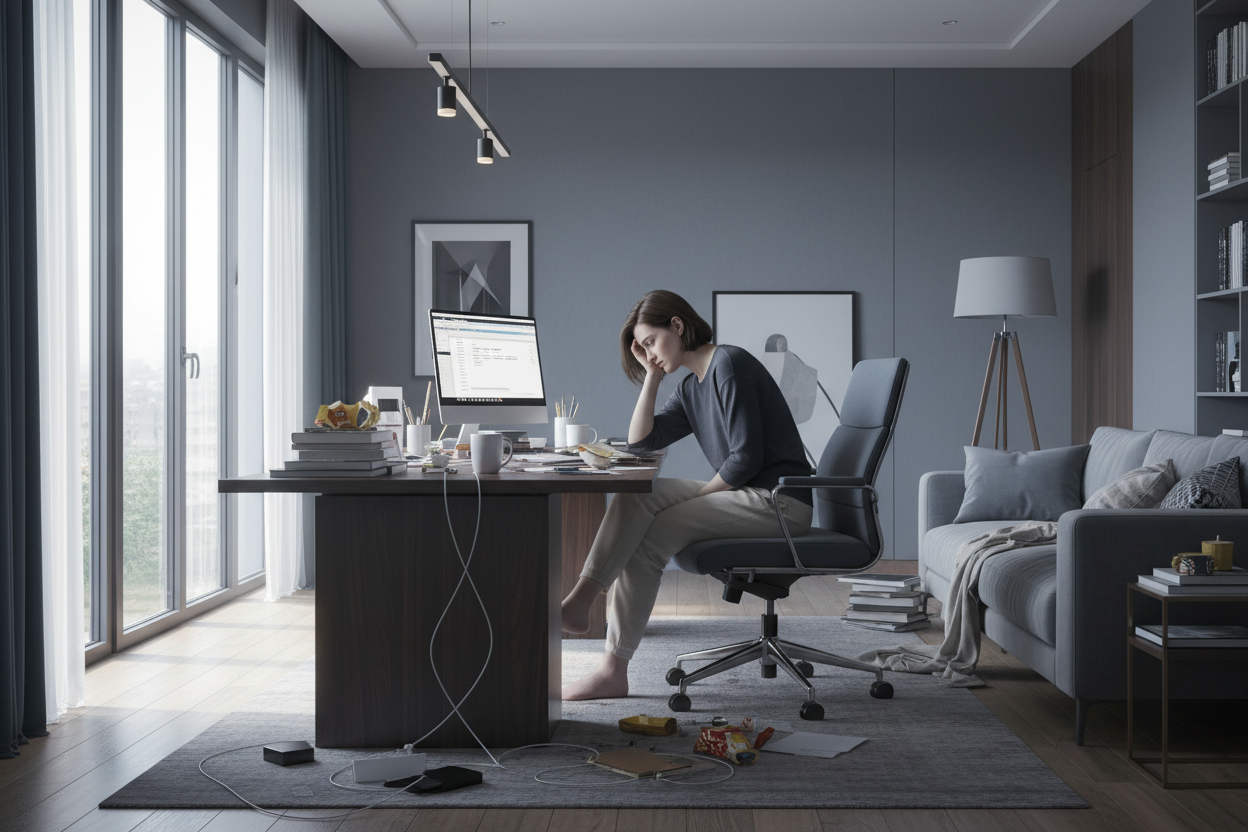
We often attribute the fatigue of remote work to Zoom burnout or lack of social interaction. However, as an interior designer, I see a different culprit: the environment itself. If you find yourself asking is working from home hard because of a lack of discipline, pause and look around. Often, the difficulty stems from trying to force professional output in a space designed for leisure. When your physical surroundings lack ergonomic fidelity and spatial definition, your brain struggles to switch into 'work mode,' leaving you exhausted and unproductive.
Key Design Factors for WFH Success
- Spatial Zoning: Establishing physical or visual boundaries to separate 'living' from 'labor'.
- Ergonomic Support: Prioritizing lumbar health and seat depth over purely aesthetic chair choices.
- Lighting Layers: Balancing ambient, task, and accent lighting to reduce eye strain and fatigue.
- Material Tactility: Choosing surfaces (like solid wood or matte laminates) that reduce glare and provide tactile grounding.
- Acoustic Control: Using textiles and rugs to dampen echo and visual noise.
When Working From Home Doesn't Work: The Layout Problem
The sentiment of work from home not working usually begins with a failure of layout. In open-concept homes, the lack of walls creates a bleed-over effect. If your line of sight from the desk includes a pile of laundry or dirty dishes, your cognitive load increases.
Defining Boundaries Without Walls
You don't need a dedicated room to solve the issue of an employee not working from home efficiently. Use furniture as architecture. A high-backed bookshelf placed perpendicular to a wall can create a 'nook,' shielding you from domestic distractions. Orient your desk to face a window or a piece of art, never the center of the room where household chaos ensues. This visual discipline is critical for signaling to your brain that the workday has begun.
The Ergonomic Trap: Style vs. Substance
Why is working from home so hard on the body? Because we often compromise function for form. I frequently see clients attempting to use dining chairs for eight-hour shifts. While a wishbone chair looks sculptural, it lacks the kinetic support required for prolonged sitting.
Investing in the Right Chair
If you are working from home but not working at full capacity, check your posture. A proper task chair should offer adjustable seat height, lumbar tension, and breathable material. If you refuse to bring a 'corporate' looking chair into your curated living space, look for mid-century modern inspired task chairs that conceal their mechanisms within upholstered silhouettes. However, never sacrifice the 90-degree knee angle for a velvet finish.
Materiality and Visual Noise
The texture of your workspace matters. Glass desks, while sleek, are often cold to the touch and attract fingerprints, creating subconscious irritation. I recommend solid wood or high-quality veneers. Wood offers warmth and acoustic absorption. Furthermore, consider the 'visual noise' of your desk surface. If you are not working from home with focus, it might be clutter. Utilize vertical storage or credenzas to keep the work surface clear, allowing for a 'clean slate' start every morning.
My Personal Take on Is Working From Home Hard
Early in my career, I fell into the aesthetic trap myself. I sourced a stunning, vintage rosewood desk for my home office. It was visually arresting—a true statement piece. However, within a week, I realized why I was struggling. The apron of the desk (the wood panel beneath the drawer) was too deep. I couldn't cross my legs, and my thighs would brush against the rough underside of the vintage timber every time I shifted.
It was a tactile annoyance that broke my concentration dozens of times a day. I was constantly shifting to find comfort, which meant I was constantly breaking my flow state. I swapped it for a modern writing desk with ample leg clearance and a matte linoleum top that felt soft under my wrists. The difference in my focus was immediate. Sometimes, the 'hardness' of WFH is literally the hard edge of a poorly chosen table digging into your forearm.
Conclusion
If you feel like working from home doesn't work for you, stop blaming your work ethic and start auditing your furniture. By investing in ergonomic pieces, establishing clear zones, and reducing visual clutter, you can transform a struggle into a sustainable, stylish workflow. Your home should be a sanctuary, but your office needs to be a machine for productivity.
Frequently Asked Questions
How much space do I really need for a functional home office?
You don't need a large footprint, but you do need depth. A desk should be at least 24 inches deep to accommodate a monitor and keyboard without cramping your wrists. Any shallower, and you risk eye strain from being too close to the screen.
Can I use a rug in a home office with a rolling chair?
Yes, but texture is key. Avoid high-pile shags or soft wool loops that will snag casters. Opt for a low-pile, tight-weave rug or a vintage kilim. Alternatively, use a transparent polycarbonate chair mat to protect the rug while maintaining the aesthetic.
What is the best lighting temperature for a home office?
Aim for a color temperature between 3500K and 4000K. This 'cool white' range mimics daylight and promotes alertness. Warm light (2700K) is too relaxing and can induce drowsiness, contributing to the feeling that working is difficult.

Dejar un comentario
Este sitio está protegido por hCaptcha y se aplican la Política de privacidad de hCaptcha y los Términos del servicio.