










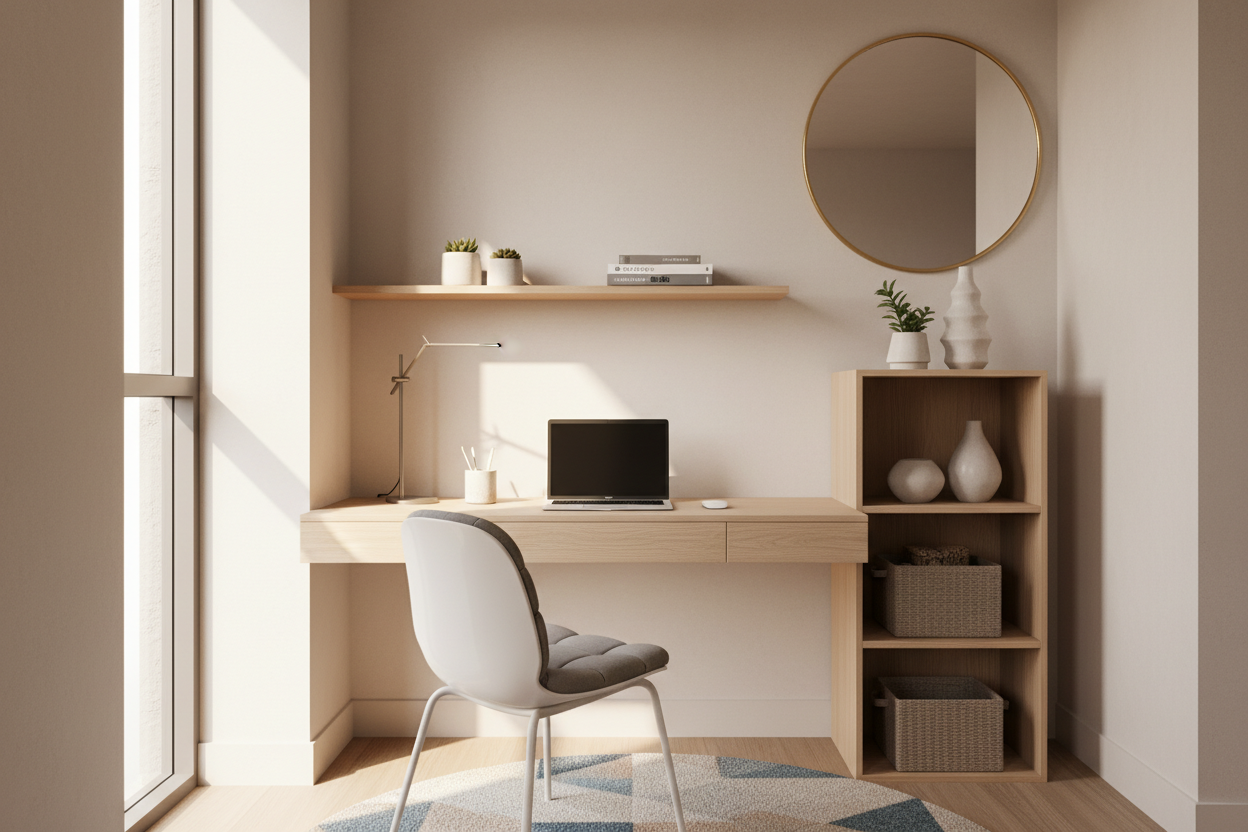
Square footage is often the ultimate luxury in modern residential design, yet the demand for a dedicated workspace has never been higher. The challenge often lies not in finding the room, but in setting up a small office that feels intentional rather than intrusive. Whether you are carving out a niche in a master bedroom or reclaiming a closet, the goal is to balance rigorous functionality with a refined aesthetic. This guide moves beyond basic furniture placement to discuss the nuances of scale, material selection, and visual weight.
Quick Decision Guide: Key Features for Compact Workspaces
If you are rushing to purchase furniture or plan your layout, prioritize these four architectural elements to ensure your space performs well:
- Visual Weight: Opt for materials like glass, acrylic, or thin metal frames. These have a lighter "footprint" than heavy, solid oak desks, preventing the room from feeling cramped.
- Vertical Utilization: When floor space is limited, storage must go up. Look for wall-mounted shelving systems that sit above the monitor line.
- Scale & Proportion: A standard office desk is 30 inches deep; in a small space, seek out "console depth" desks (18–22 inches) to maintain traffic flow.
- Ergonomic Flexibility: Choose chairs with low profiles or armless designs that can tuck completely under the desk when not in use.
Space Planning: How to Create a Small Office Space
The first step in setting up a small home office is identifying the "dead zones" in your floor plan. I often advise clients to look for alcoves, landings, or even the space behind a floating sofa. The layout must respect the room's primary traffic flow.
When creating a small office space at home, clearance is king. You need a minimum of 36 inches behind your desk to slide your chair back comfortably. If you are tight on space, consider a wall-mounted drop-leaf desk. This architectural hack allows the office to essentially disappear when the workday ends, returning the square footage to the living area.
Selecting the Right Materials and Silhouette
The Desk: Materiality Matters
In a dedicated study, a mahogany executive desk commands respect. When learning how to set up home office in small space layouts, however, that same desk becomes an obstacle. I recommend seeking out materials that reflect light or blend with the walls. A white lacquer desk against a white wall creates a monochromatic look that tricks the eye into seeing more space. Alternatively, a warm walnut veneer with slender, mid-century tapered legs offers style without the visual bulk of a pedestal desk.
The Chair: Comfort vs. Bulk
The most common mistake I see when making a home office in a small space is prioritizing a massive, high-back executive chair. While comfortable, it dominates the room. Look for "conference style" chairs or high-end task chairs with mesh backs. These provide the necessary lumbar support but maintain a breathable, airy silhouette.
Lighting and Visual Balance
How to create an office space in a small home often comes down to lighting control. A floor lamp takes up valuable real estate. Instead, utilize hardwired sconces or clamp-on architectural task lights. This keeps the work surface clear for your laptop and documents.
Furthermore, maintain visual balance by decluttering. In small spaces, every object carries more visual weight. Use closed storage (cabinets or decorative boxes) for paperwork and keep open shelving reserved for curated artifacts or books. This approach prevents the "cluttered desk, cluttered mind" phenomenon.
My Personal Take on Setting Up a Small Office
In my years of designing urban apartments, I have learned that measurements on paper rarely tell the whole story. I once designed a custom workspace for a client in a narrow hallway. We ordered a beautiful, shallow console desk that was only 18 inches deep to maximize the walkway.
However, here is the unpolished truth I learned from that project: while the desk fit perfectly, we didn't account for the monitor stand depth. Once the monitor was placed, the keyboard was practically falling off the edge. We had to pivot to a monitor arm clamp. But, because the desk was a lightweight veneer over particle board (to save money), the clamp actually began to crush the table edge.
The lesson? If you are going small and using clamp-mounts to save space, ensure your desk top is solid wood or high-density laminate, and at least 1 inch thick. It’s these tactile, structural details that determine whether how to make an office in a small space is a success or a frustration.
Conclusion
How to create a home office in a small space is an exercise in editing. It requires you to be ruthless with clutter and intentional with every piece of furniture you select. By focusing on vertical storage, appropriate scale, and high-quality materials, you can curate a workspace that inspires productivity without dominating your home.
Frequently Asked Questions
What is the minimum size for a functional small office?
Ideally, you need a wall width of at least 40 inches to accommodate a standard compact desk and a chair. However, for a truly minimal setup using a laptop and a wall-mounted shelf, you can work with as little as 30 inches of width.
How do I separate my office from my bedroom visually?
Use area rugs to define the "work zone" separate from the "sleep zone." Additionally, orienting the desk so you face away from the bed helps mentally separate rest from work. Folding screens are also an elegant way to hide the office after hours.
Is a standing desk a good option for a small space?
Yes, but be careful with the base width. Many standing desks have wide, splayed feet for stability which can become a tripping hazard in tight corners. Look for single-column pneumatic standing desks which often have a smaller footprint.

Dejar un comentario
Este sitio está protegido por hCaptcha y se aplican la Política de privacidad de hCaptcha y los Términos del servicio.