










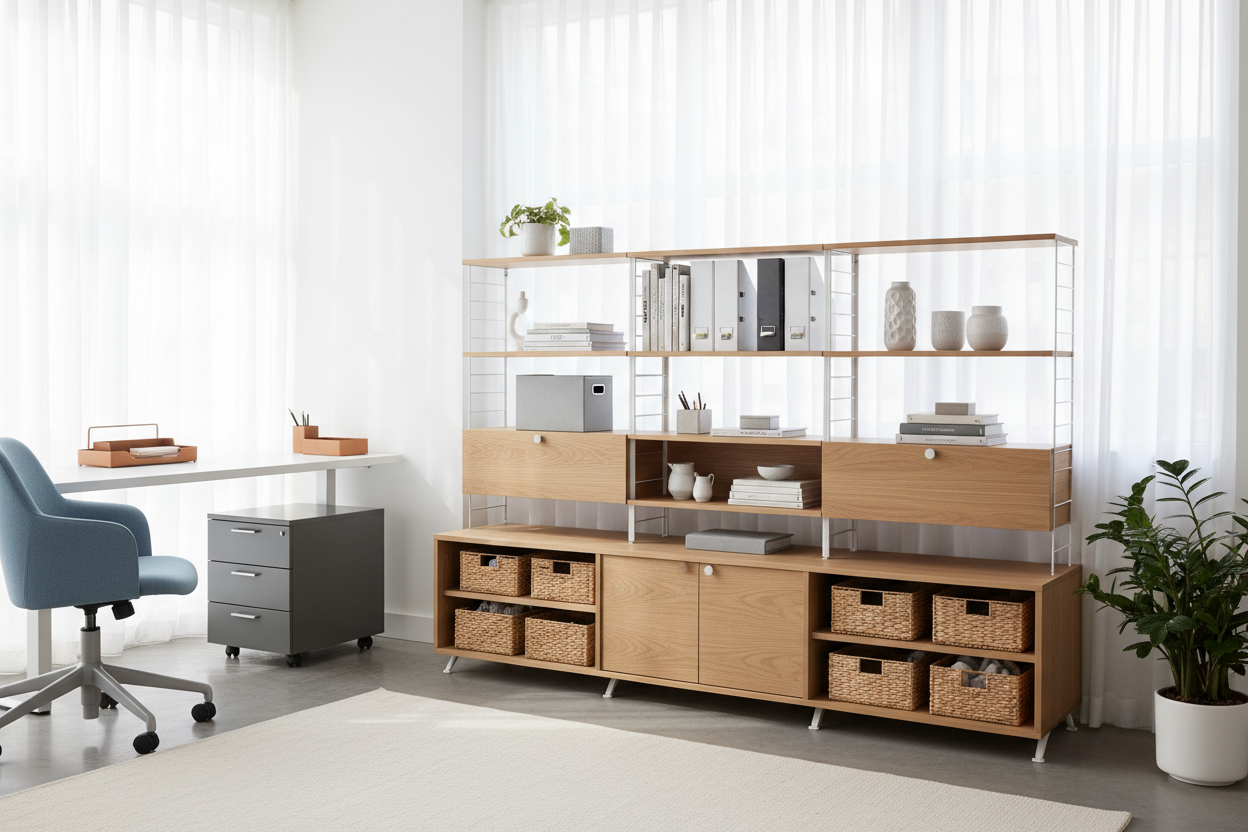
There is a distinct tension in interior design between the need for minimalism and the reality of accumulation. We all crave that clean, architectural desk surface, but the operational reality of business involves paperwork, tech peripherals, and stationery. The solution isn't just throwing things away; it is selecting the right **storage for offices** that bridges the gap between high-end aesthetics and rigorous utility. When curated correctly, your storage becomes part of the architecture, grounding the room rather than cluttering it.
Quick Decision Guide: What to Look For
Before you commit to a purchase, review these critical specifications to ensure the piece meets professional standards:
- Weight Capacity: Ensure shelves are rated for heavy paper loads (at least 50 lbs per shelf) to prevent bowing.
- Hardware Quality: Look for full-extension ball-bearing slides for drawers; they allow access to the very back of the file.
- Leveling Glides: Essential for uneven floors to ensure doors hang straight and drawers don't drift open.
- Material Finish: High-pressure laminate or sealed wood veneer offers the best resistance to coffee rings and scratches.
Balancing Visual Weight and Function
In my years of designing executive suites, the most common error I see is ignoring "visual weight." Tall, dark towers of shelving can make a room feel claustrophobic. If your square footage is limited, opt for a low office storage cabinet (often called a credenza). These pieces provide ample surface area for decor or printers while keeping the sightlines open across the room, maintaining an airy, spacious feel.
The Role of Materiality
The finish of your storage office furniture dictates the mood. A matte lacquer finish feels modern and disappears into the walls, while a walnut or oak veneer adds warmth and authority. If you are integrating office storage cupboards into a client-facing meeting room, I always recommend doors over open shelving. It hides the inevitable visual noise of binders and boxes, presenting a polished front to visitors.
Solutions for Compact Floorplans
When dealing with tight urban workspaces, the footprint is everything. A standard lateral file is often too deep. Instead, look for an office small cabinet designed with a slimmer profile, usually around 15 to 18 inches deep. For these spaces, verticality is your friend.
A small storage cabinet for office use doesn't have to look utilitarian. I often specify units that sit on raised legs rather than a solid plinth base; seeing the floor underneath the furniture tricks the eye into thinking the room is larger than it is.
Versatility in Organization
Static shelves are rarely enough. The most functional pieces are hybrid units, such as office shelves with drawers integrated into the base. This allows you to display books or awards on top while concealing unsightly cables and office supplies below. For immediate desk-side access, an office small storage cabinet on casters (a pedestal) is indispensable. However, ensure the casters have locking mechanisms so the unit doesn't roll away when you pull a drawer open.
My Personal Take on Storage for Offices
I learned a hard lesson early in my career regarding freestanding storage. I once specified a beautiful, expensive bank of cabinets for a client's open-plan loft. We intended to use them as room dividers. However, when they arrived, I realized I hadn't checked the back finish. The backs were raw, stapled masonite—meant to be pushed against a wall. It looked terrible from the rear.
We had to hire a millworker to build custom panels to cover them, blowing the budget. Now, whenever I buy storage, I physically touch the back panel and the drawer interiors. I also check the "anti-tip" mechanism. There is nothing more terrifying (and cheap-feeling) than opening a top drawer and feeling the whole cabinet lurch forward. Quality storage stays planted.
Conclusion
Investing in the right storage is about respecting your workflow. It allows you to clear your mind by clearing your desk. Whether you choose a substantial credenza or a mobile pedestal, prioritize hardware quality and proportion. Your office shouldn't just store your work; it should elevate the way you perform it.
Frequently Asked Questions
How much space do I need for drawer clearance?
Always allow at least 24 to 30 inches of clear space in front of any cabinet. This ensures you can fully extend drawers and stand comfortably in front of them without blocking traffic paths.
Should I choose open shelves or closed cabinets?
If you are naturally tidy, open shelves offer a beautiful opportunity for styling. However, for 90% of working professionals, closed cabinetry is superior because it conceals the clutter of paperwork and supplies, reducing visual stress.
Can I mix wood tones in my office storage?
Yes, but keep it intentional. If your desk is a dark walnut, a matte black or charcoal storage unit often looks better than trying to match the wood grain perfectly and failing. Contrast is often more sophisticated than a near-match.

Dejar un comentario
Este sitio está protegido por hCaptcha y se aplican la Política de privacidad de hCaptcha y los Términos del servicio.