










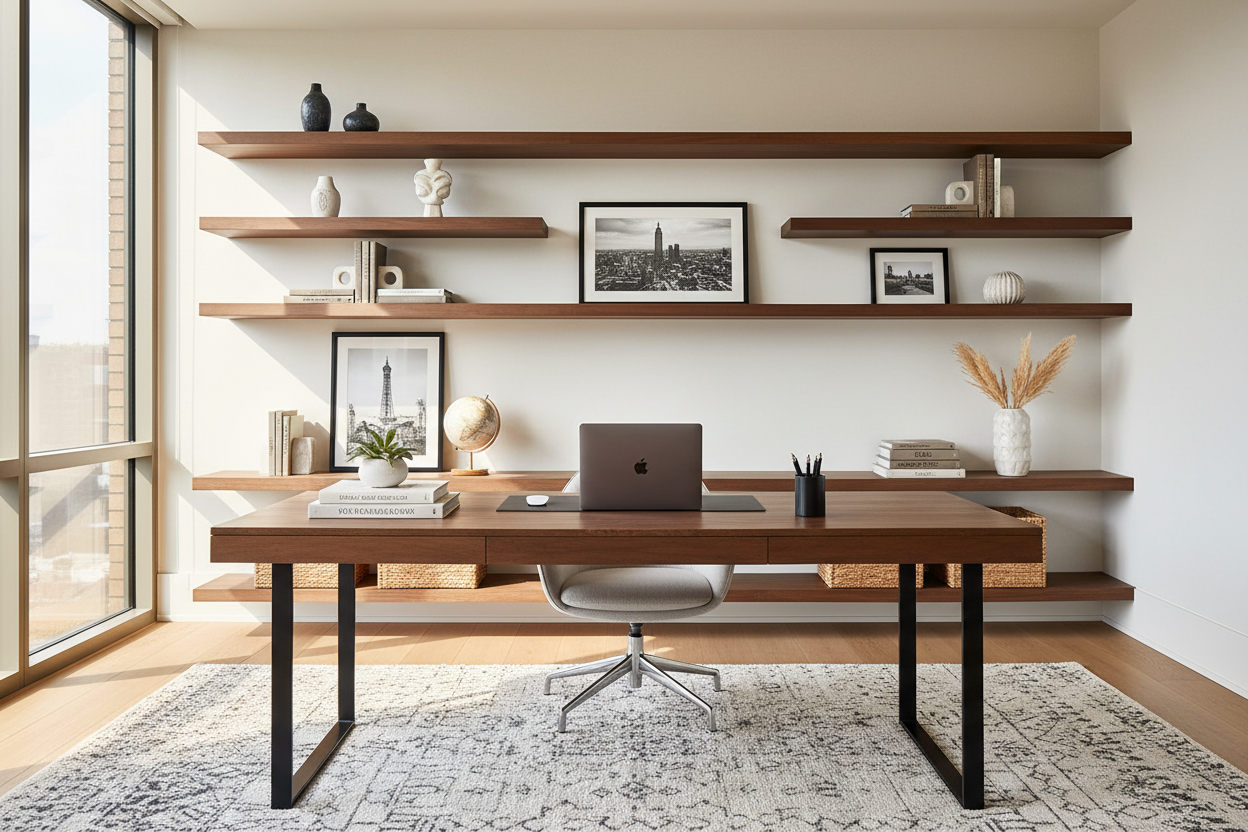
Nothing disrupts a design scheme—or a train of thought—quite like a cluttered workspace. We often treat the desk and the storage as separate entities, buying a table for working and a bookcase for storing. However, the true secret to a cohesive study lies in viewing the office desk and shelf as a singular, integrated architectural element. Whether you are working with a sprawling executive suite or a compact nook, the relationship between your horizontal work surface and your vertical storage defines the room's functionality and its soul.
Key Features to Look For
Before committing to a purchase, review these critical factors to ensure your setup balances form with function:
- Visual Weight: Ensure the shelving doesn't visually overpower the desk; top-heavy designs make rooms feel smaller.
- Material Continuity: Look for matching wood grains or complementary textures (e.g., walnut desk with matte black metal shelving).
- Ergonomic Clearance: Verify there is at least 18-24 inches of clearance between the desktop and the lowest shelf for monitor height.
- Structural Integrity: For attached units, check for "monitor shake" stability; for wall-mounted, verify stud placement.
- Cable Management: Integrated grommets or hidden channels are essential for a clean look.
Curating Materials and Textures
As a designer, I always start with the tactile experience. Your desk is a high-touch surface. Solid wood, such as white oak or walnut, offers longevity and develops a patina over time that veneers simply cannot replicate. However, high-quality high-pressure laminates (HPL) have come a long way and offer superior scratch resistance for heavy daily use.
When selecting office desk and shelves, consider the interplay of materials. If you choose a heavy, solid wood desk, pair it with floating metal shelves to keep the room feeling airy. Conversely, a glass or acrylic desk often benefits from the grounding presence of substantial wooden cabinetry behind it. This contrast creates a sophisticated silhouette rather than a "catalog matchy-matchy" appearance.
Space Planning and The "Command Position"
Placement is just as vital as the furniture itself. In interior design, we often reference the "command position"—facing the door, not the wall. However, this creates a challenge for cabling and storage access. A freestanding desk with a credenza or wall-mounted home office desk and shelves behind you is often the most luxurious layout. It separates the "active work" zone from the "archival" zone.
Verticality in Small Spaces
For tighter footprints, verticality is your best asset. Ladder desks or wall-mounted secretary units utilize height without encroaching on floor space. When installing shelves above the desk, I recommend staggering them. Instead of one long block, use offset lengths. This allows for taller items (like a secondary monitor or a tall vase) to break the horizontal lines, adding dynamic energy to the wall.
Styling for Focus and Aesthetics
The styling of your shelves dictates the vibe of the room. The golden rule here is the 60/40 split: 60% functional items (books, binders, boxes) and 40% decorative (sculptural objects, plants, art). Use decorative boxes to hide unsightly paperwork. This hides the chaos while keeping the aesthetic clean. Lighting is also crucial; consider installing LED strip lighting under the lowest shelf to provide task lighting for the desk surface below, eliminating shadows cast by overhead fixtures.
My Personal Take on Office Desk and Shelf Combinations
I learned a hard lesson about integrated desk-and-shelf units during a project for a client in a historic brownstone. We ordered a stunning, high-end leaning ladder desk unit where the shelves were physically attached to the desk frame. It looked incredible in photos.
However, once the client started typing vigorously, the vibration traveled up the frame. The decorative vase on the top shelf would rattle subtly, and the monitor on the desk would wobble just enough to be annoying. It was a physics issue, not a quality issue. Since then, I almost exclusively recommend separating the two. Mount the shelves to the wall studs and let the desk stand independently on the floor. It eliminates vibration transfer and usually looks more custom and built-in. Also, a quick tip from my own home office: never put deep shelves directly above your head. I once installed 12-inch deep shelves too low, and the psychological feeling of something "looming" over me actually hampered my focus. Stick to 8-inch or 10-inch depths for immediate overhead storage.
Conclusion
Investing in the right workspace setup is an investment in your own efficiency and peace of mind. By carefully selecting materials that age gracefully and planning a layout that separates structure from style, you create a space that invites you to sit down and do your best work. Don't just buy furniture; build a habitat for your ideas.
Frequently Asked Questions
How high should the first shelf be above my desk?
Ideally, leave at least 18 to 24 inches of vertical space between the desktop and the bottom of the first shelf. This accommodates most computer monitors and allows you to use the full depth of the desk without banging your knuckles or feeling cramped.
Should the desk and shelves match perfectly?
Not necessarily. While they should share a design language (e.g., both Mid-Century Modern or both Industrial), mixing materials often looks more high-end. A timber desk pairs beautifully with matte black or brass metal shelving.
What is the best depth for shelves above a desk?
For shelves directly above the seated area, shallower is better. Aim for 8 to 10 inches deep. This provides enough space for books and decor without casting a large shadow on your workspace or making you feel claustrophobic.

Dejar un comentario
Este sitio está protegido por hCaptcha y se aplican la Política de privacidad de hCaptcha y los Términos del servicio.