








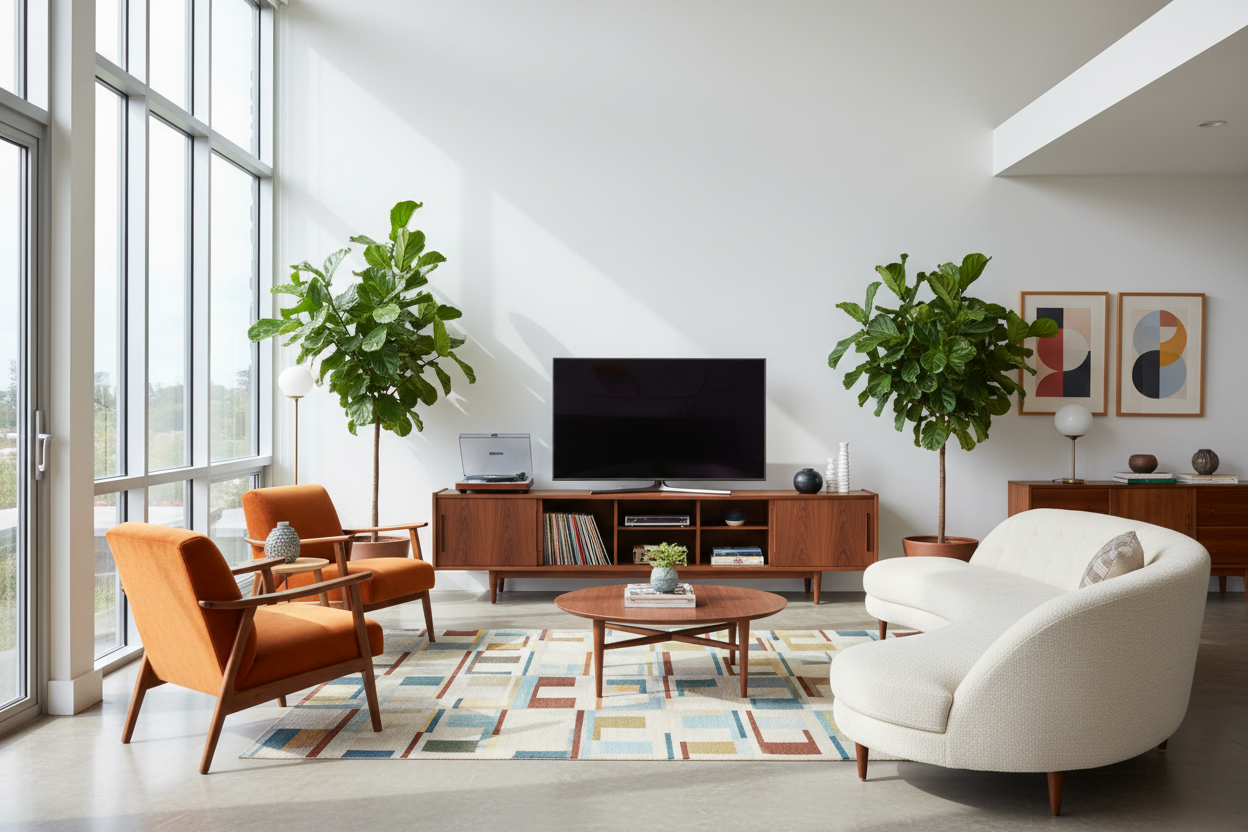
We have all seen it happen. You finally bring home that gorgeous 75-inch flat screen, set it on your existing media cabinet, and suddenly the entire living room feels completely off-balance. The screen looms over the furniture like a dark storm cloud, making the cabinet look like a toy. To fix this proportion nightmare without dragging a heavy, blocky piece of furniture into your room, a mid century modern tv stand 80 inch is often the most effective solution.
The signature tapered legs and clean lines of this style provide the necessary width to anchor a large screen without eating up your visual space. But styling a piece this long comes with its own set of rules. Let's break down how to properly size, place, and style this specific silhouette so it looks intentional in your home.
Quick Decision Guide
- Measure physical width, not diagonal: A TV's advertised size is diagonal. Ensure your stand is at least 4 to 6 inches wider than the actual physical width of your screen.
- Look for slatted doors: Wood slats or cane webbing allow infrared remote signals to pass through while hiding unsightly cable boxes and gaming consoles.
- Verify the center support: An 80-inch span requires at least one hidden middle leg to prevent the wood from bowing under heavy equipment over time.
- Prioritize high-density cores: While solid wood sounds appealing, a high-quality walnut veneer over a dense MDF core is actually less prone to warping across long spans.
Space Planning & Layout
The Screen-to-Stand Ratio
People often confuse diagonal screen size with physical width. For example, a 75-inch TV is roughly 66 inches wide. Placing it on an 80 inch tv stand mid century modern leaves about 7 inches of breathing room on each side. This negative space is crucial. It stops the setup from looking top-heavy and gives you room to add subtle decor, like a structural plant or a minimalist table lamp, which softens the harsh black rectangle of the TV.
Managing Room Clearances
Because an 80-inch console takes up nearly seven feet of wall space, you need to plan your walkways carefully. Keep a minimum of 36 inches between the front of the stand and your coffee table. The beauty of the mid-century silhouette is that it sits off the floor—usually 6 to 8 inches—which allows light to pass underneath. This continuous sightline of the floor makes tight suburban family rooms and narrow apartments feel significantly larger than they actually are.
Material & Build Quality
Navigating Walnut Veneers vs. Solid Wood
When shopping for a mid century modern tv console 80 inch, you will mostly encounter walnut or acorn veneers. This is not a negative compromise. High-quality wood veneer over a stable plywood or MDF core handles the drastic seasonal humidity shifts in North American homes much better than a solid slab, which can cup or split over an 80-inch span. Just pay close attention to the edge banding. Cheap iron-on edges will begin to peel after being bumped a few times by a vacuum cleaner. Look for solid wood edging around the perimeter.
Designer's Honest Take
I specify long mid-century consoles constantly because they solve the giant TV problem so gracefully. But I will share an annoying reality I learned during a recent project in a Chicago loft. We sourced a stunning, low-profile 80-inch walnut console with beautiful peg legs. It looked incredible when it was empty.
However, because the piece was so wide, the manufacturer included two standard wooden center support legs. When we placed it on a plush vintage Moroccan rug, those center legs caught the thick pile, making the whole unit wobble unevenly. We had to carefully shim the outer legs to get the cabinet doors to align properly. Additionally, be warned: genuine vintage credenzas from the 1960s were not built for modern cord management. If you buy true vintage, be prepared to drill your own holes for HDMI cables and power cords.
Frequently Asked Questions
What size TV looks best on an 80-inch stand?
Ideally, TVs ranging from 65 to 77 inches (diagonal) look best. This keeps the physical width of the TV between 57 and 68 inches, leaving a visually pleasing margin of wood on either end to balance the composition.
Will a mid-century TV stand clash with my transitional decor?
Not at all. Mid-century pieces are highly versatile. If your room leans transitional, choose a console with a slightly darker, muted walnut finish rather than a highly saturated orange-toned acorn, and avoid pieces with overly aggressive, atomic-era geometric hardware.
How do I hide cords on an open-backed or raised console?
Since mid-century stands sit high off the ground on tapered legs, wall outlets are often awkwardly visible underneath. I recommend using a paintable cable raceway to drop cords directly down behind the center support leg, keeping the negative space under the console clean and uncluttered.


Dejar un comentario
Este sitio está protegido por hCaptcha y se aplican la Política de privacidad de hCaptcha y los Términos del servicio.