










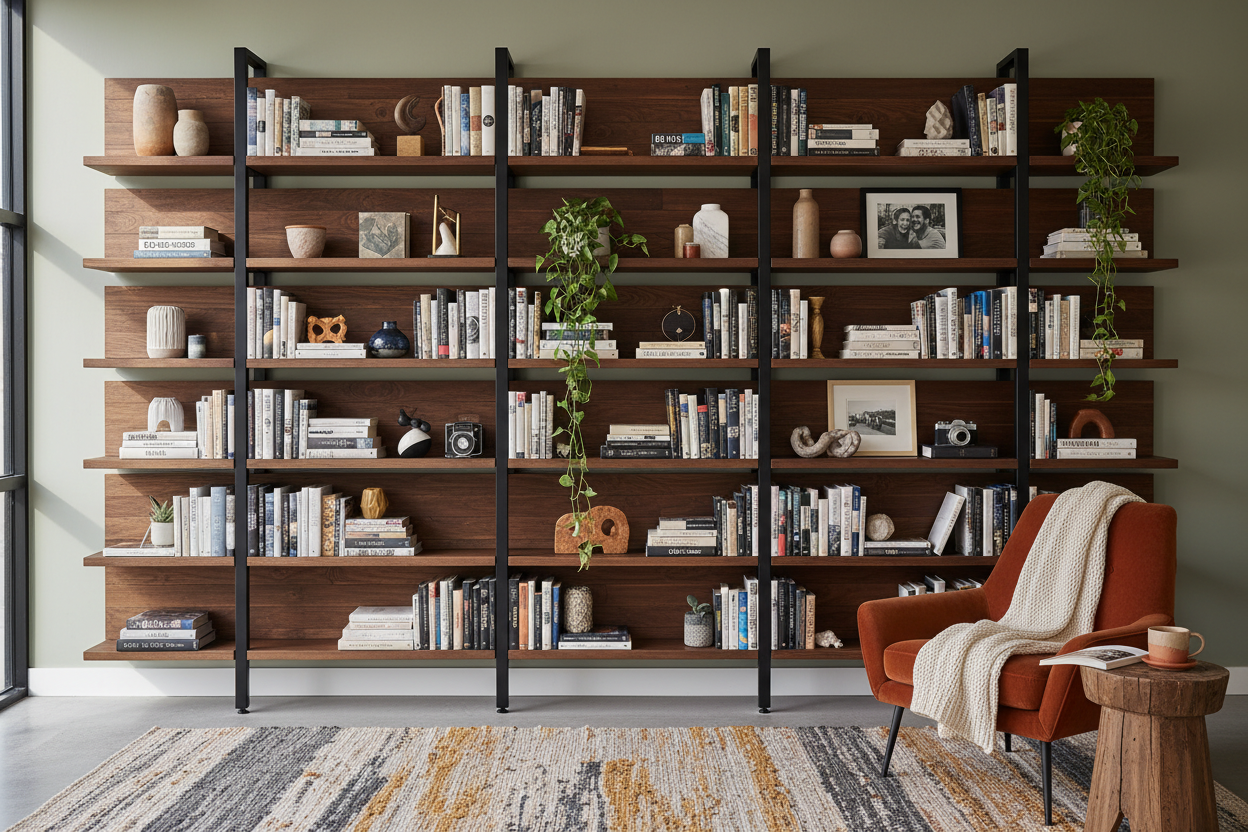
Choosing the right shelving isn't just about finding a place to stack paperbacks; it is about altering the entire dynamic of your living space. A well-chosen bookshelf for room design acts as a focal point, a partition, or a gallery of your life's interests. If you pick the wrong one, you end up with a cluttered corner or a piece of furniture that dominates the floor plan in the worst way possible. The goal is to balance function with form, ensuring your library looks intentional rather than accidental.
Assessing Your Space and Needs
Before you even look at wood finishes or metal frames, look at the room itself. The biggest mistake people make is underestimating the footprint of a freestanding unit. Grab a tape measure, but don't just measure the wall width. Measure the depth. A standard book shelf room setup requires enough clearance for you to walk past it comfortably without brushing against the spines of your books. If you are working with a tight hallway or a small bedroom, verticality is your best friend. Tall, narrow units draw the eye upward, making ceilings feel higher while consuming minimal floor real estate.
Consider what you are actually storing. Are you displaying heavy art books, vinyl records, and ceramics? Or is this for a collection of lightweight paperbacks? Knowing this dictates the structural integrity you need. A sleek, minimalist shelf might look great in a catalog, but if it lacks center supports, it will bow under the weight of hardcovers within six months.
Material Selection and Durability
The material defines both the longevity of the piece and the atmosphere of the room. Solid wood offers warmth and incredible strength, but it comes with a heavier price tag and physical weight. It suits spaces where you want a permanent, substantial feel, like a home office or a main living area.
Metal shelving units introduce an industrial or modern aesthetic. They are often modular, allowing you to adjust shelf heights as your collection grows. This flexibility is fantastic for renters who might move the unit to different apartments with varying layouts. On the more budget-friendly end, you have particle board or MDF with veneers. These can look excellent, but they are susceptible to moisture and sagging if overloaded. If you choose engineered wood, check the weight rating per shelf carefully.
My Battle with the Bowing Shelf
I learned the hard way about weight limits a few years ago. I bought a wide, beautiful mid-century modern style bookcase for my living room. It looked perfect online. I immediately loaded the middle shelf with my heaviest reference books and vintage encyclopedias. Within three weeks, the shelf had developed a noticeable "smile"—a deep sag in the center. It ruined the clean lines of the room and, frankly, looked dangerous. I ended up having to reinforce it with custom-cut lumber supports I painted to match. It was a hassle that could have been avoided if I had simply checked the load capacity or opted for a unit with a central vertical divider. Now, I always tap the shelf span; if it is longer than 30 inches without support, I skip it unless it is solid oak or steel.
Styling Your Shelves for Visual Impact
Once the structure is in place, the fun part begins: styling. A bookshelf for room aesthetics shouldn't look like a warehouse inventory. The most visually appealing shelves use negative space. You don't need to fill every inch. Leaving gaps allows the eye to rest and highlights the items you do choose to display.
Try varying the orientation of your books. Stack some horizontally and line others up vertically. This breaks up the monotony of the spines. Use the horizontal stacks as risers for small decor items, like a succulent or a framed photo. This creates layers and depth. If your book collection is massive and colorful, you might consider organizing by color for a bold statement, though some purists find this makes finding specific titles difficult. Alternatively, turning spines inward (pages out) creates a neutral, textural palette, though it is admittedly impractical for readers who actually need to find their books quickly.
The Role of Lighting
Lighting transforms a book shelf room setup from a storage area into a display case. If your shelves are deep, the back corners can become dark caverns where items disappear. Installing simple LED strip lighting under the lip of each shelf can dramatically change the mood. It highlights the texture of the book spines and adds a soft, ambient glow to the room in the evening. For built-in units, picture lights mounted at the top of the frame add a library-esque sophistication that elevates the entire wall.
Safety and Anchoring
Regardless of how stable a unit feels, anchoring it to the wall is not optional. This is especially true if you have children, pets, or live in an earthquake-prone area. Once you load the upper shelves, the center of gravity shifts dangerously high. A simple bracket attached to a stud takes ten minutes to install and prevents catastrophic tipping. Many modern bookshelves come with hardware kits specifically for this purpose. If you are renting and worried about wall damage, keep in mind that a small screw hole is much easier to patch than a damaged floor or an injured family member.
Defining Zones in Open Concepts
In studio apartments or large open-plan living areas, a bookshelf can serve as a room divider. Open-back shelving units are perfect for this. They physically separate a sleeping area from a living area without blocking light. This creates distinct zones while maintaining an airy feel. When using a shelf this way, remember to style it from both sides since the back is visible. Plants work exceptionally well here, as the foliage adds life and softens the transition between spaces.
Selecting the right shelving is a balance of physics and art. You need structure that handles the weight and style that handles the gaze. whether you go for a wall-to-wall built-in look or a simple ladder shelf, ensuring it fits the scale of your room will make your home feel curated and complete.
Frequently Asked Questions
How much weight can a standard bookshelf hold?
This varies significantly by material. A standard 30-inch wide particle board shelf can usually hold 30-50 pounds before sagging, while solid wood or metal can often support 100 pounds or more. Always check the manufacturer's specifications for the "load per shelf" rating.
What is the best way to fit a bookshelf in a small bedroom?
Go vertical and utilize corners. A tall, narrow "tower" style shelf takes up roughly one square foot of floor space but offers five or six levels of storage. Wall-mounted floating shelves are another excellent option as they keep the floor completely clear, making the room feel larger.
How do I keep my open bookshelves from looking cluttered?
Stick to the "two-thirds" rule: fill only about two-thirds of each shelf and leave the rest as empty space. Incorporate baskets or bins on the lower shelves to hide unsightly items like cables or loose papers, keeping the visual clutter contained.

Dejar un comentario
Este sitio está protegido por hCaptcha y se aplican la Política de privacidad de hCaptcha y los Términos del servicio.