










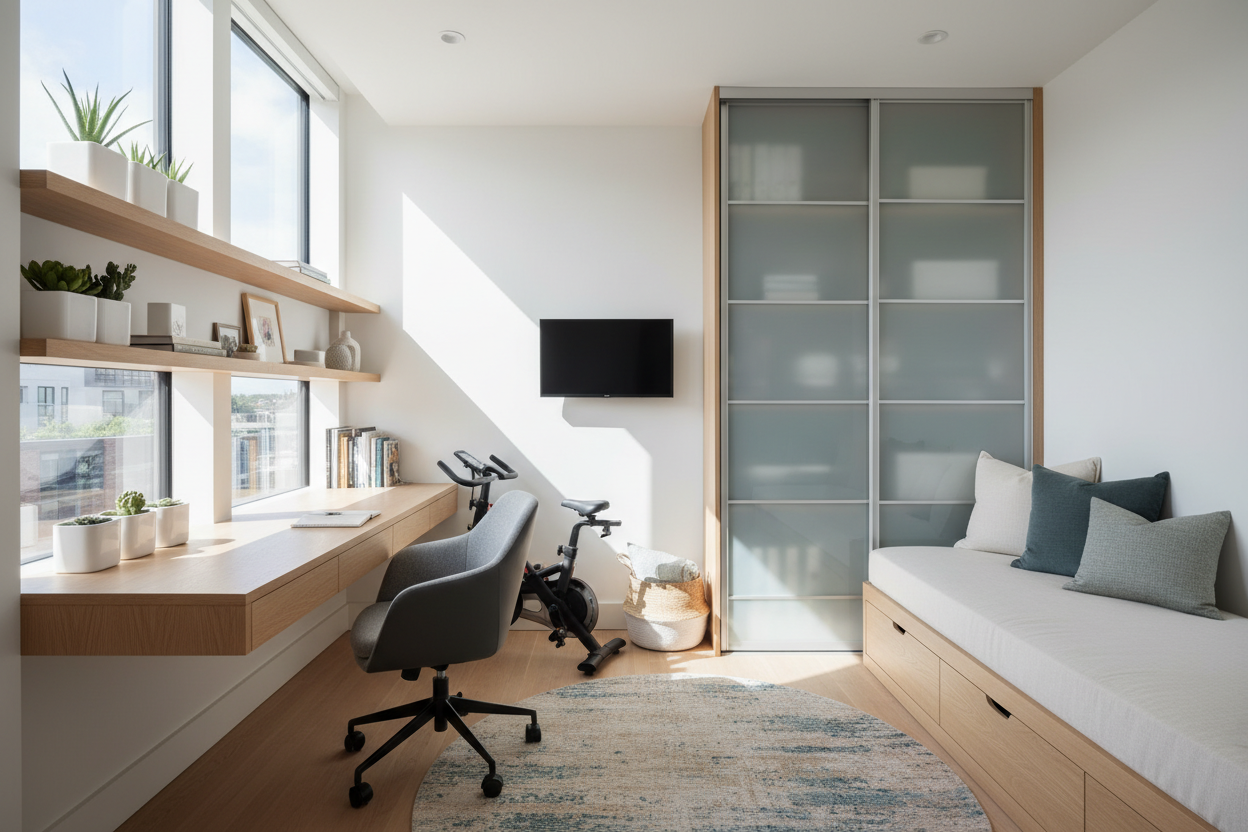
We have all been there: you are trying to relax on your sofa or wind down in a guest bedroom, but your dual monitors, a stack of mail, and a tangled mess of charging cords are glaring at you from the corner of the room. When a space has to serve two competing functions, it is incredibly easy for the utilitarian elements to overpower the design, leaving the room feeling cluttered and stressful.
Designing a truly effective multi-purpose home office requires more than just shoving a desk against an empty wall. It requires a strategic approach to layout, storage, and visual flow. By the end of this guide, you will know exactly how to integrate a functional workspace into your home without sacrificing comfort, aesthetics, or your sanity.
Quick Decision Guide
- Zone by function: Use area rugs, strategic lighting, or open shelving to clearly separate the work zone from the relaxation zone.
- Respect the clearance: Always leave at least 36 inches of walkway space behind a desk chair so you can comfortably back out without hitting a bed or sofa.
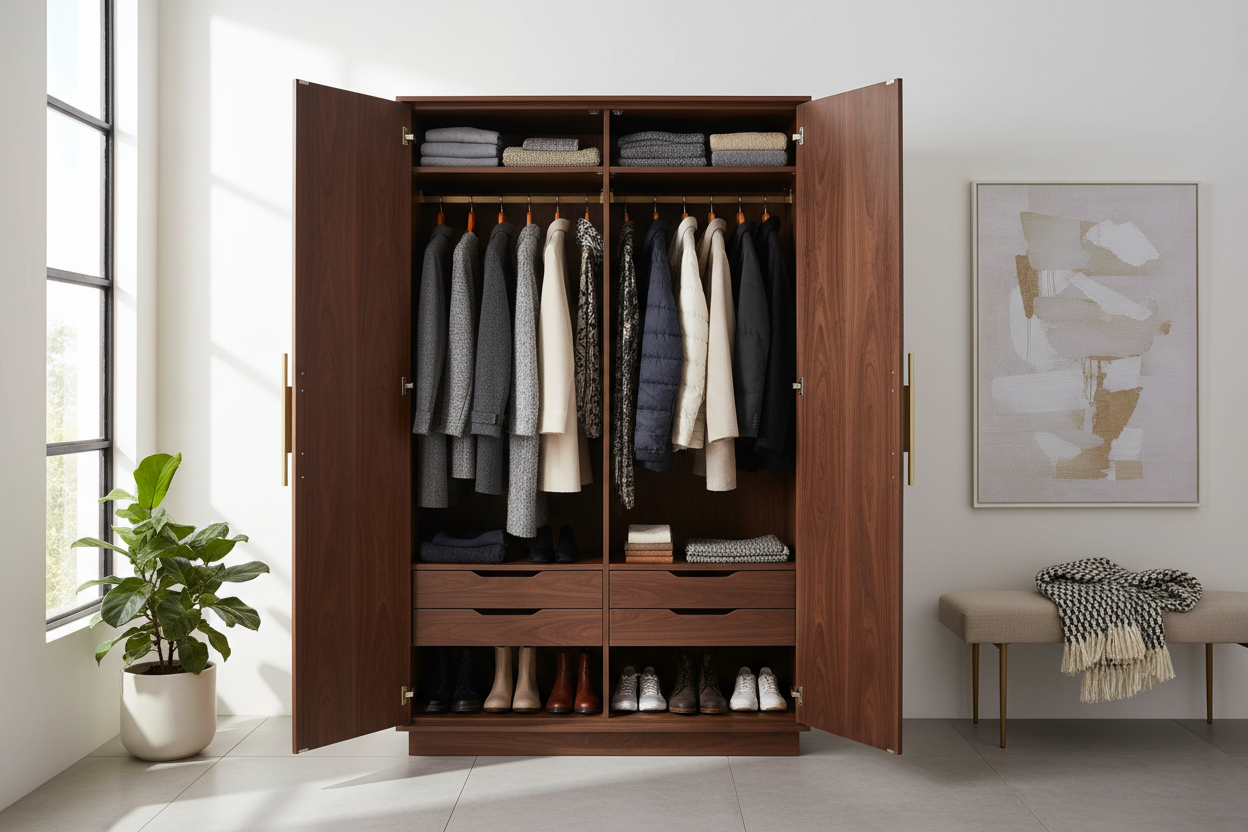
- Hide the hardware: Invest in closed storage or secretary-style desks to conceal laptops and paperwork when the workday ends.
- Match the silhouette: Choose office furniture that shares the same design language (like leg style or wood tone) as the rest of the room to maintain a cohesive look.
Zoning Your Multipurpose Home Office Space
The 36-Inch Clearance Rule
In standard North American homes, space planning is the foundation of good design. When configuring a multipurpose home office space, the biggest mistake is ignoring traffic flow. You need a minimum of 36 inches behind your desk chair to push back and stand up comfortably. If your multipurpose office shares a footprint with a guest bedroom, you must measure the clearance with the sleeper sofa or Murphy bed fully extended. If those two zones overlap, the room will fail at both functions.
Utilizing Negative Space
A common pitfall in a multi use office space is feeling the need to fill every corner. Negative space—the empty areas around your furniture—gives the eye a place to rest. Instead of a bulky L-shaped desk that dominates the floor plan, consider a sleek writing desk paired with wall-mounted floating shelves. This draws the eye upward and preserves the floor space, making the room feel larger and less chaotic.
Blending Your Multifunctional Office Space with Existing Decor
Managing Visual Weight
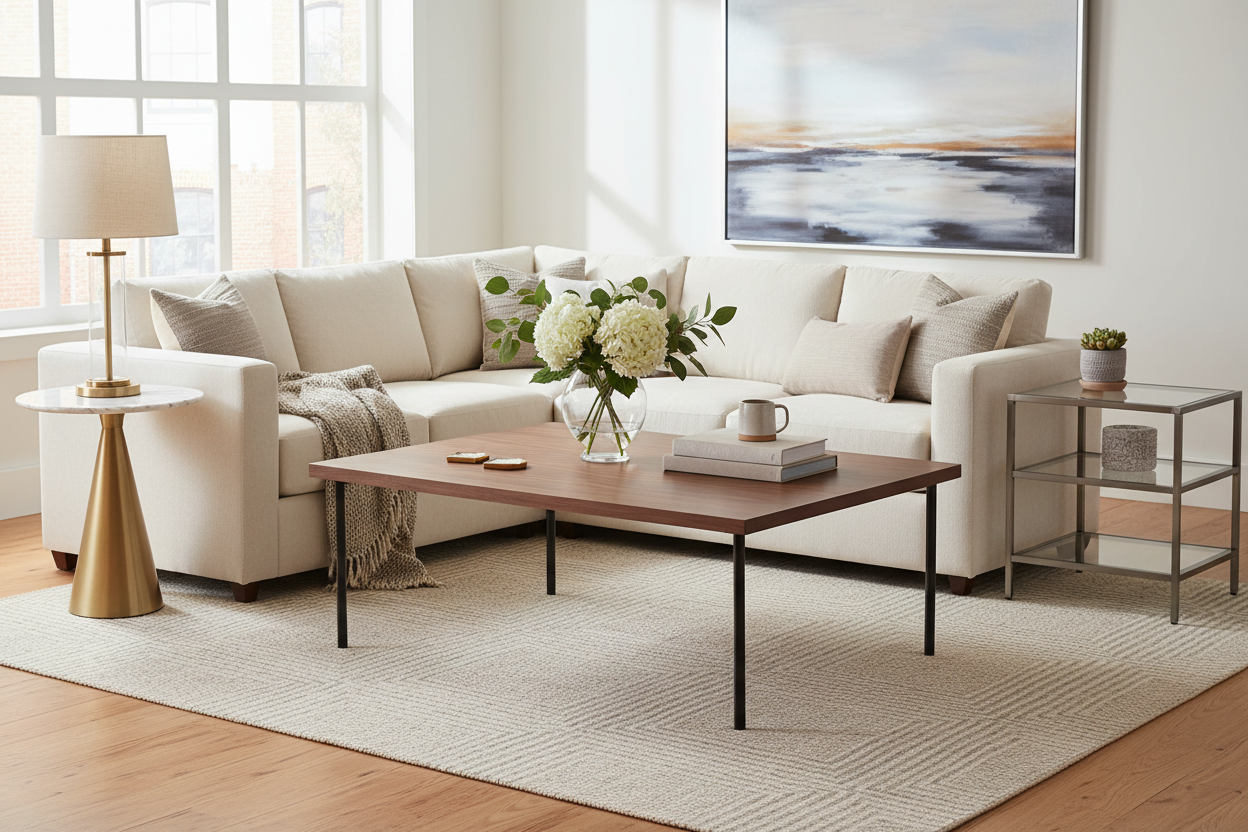
To keep a multifunctional home office space from looking like a corporate cubicle dropped into a cozy living room, pay attention to visual weight. If your living room features a heavy, skirted sectional, balance it with a desk that has thin, tapered metal or wood legs. The lighter silhouette of the desk prevents the room from feeling bottom-heavy.
Material Coordination
Your office furniture should look like it belongs to the same family as your residential pieces, even if they aren't a matched set. If you have warm oak floors and mid-century modern living room furniture, avoid cold, frosted-glass and chrome desks. Opt for a warm walnut veneer or a painted solid wood desk that complements your existing palette. Integrating a multipurpose office space seamlessly is all about echoing textures and finishes.
Lessons from My Own Projects
Early in my career, I designed what I thought was a stunning multifunctional office space in a tight suburban townhouse. The room needed to serve as a daily workspace and a weekend guest room. I specified a gorgeous, heavy walnut executive desk with deep drawers. It looked incredible in the portfolio photos.
But I learned the hard way that when the clients' in-laws came to visit, the pull-out sleeper sofa bumped right into the desk's edge. The homeowners had to physically dismantle the ergonomic chair and awkwardly shove the heavy walnut desk into the hallway just to open the bed. It was a functional disaster. Now, I always prioritize modular, lighter-weight desks for these dual-purpose rooms, and I measure the clearance for the room's secondary use down to the half-inch. Looks matter, but livability matters more.
Frequently Asked Questions
How do I hide my computer in a multipurpose home office?
The easiest method is using a secretary desk, which features a drop-down front that you can simply close over your laptop and monitors at the end of the day. Alternatively, use a stylish woven basket or a dedicated closed-door credenza to tuck away laptops, keyboards, and mice when guests arrive.
What is the best layout for a guest room and multipurpose office?
If space allows, place the desk and the bed on opposite walls to create two distinct focal points. If the room is narrow, place a slim desk at the foot of the bed, facing outward, functioning almost like a footboard console. This keeps the desk out of the immediate eyeline when someone is sleeping.
How can I make a multifunctional home office space look cohesive?
Ditch the standard black plastic rolling chair. Opt for an upholstered dining chair or a designer-friendly ergonomic chair that matches the upholstery fabrics used elsewhere in the room. Swap harsh corporate desk lamps for warm, brass or ceramic table lamps to maintain a residential feel.

Dejar un comentario
Este sitio está protegido por hCaptcha y se aplican la Política de privacidad de hCaptcha y los Términos del servicio.