










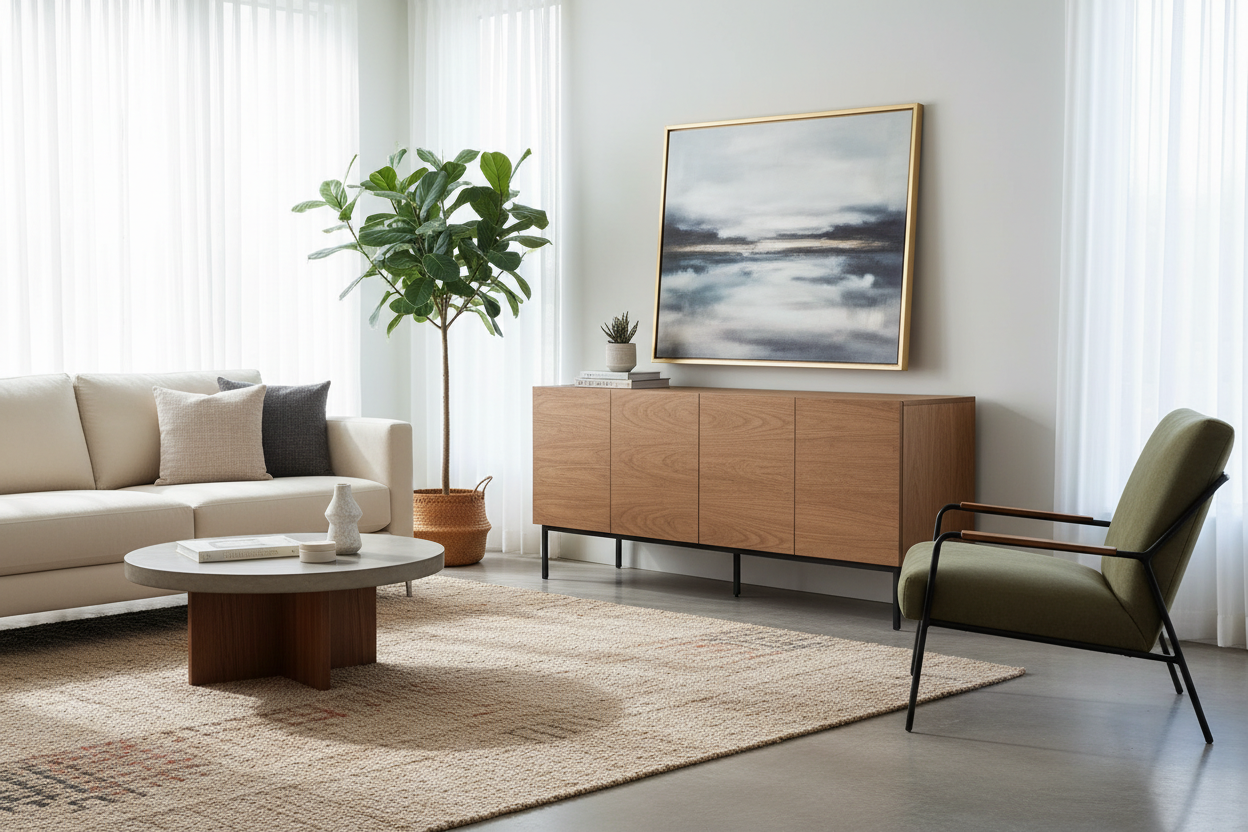
We have all been there: staring at a chaotic home office or an overflowing living room, knowing you desperately need closed storage, but balking at the price of solid oak. Enter the pressed wood storage cabinet. It is the undisputed champion of budget-friendly organization, but let us be realistic—it carries a certain stigma in the design world.
Today, we are stripping away the marketing fluff. You will walk away knowing exactly when these engineered pieces make sense, how to make them look genuinely high-end, and the specific scenarios where you should absolutely walk away.
Quick Decision Guide
- Check the density: Heavy MDF (Medium-Density Fiberboard) is vastly superior to lightweight, airy particleboard.
- Keep it dry: Engineered wood is highly susceptible to moisture damage; never place it in a damp basement or bathroom.
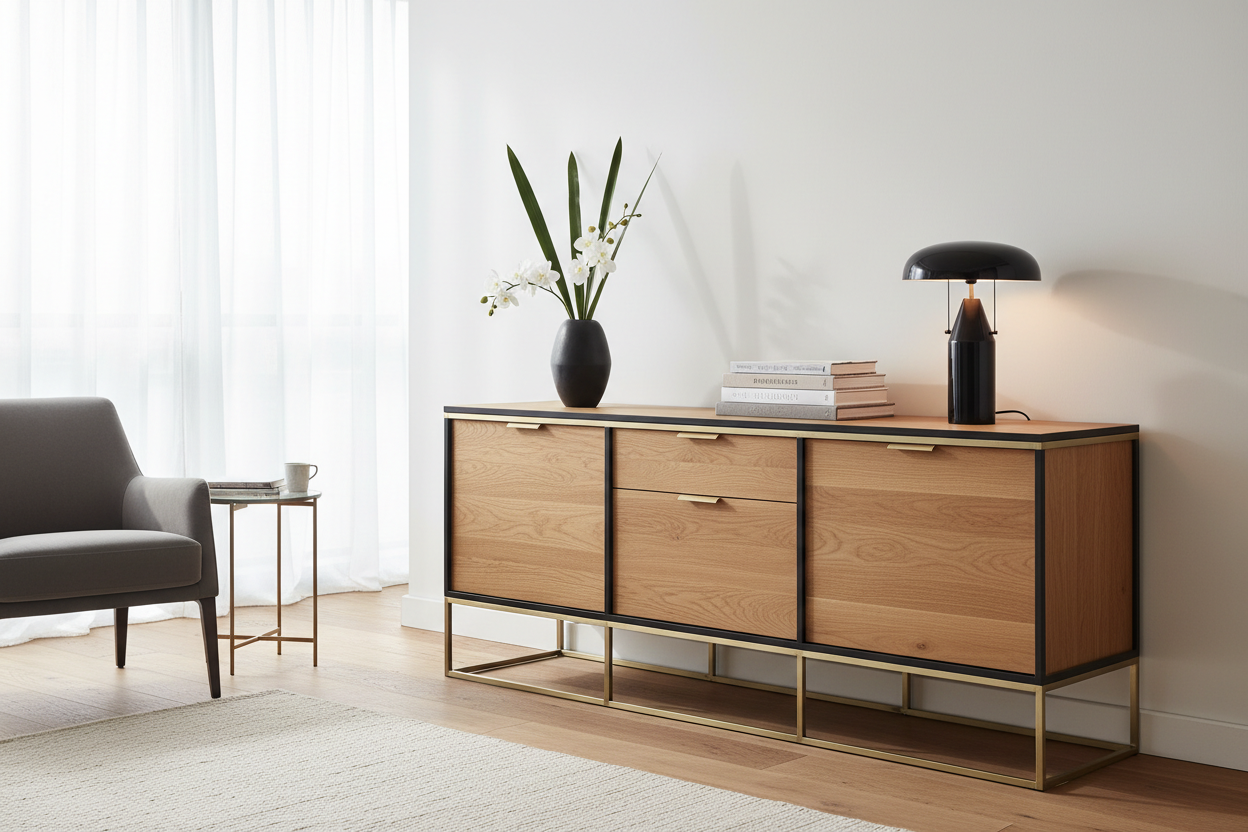
- Hardware matters: Swapping out cheap factory plastic pulls for solid brass or matte black metal instantly elevates the cabinet silhouette.
- Respect weight limits: Never overload the shelves, as pressed wood will permanently bow under heavy, concentrated loads.
Material & Build Quality: The Reality of Engineered Wood
MDF vs. Particleboard
Not all pressed wood is created equal. When shopping, you will primarily encounter two types: MDF and particleboard. MDF is dense, heavy, and provides a smooth surface that takes veneers and laminates beautifully. Particleboard, on the other hand, is made of larger wood chips pressed together with resin. It is lighter on the wallet but much more prone to chipping and sagging. If you have the choice, always opt for an MDF core to ensure better longevity.
The Veneer Factor
The visual success of a pressed wood storage cabinet entirely depends on its outer layer. Paper laminates photograph well but scratch easily and peel at the corners. For a piece that needs to anchor a living room, look for a real wood veneer or a high-pressure laminate (HPL). These materials offer a much more convincing texture and can handle the daily friction of a busy North American household.
Space Planning & Styling
Managing Visual Weight
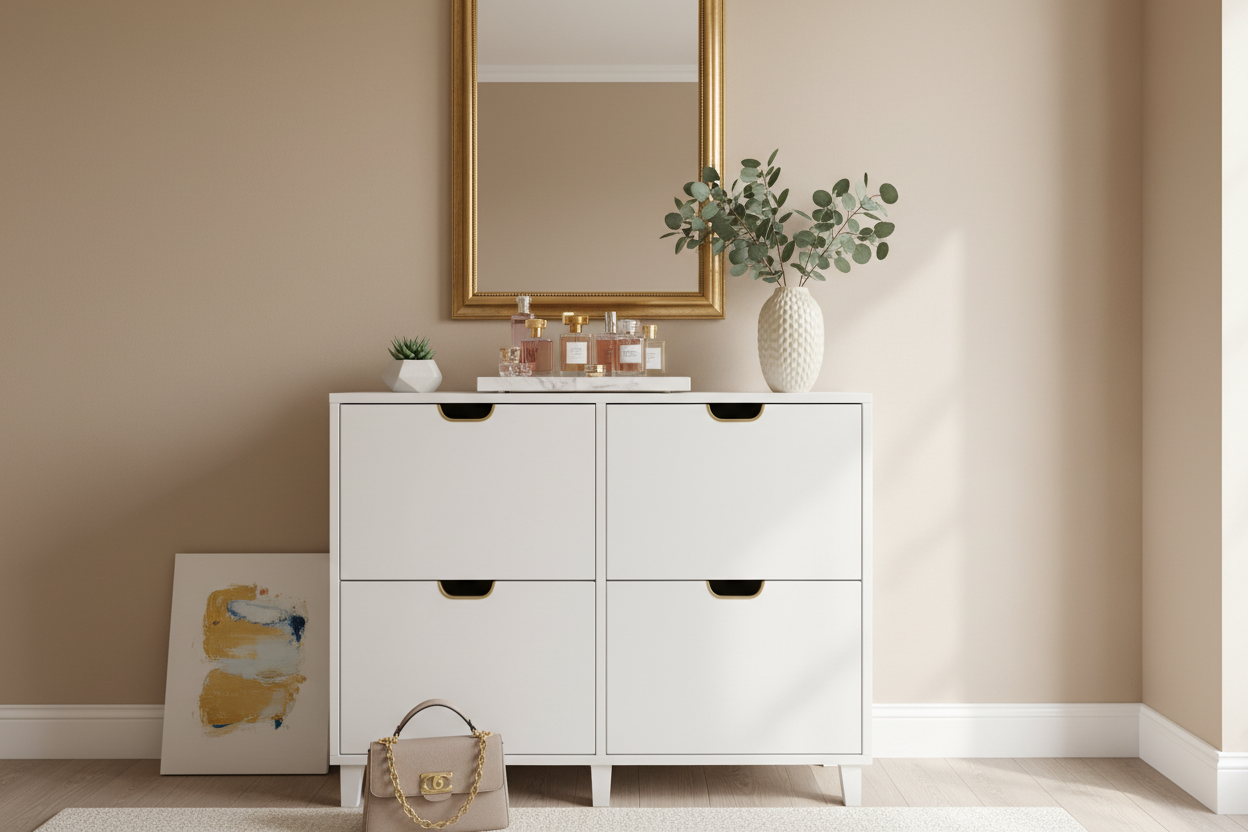
A tall, solid block of closed storage can easily overpower a small suburban family room or a tight apartment. To manage the visual weight, pay attention to the base. A cabinet raised on tapered mid-century legs or a recessed plinth feels significantly lighter than a piece that sits flush against the floor. Leave negative space on either side of the cabinet so the room can breathe and the furniture does not feel crammed into a corner.
Styling for a High-End Look
The secret to making budget furniture look bespoke is styling. Treat the top of your cabinet as a focal point. Layer a textured ceramic lamp, an oversized piece of leaning art, and a trailing plant like a pothos to draw the eye upward. This distracts from the flat finish of the engineered wood and grounds the piece in your overall room design.
Designer's Honest Take
Early in my career, I specified a sleek, flat-pack pressed wood storage cabinet for a client's busy mudroom. The goal was to save budget for a custom built-in bench nearby. It looked fantastic on installation day. Six months later? The bottom edges had swollen and peeled because of wet winter boots constantly resting against the baseboard.
I learned the hard way that engineered wood and moisture are sworn enemies. Once that material swells, there is no fixing it. Now, if I use pressed wood, it stays strictly in climate-controlled, dry zones like home offices, playrooms, or bedrooms. I also always add aftermarket felt glides to the bottom to lift the base slightly off the floor, protecting it from routine mopping and accidental spills.
Frequently Asked Questions
How do I clean a pressed wood storage cabinet?
Use a lightly damp microfiber cloth to wipe away dust and fingerprints, then immediately follow up with a dry cloth. Never use soaking wet sponges or harsh chemical sprays, as moisture can seep into the seams and cause the wood fibers to expand.
Can I paint over pressed wood?
Yes, but preparation is non-negotiable. You cannot just slap latex paint over a laminate surface. You must lightly scuff the surface with fine-grit sandpaper, apply a high-quality bonding primer like a shellac-based formula, and finish with a durable cabinet enamel.
How long does a pressed wood cabinet usually last?
With proper care in a dry environment, a good quality MDF cabinet can last 5 to 10 years. However, their lifespan drops significantly if they are disassembled and moved frequently, as the hardware joints in engineered wood tend to strip out easily.

Dejar un comentario
Este sitio está protegido por hCaptcha y se aplican la Política de privacidad de hCaptcha y los Términos del servicio.