










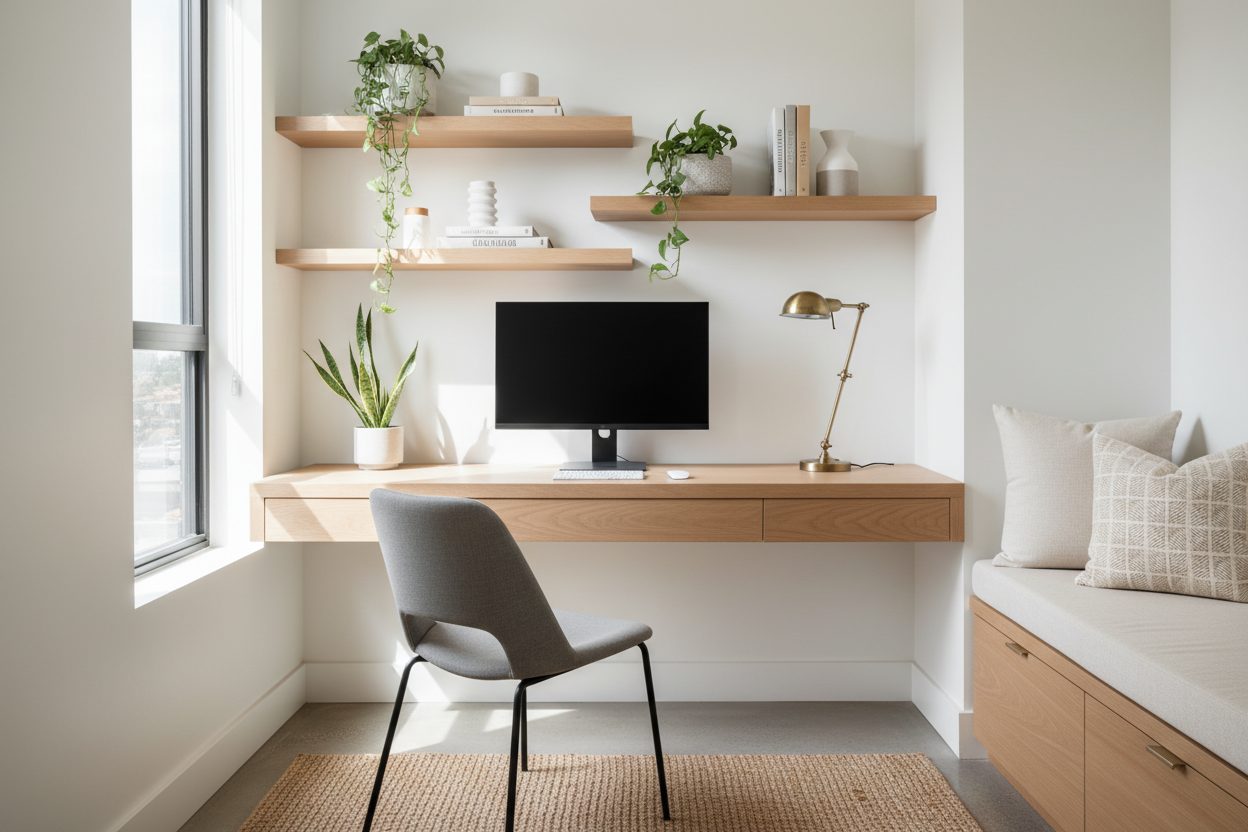
We have all been there. You need a dedicated spot to work, so you wedge a bulky desk into the corner of your guest room or living area. A week later, the room feels cramped, the cables are a tangled mess, and your new workspace feels more like an afterthought than a productive retreat. When square footage is limited, finding effective small home office design ideas requires more than simply buying miniature furniture.
In my 15 years designing residential interiors, I have learned that a successful compact workspace is about managing visual weight and prioritizing ergonomics. Today, we are going to walk through how to carve out a highly functional, stylish office area that blends seamlessly into your existing floor plan without making the room feel like a corporate cubicle.
Quick Decision Guide
- Float the furniture: Avoid pushing heavy, solid-wood desks against the wall. A leggy or wall-mounted desk creates negative space and makes the room feel larger.
- Go vertical: Utilize the wall space above your monitor for floating shelves or closed cabinetry to keep the desktop clear.
- Check your clearances: Always leave at least 36 inches of push-back room behind your desk chair to avoid scuffing walls and ensure easy movement.
- Match the room aesthetic: Treat the workspace as an extension of the room design, using coordinating materials and colors rather than standard black office gear.
Carving Out an Office Space in House Layouts
Finding the right spot is half the battle. When you are trying to integrate an office space in house layouts that were never designed for remote work, you have to get creative with underutilized zones.
The Power of the Niche
Look for architectural quirks. A wide hallway, the awkward space under a staircase, or a standard reach-in closet can become incredibly efficient workspaces. The 'cloffice' (closet office) is popular for a reason: you can install a custom desktop at the perfect ergonomic height (typically 29 to 30 inches) and add floating shelves above. Best of all, if you keep the doors on, you can simply shut them at the end of the day to hide the work completely.
Decorating Ideas for Small Home Office Setups
When a desk sits out in the open, standard corporate furniture is a visual eyesore. The goal is to select pieces that feel residential. Excellent decorating ideas for small home office spaces usually start with camouflage.
Managing Visual Weight
If your workspace shares a footprint with your living room or bedroom, pay attention to the silhouette of your desk. A chunky, solid oak desk will visually dominate a small room. Instead, consider a writing desk with slim metal legs or a glass top. These materials allow the eye to travel through the piece, making the footprint feel lighter. Pair it with a chair that features a low back or an open weave, like cane or rattan, so it does not block sightlines.
Scaling Down Without Sacrificing Comfort
It is tempting to buy a tiny, stool-like chair to save space, but your spine will protest after a few hours. Finding creative home office space ideas means balancing the scale of the room with the physical realities of the human body.
Ergonomics in Tight Quarters
You do not need a massive executive chair, but you do need proper seat depth and lumbar support. Look for mid-century modern inspired task chairs that offer adjustable height and swivel functions but have a slimmer profile. For the desk itself, a depth of 20 to 24 inches is usually sufficient for a laptop and a monitor on an articulating arm. Mounting your monitor to the wall or the back edge of the desk reclaims precious surface area.
Lessons from My Own Projects
Early in my career, I designed a stunning built-in home small office for a client living room alcove. We used a gorgeous, high-gloss white lacquer for the desktop to bounce light around the dark corner. It looked incredible in the portfolio photos.
The reality? I got a call two weeks later. The glossy surface showed every single fingerprint, coffee cup ring, and speck of dust. Worse, the glare from their desk lamp reflecting off the lacquer was giving them headaches. I learned the hard way that high-touch work surfaces need matte or satin finishes. Wood veneers or matte laminates are far more forgiving for daily use. I also realized that technically fitting a 40-inch desk into a 41-inch alcove leaves exactly zero room to route cables down the side, forcing us to drill a messy hole right through the center of that expensive lacquer top.
Frequently Asked Questions
Where is the best place for a home small office?
The ideal spot offers natural light and is away from high-traffic pathways. Guest bedrooms, wide landings, or a quiet corner of a dining room work well. Avoid placing your back to heavy traffic areas, which can cause subconscious stress while working.
How deep should a desk be for a tight space?
If you strictly use a laptop, a desk as shallow as 18 inches can work. However, if you use an external monitor and keyboard, aim for a minimum depth of 22 to 24 inches to maintain proper viewing distance and wrist support.
How can I make my workspace look less like a corporate cubicle?
Ditch the black plastic accessories. Use a ceramic mug for pens, a woven basket for paper recycling, and a decorative table lamp instead of a harsh LED task light. Blending residential textures into the workspace softens the overall look.


Dejar un comentario
Este sitio está protegido por hCaptcha y se aplican la Política de privacidad de hCaptcha y los Términos del servicio.